

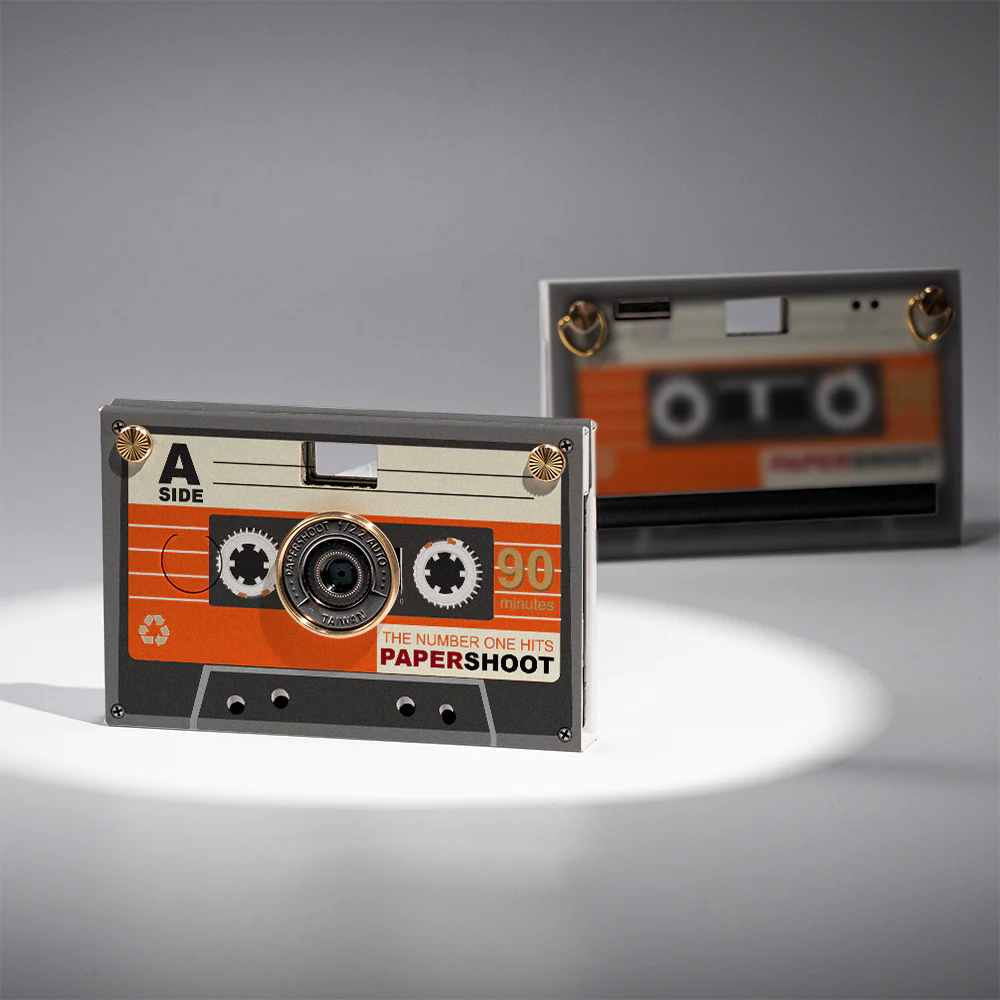

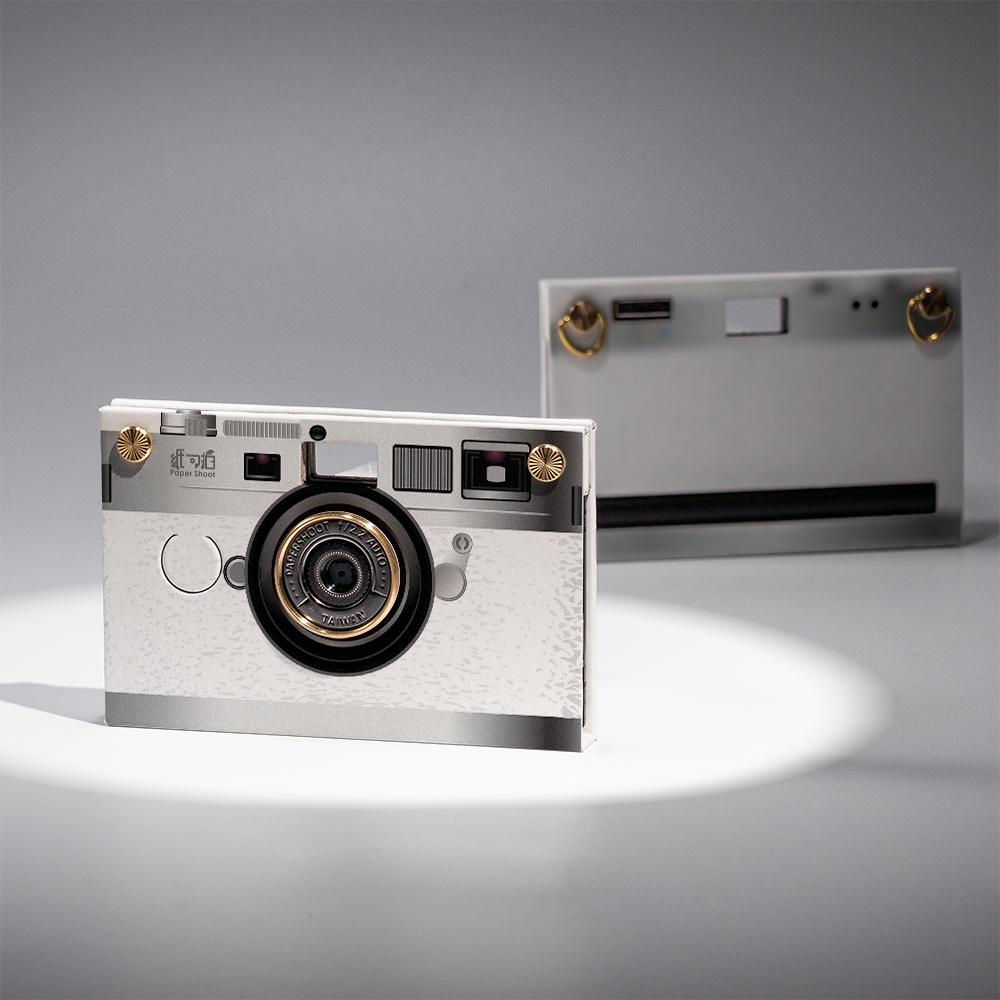


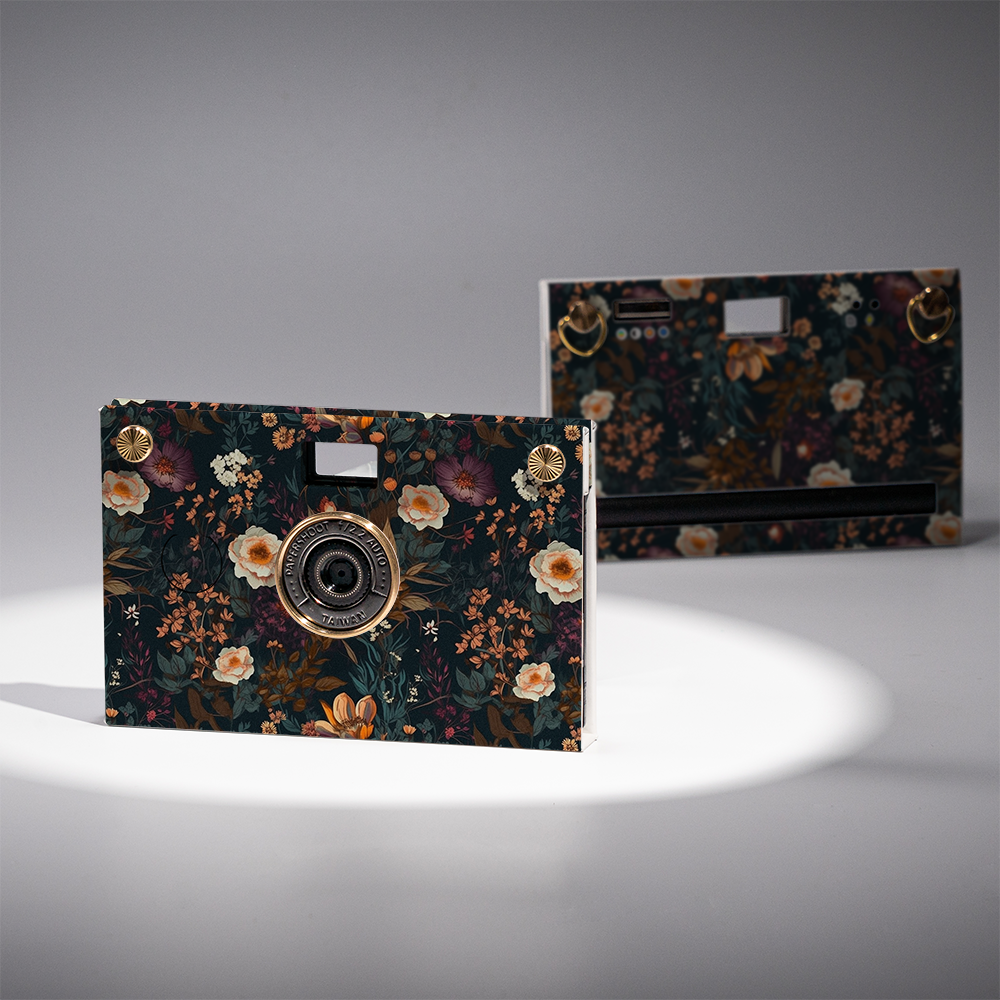
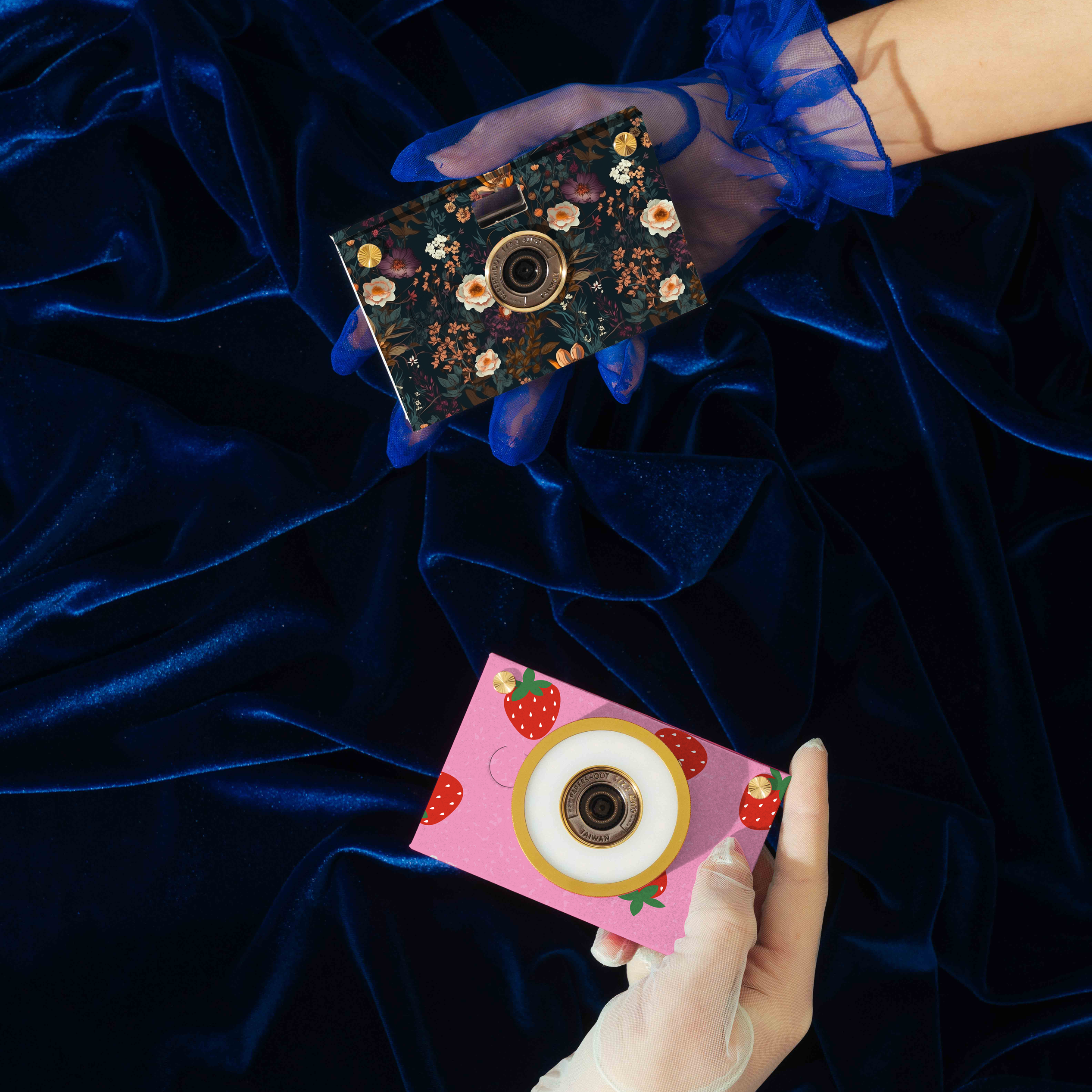










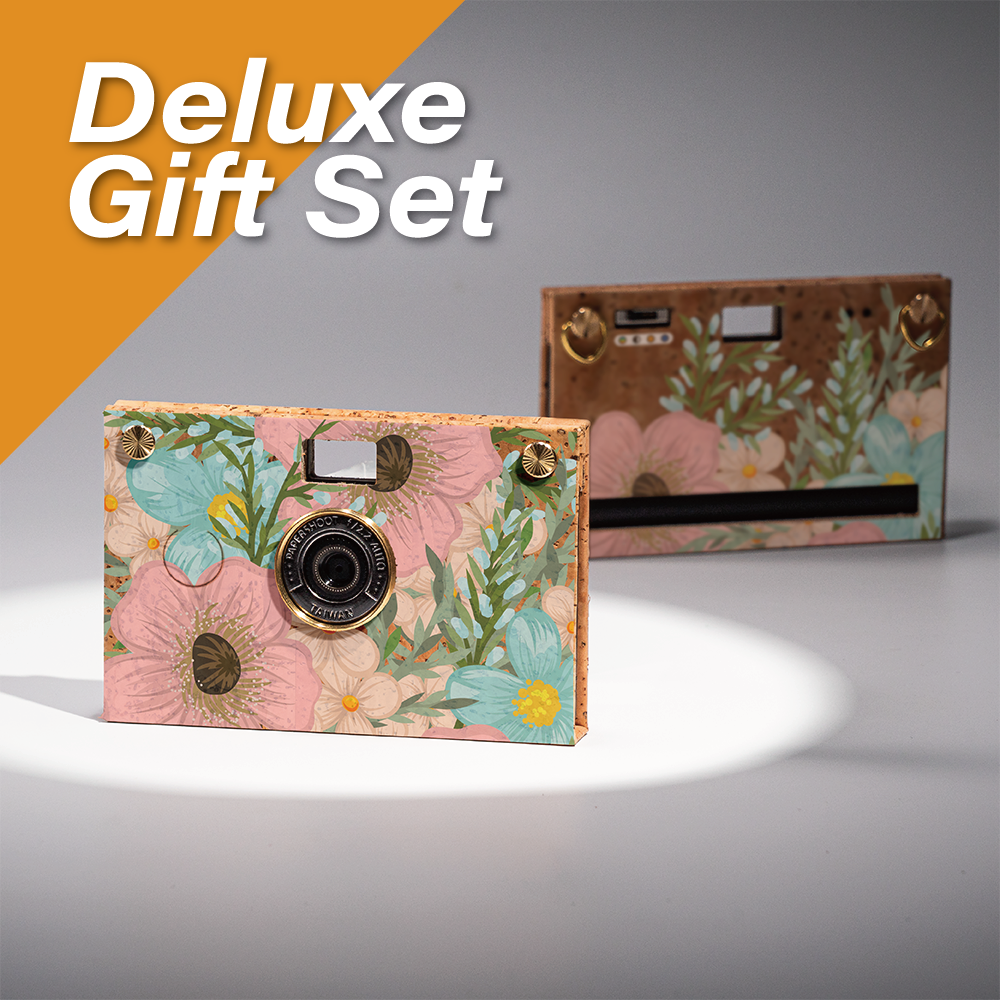


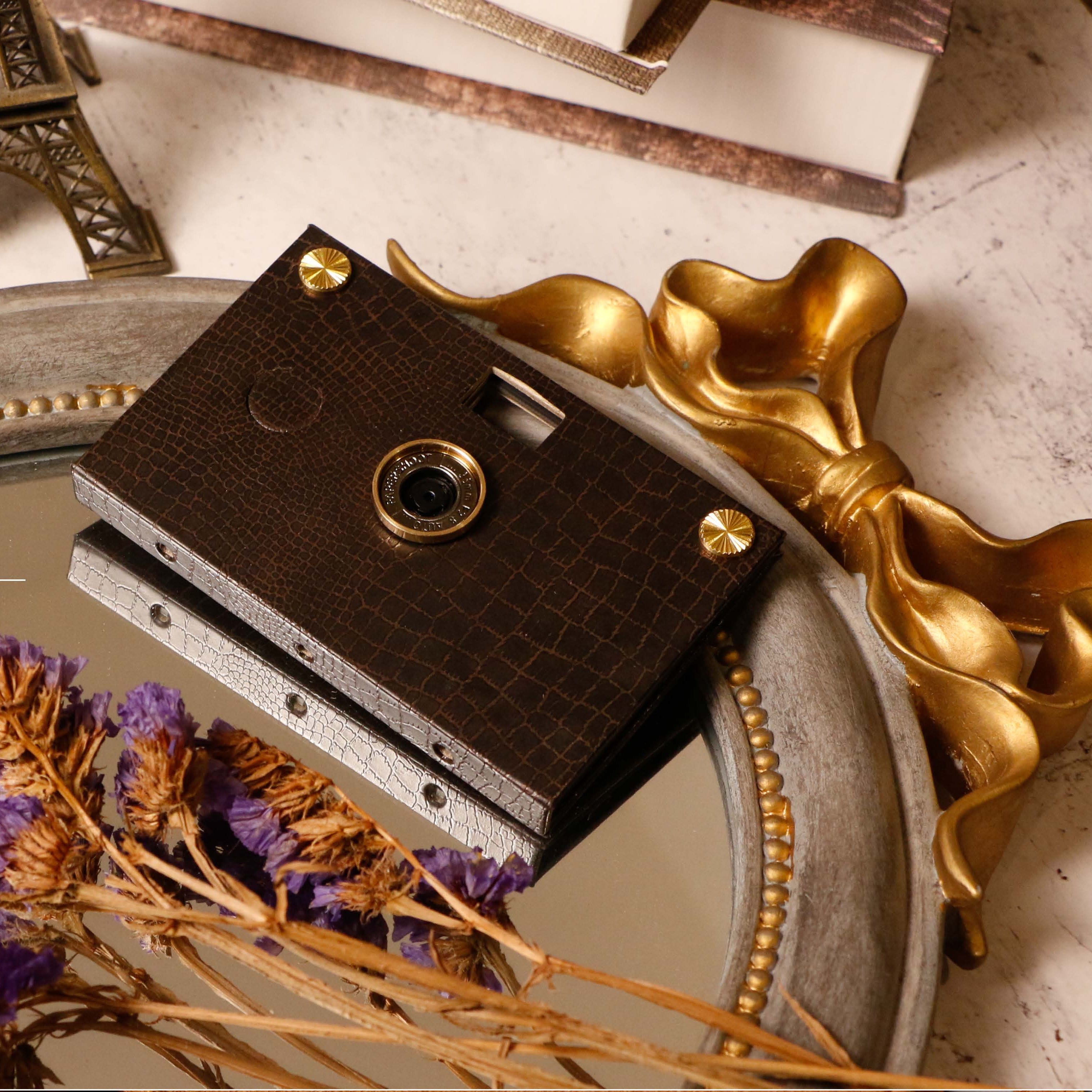
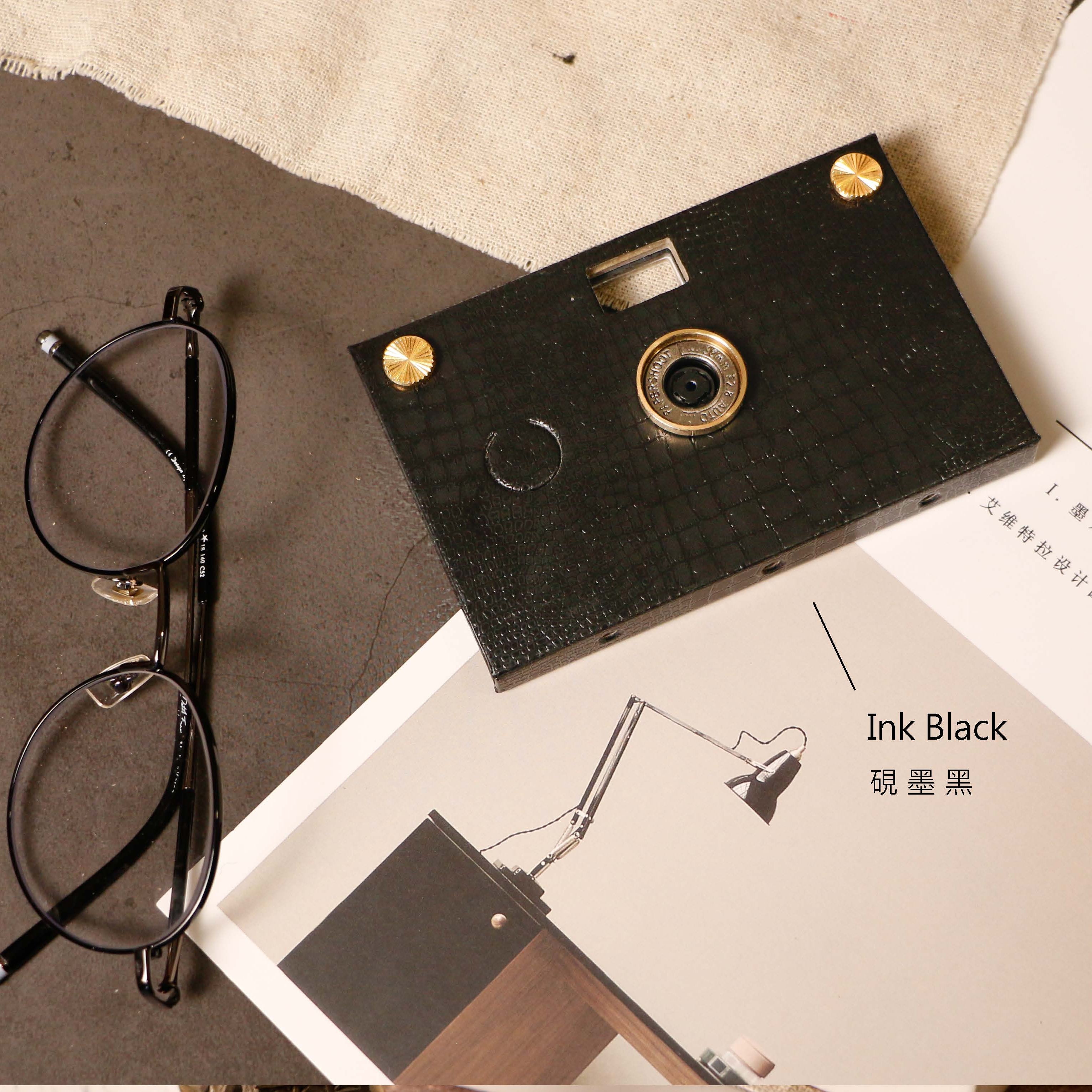
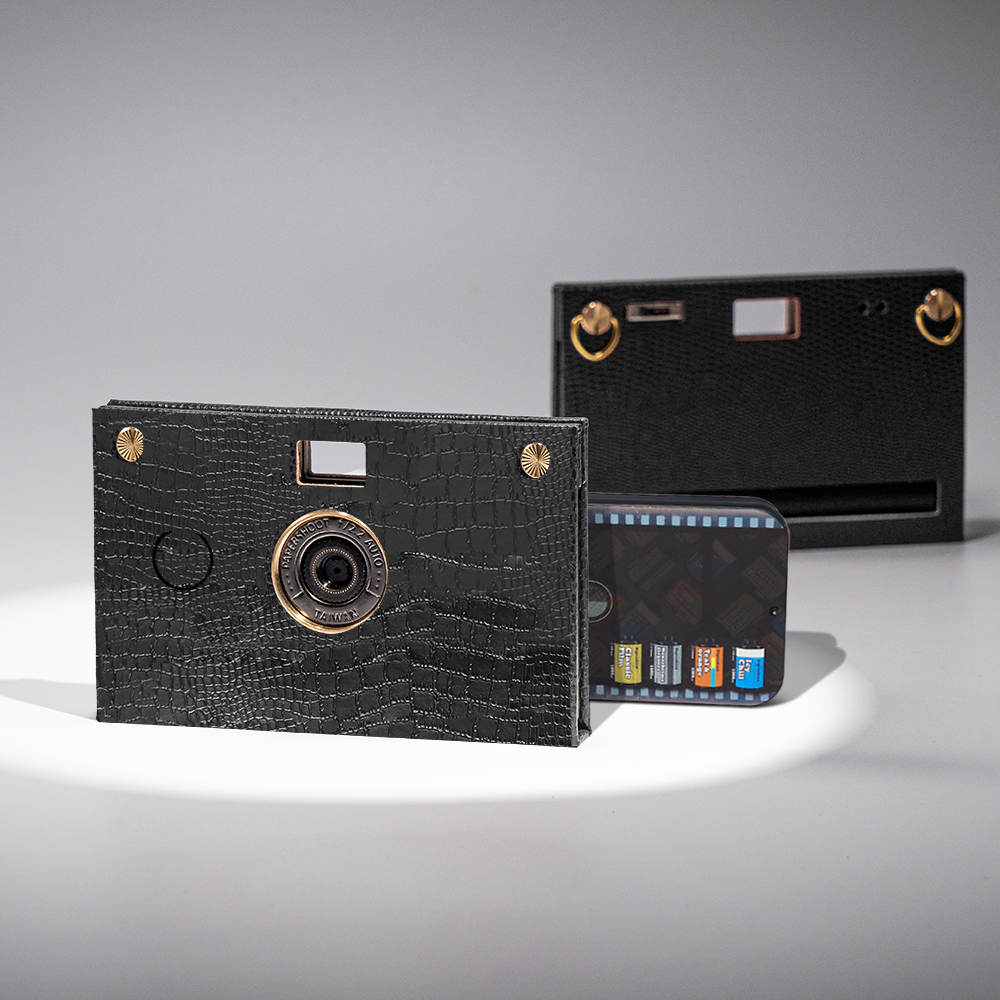


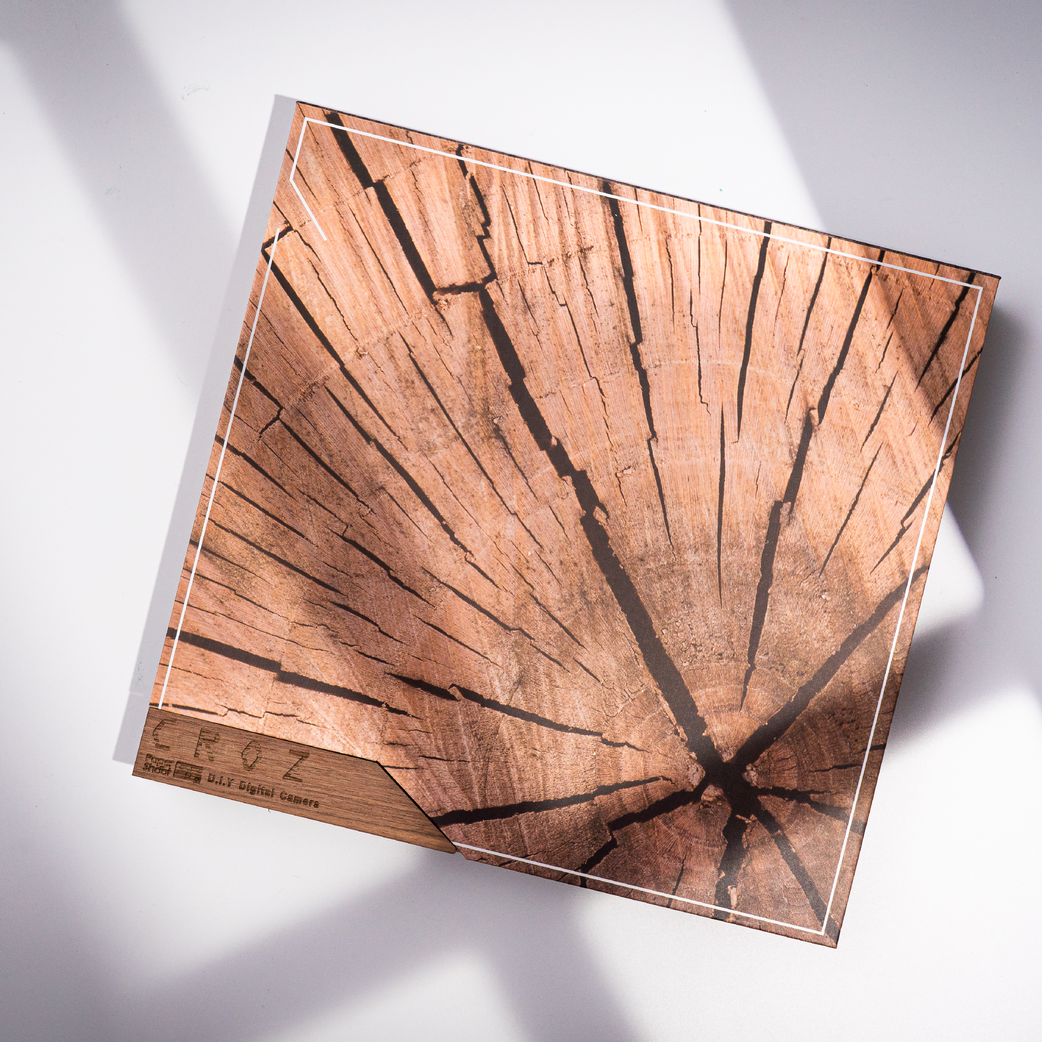
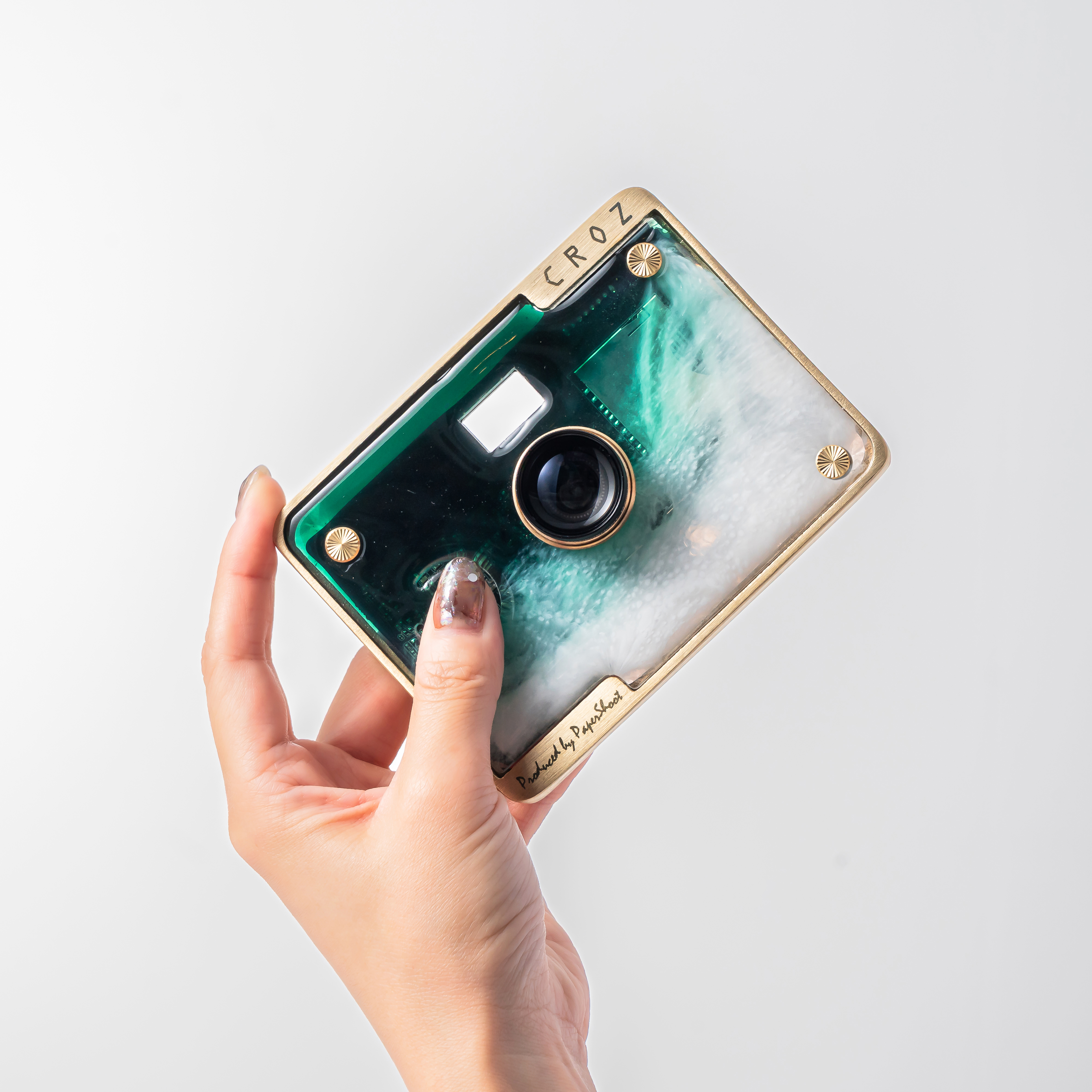
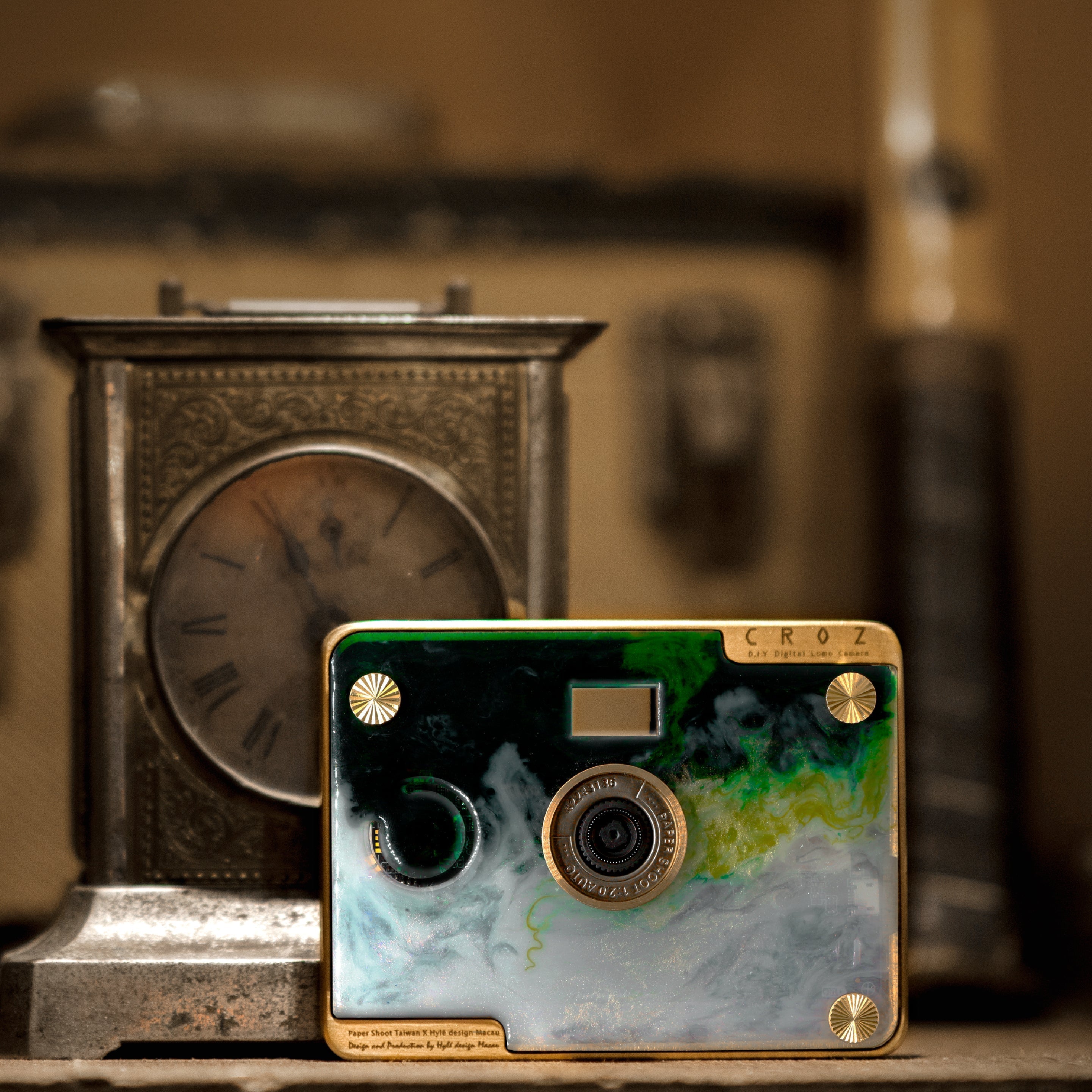

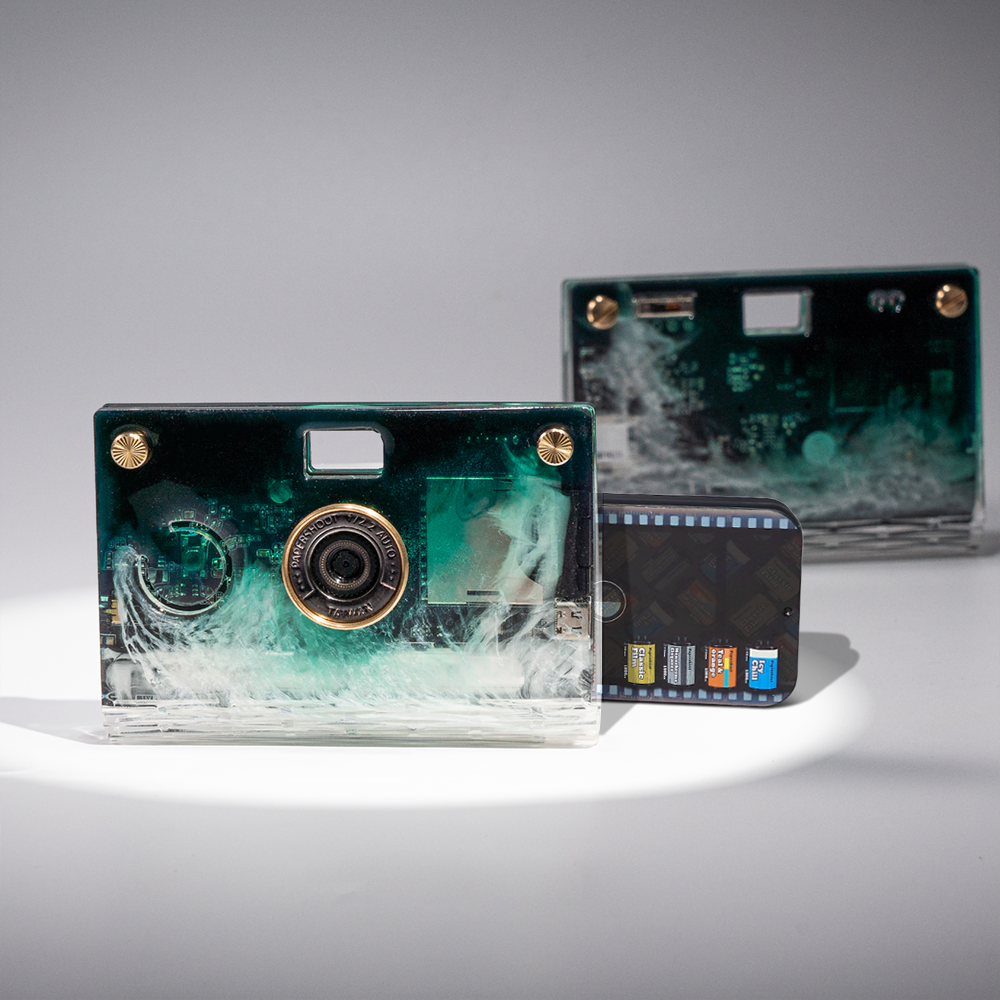
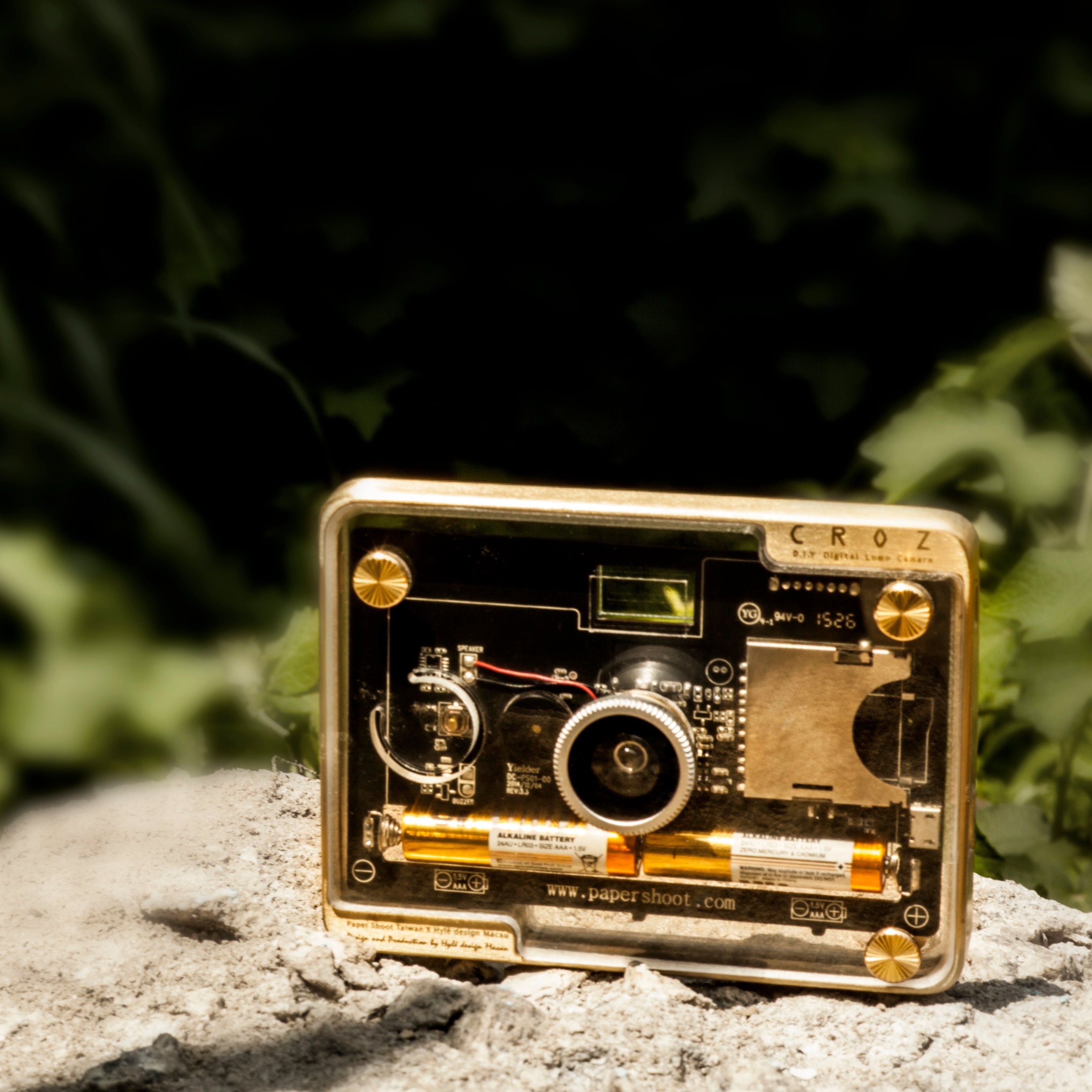


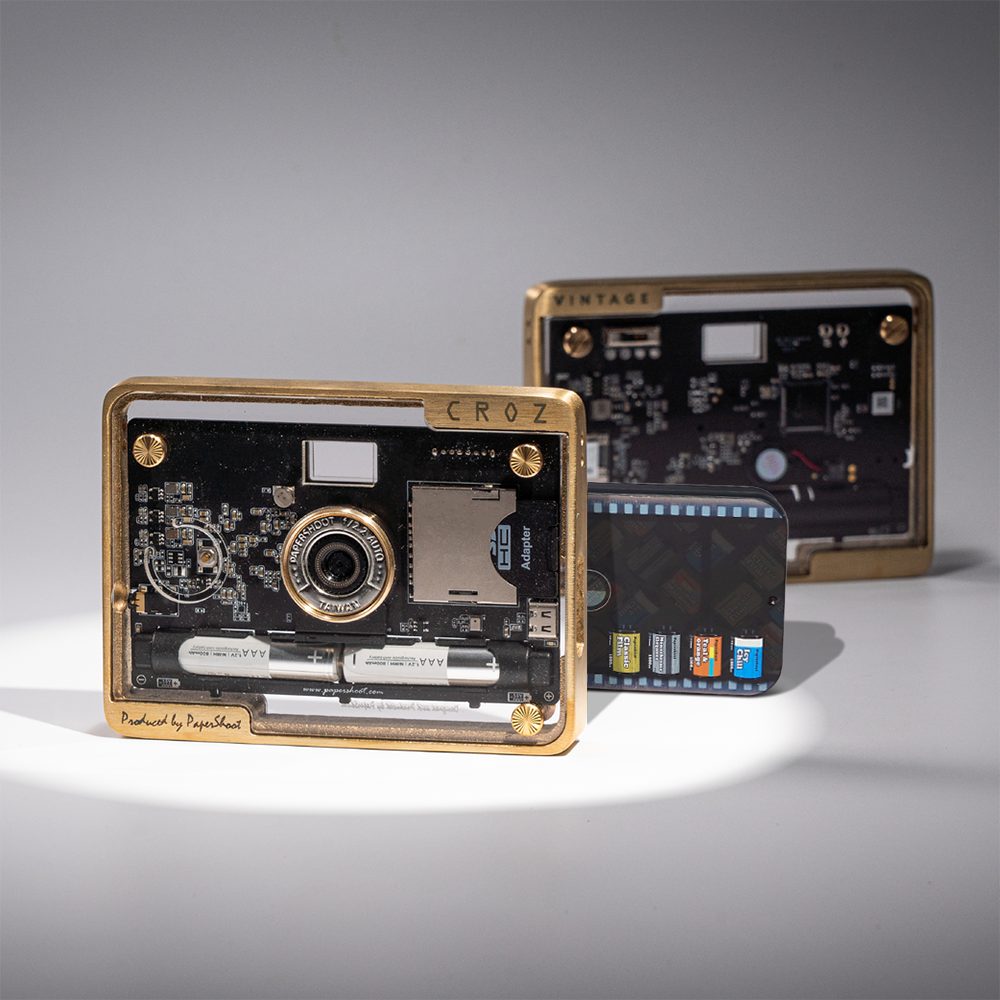
Featured Camera
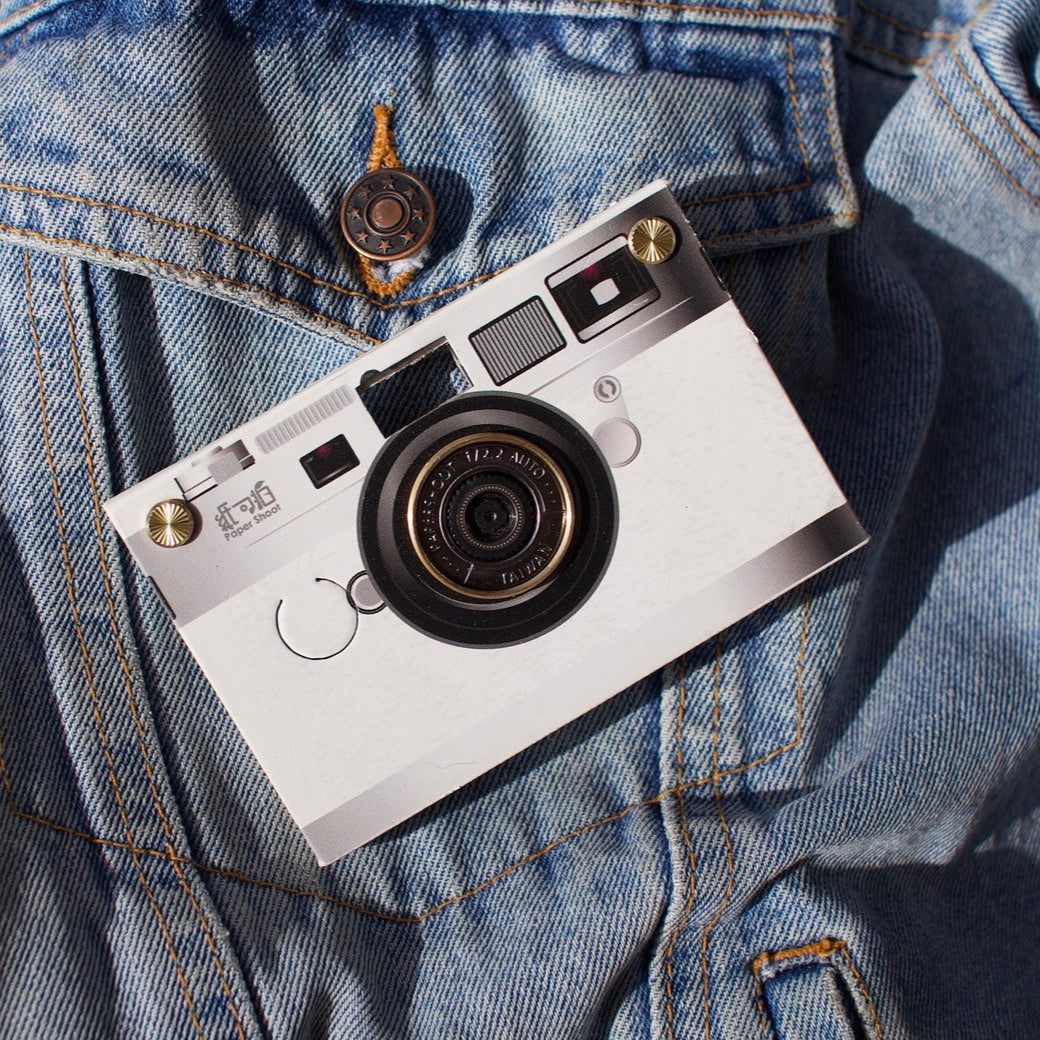
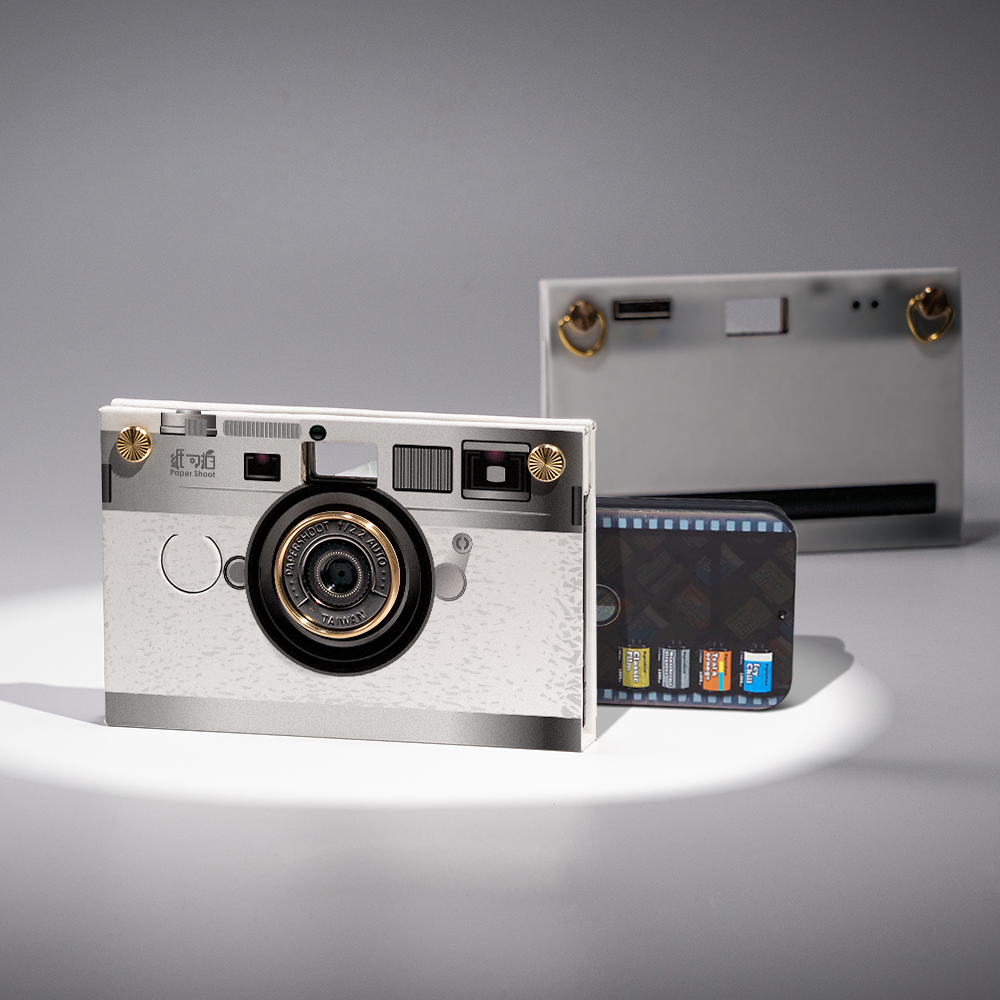
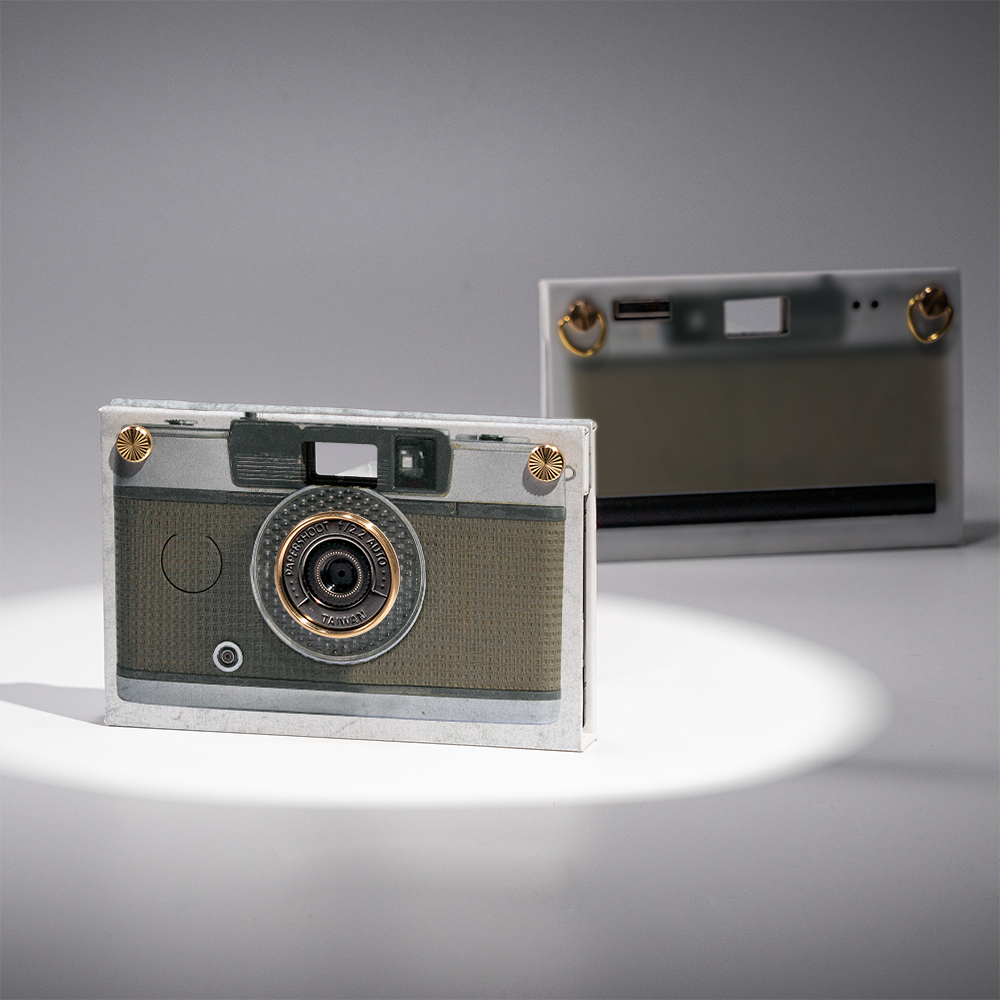
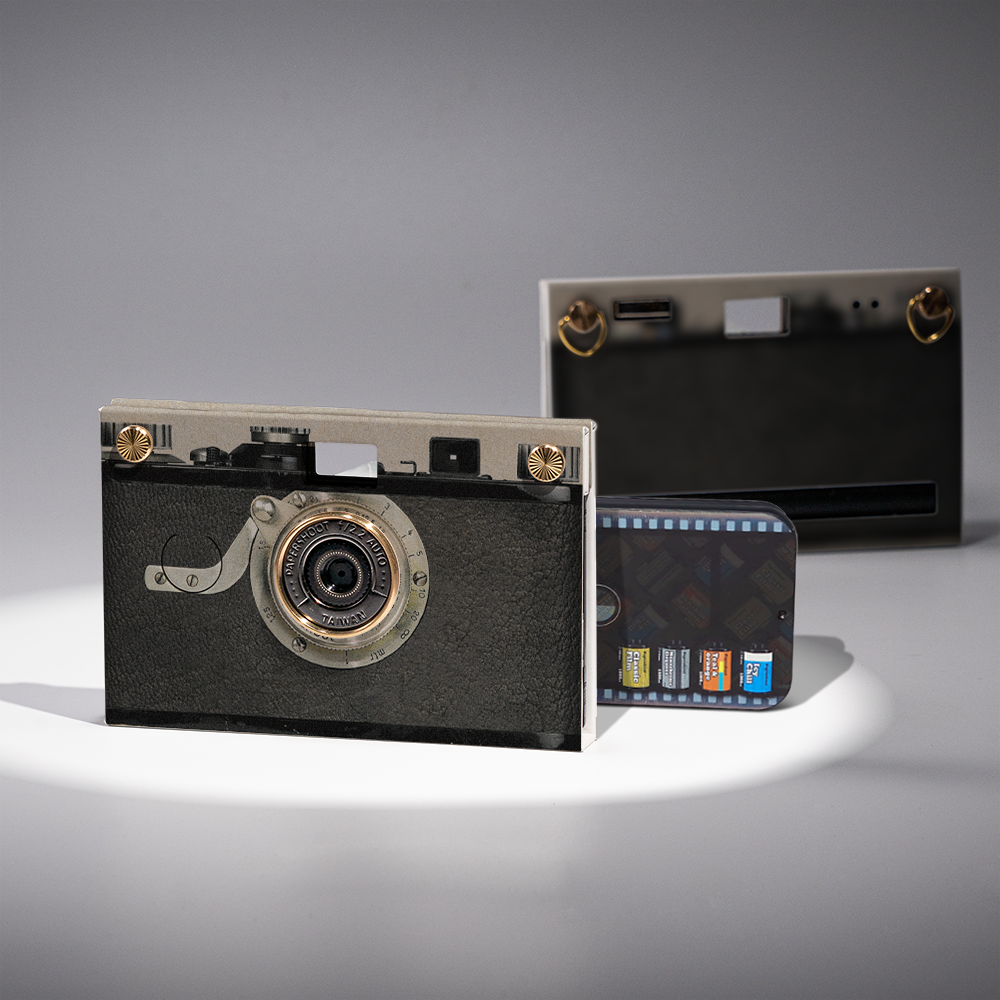
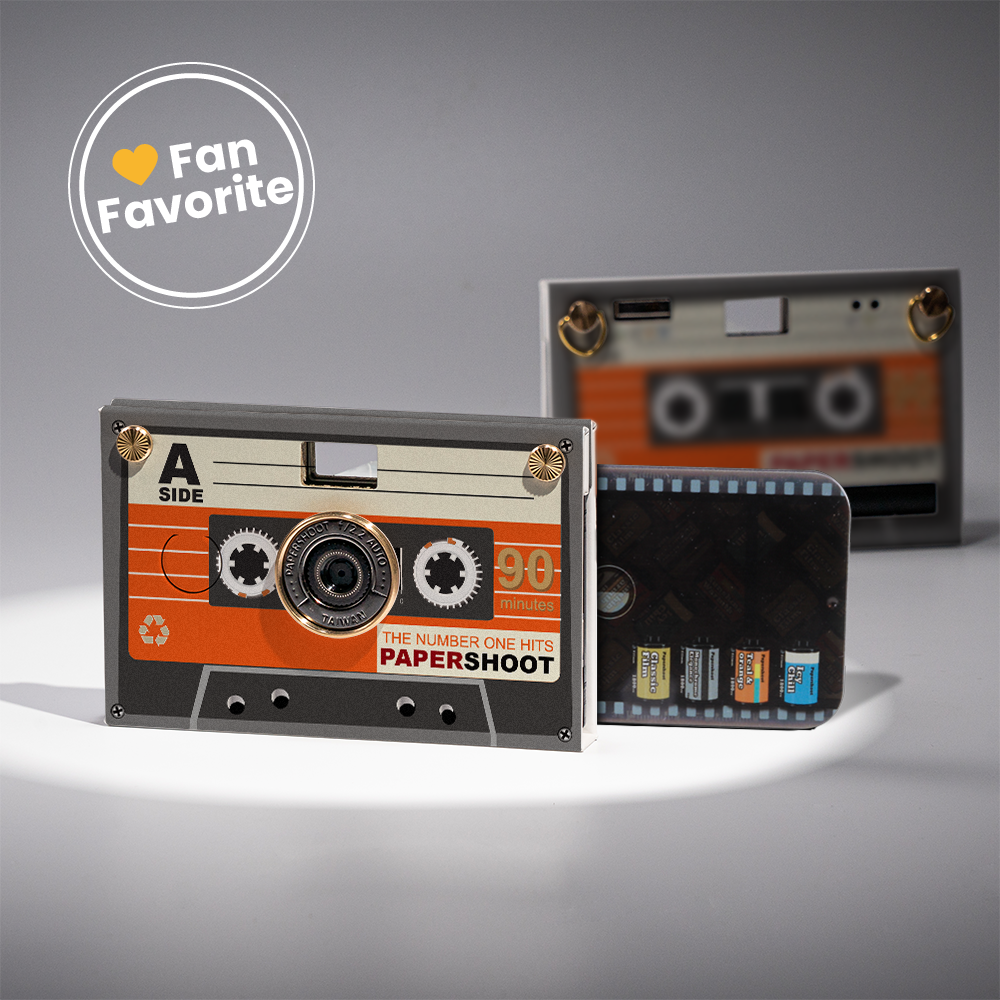
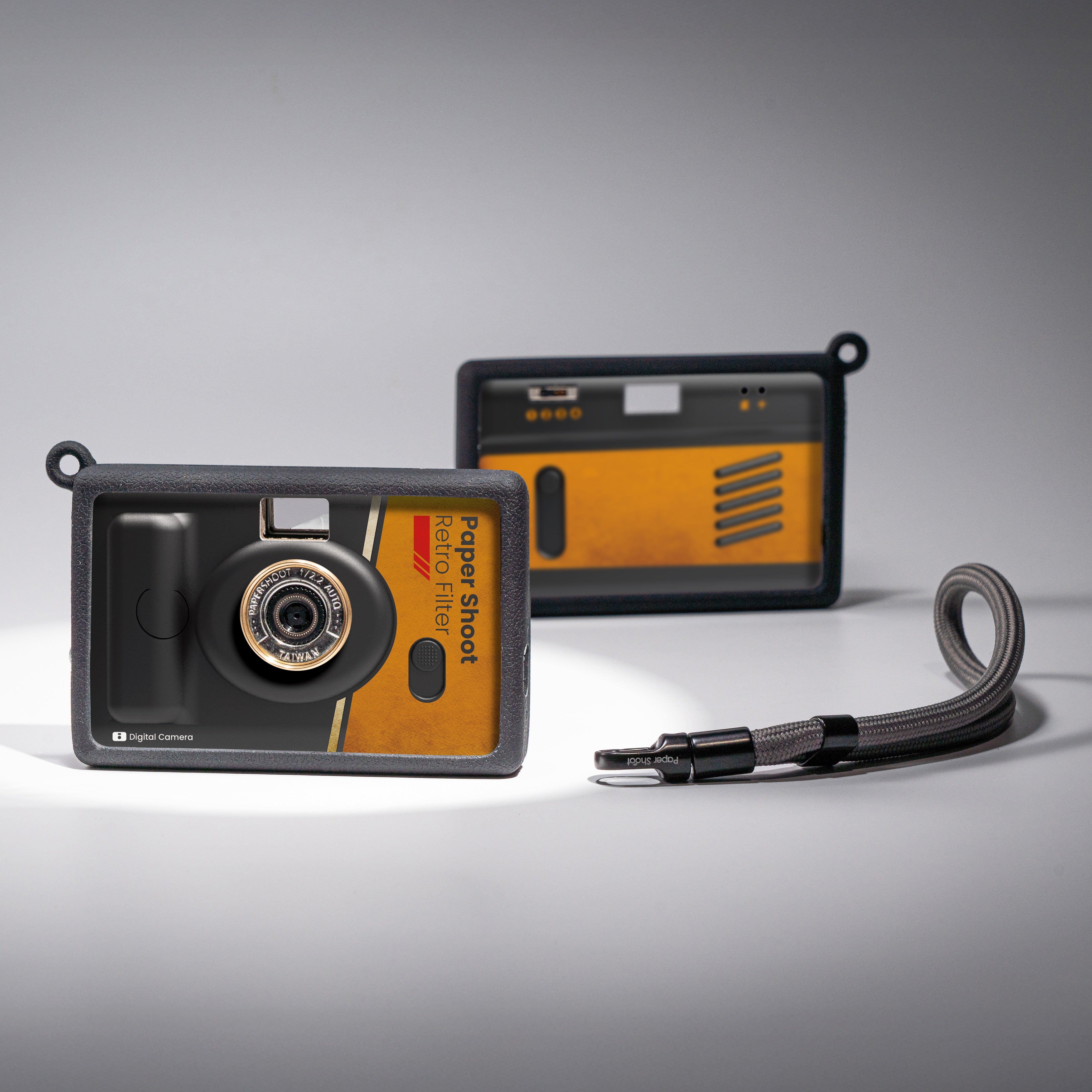
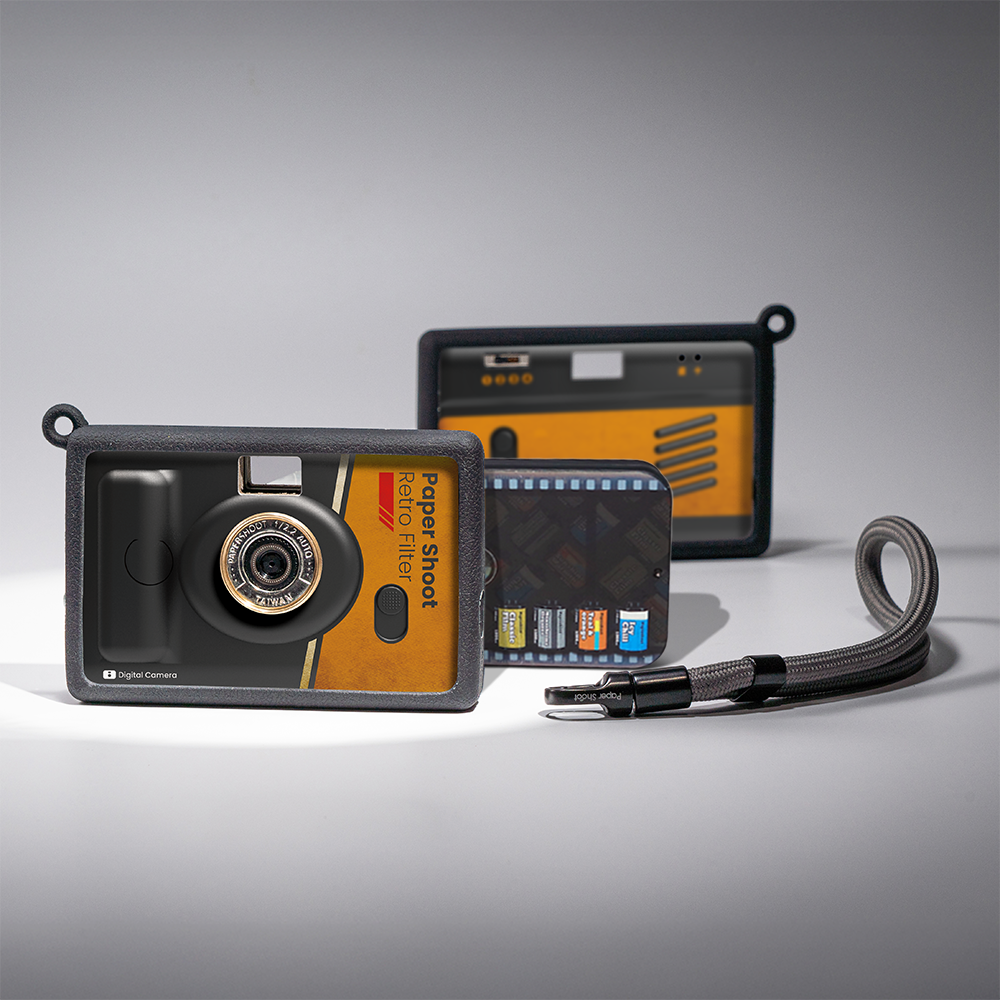
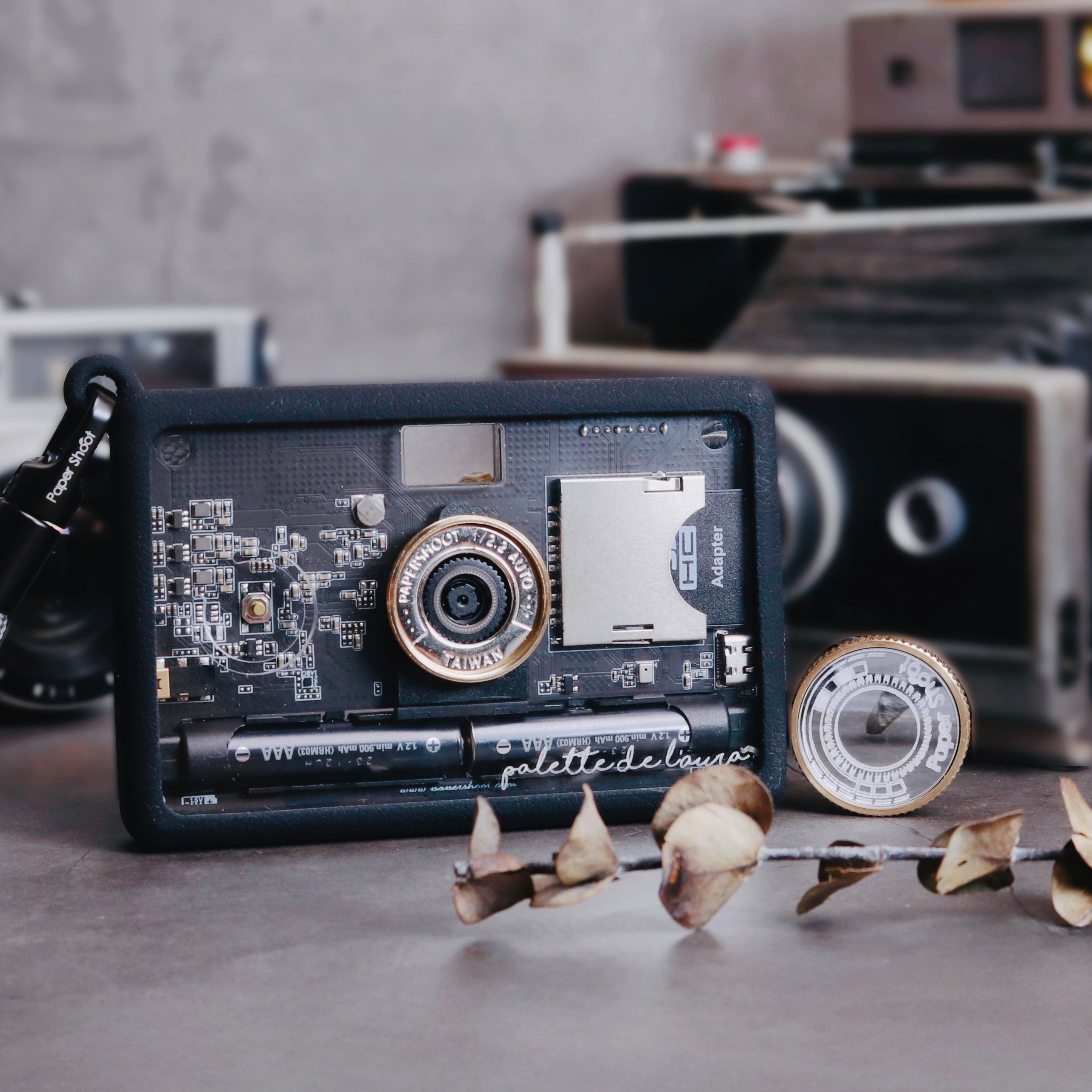
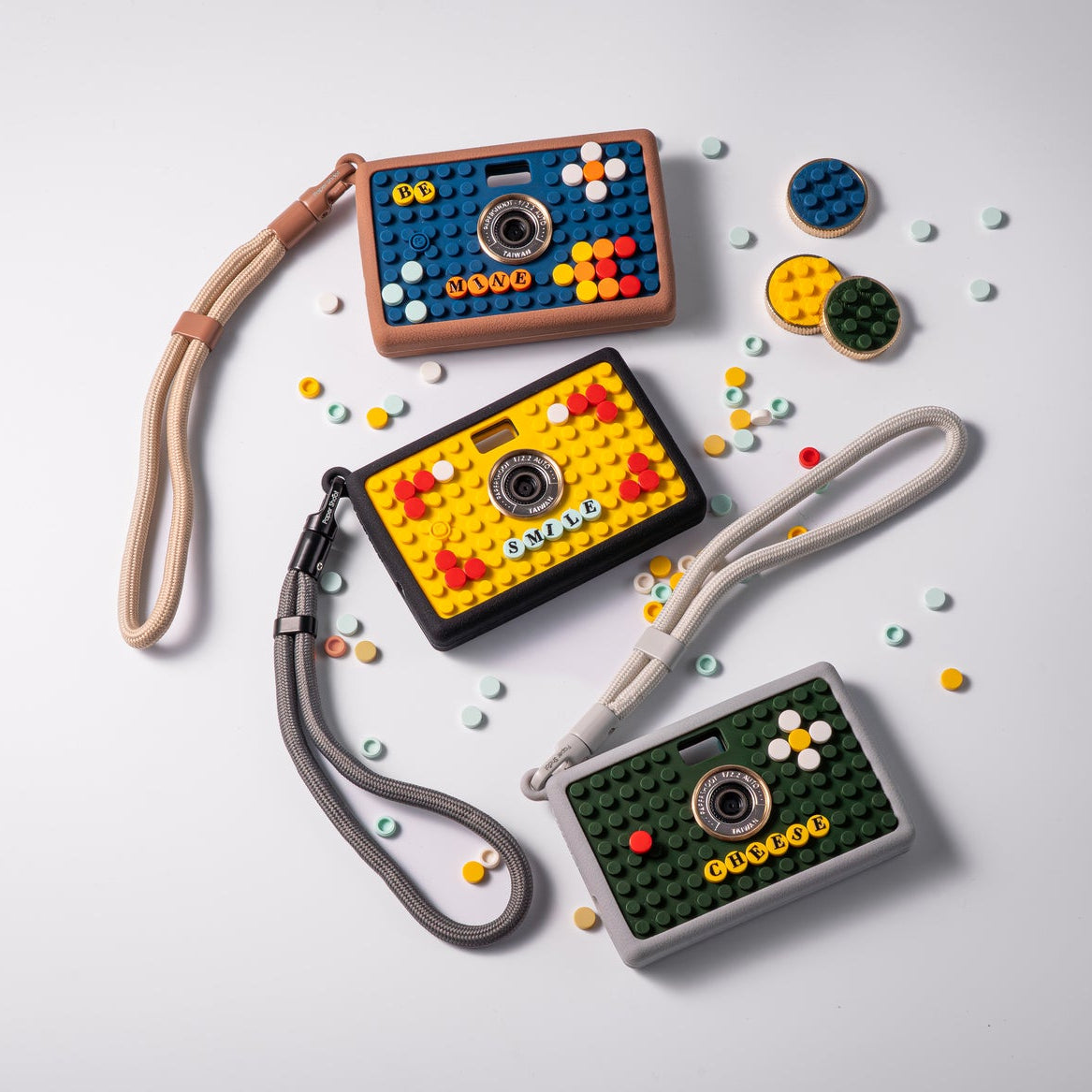
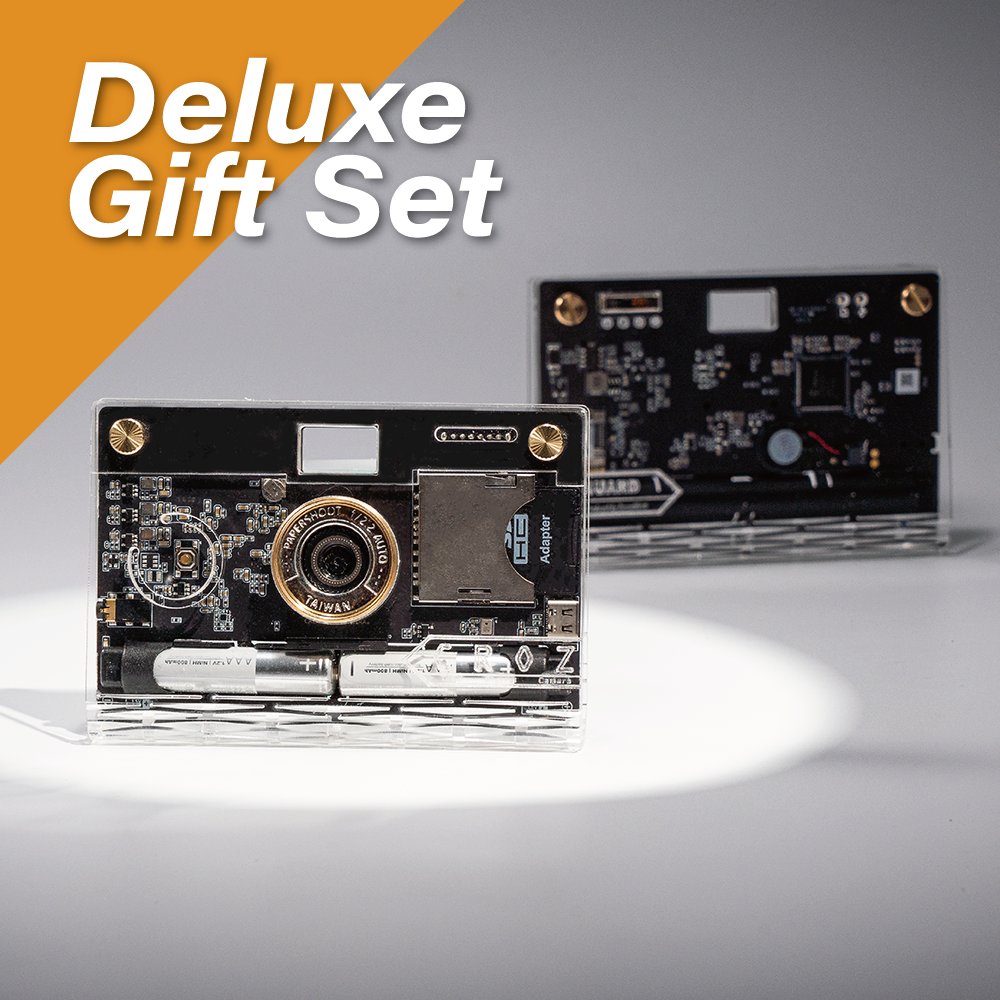
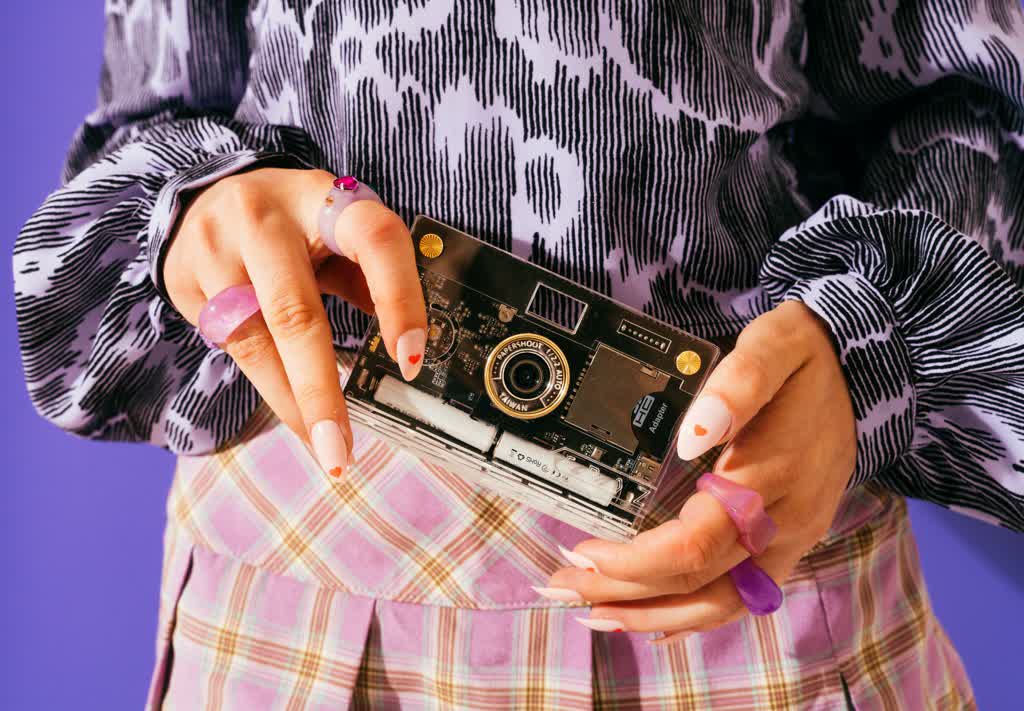
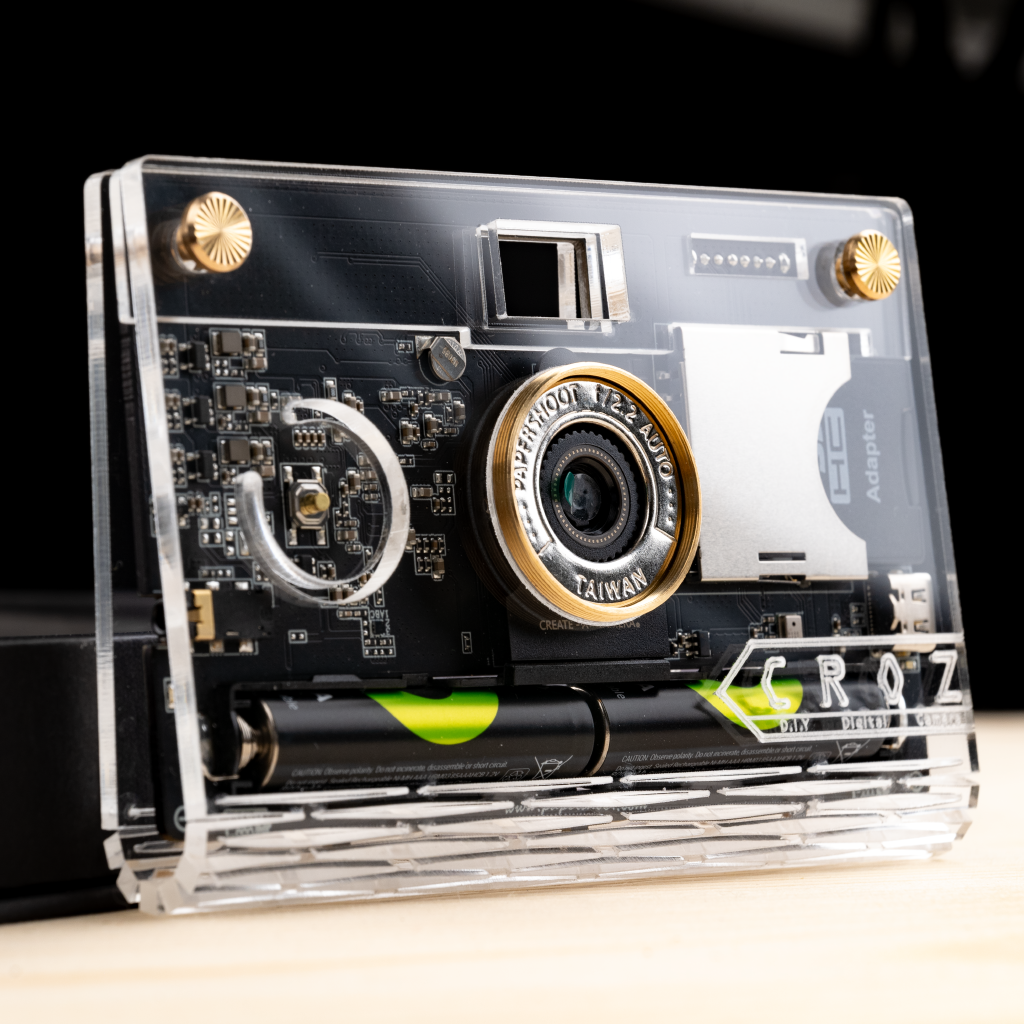
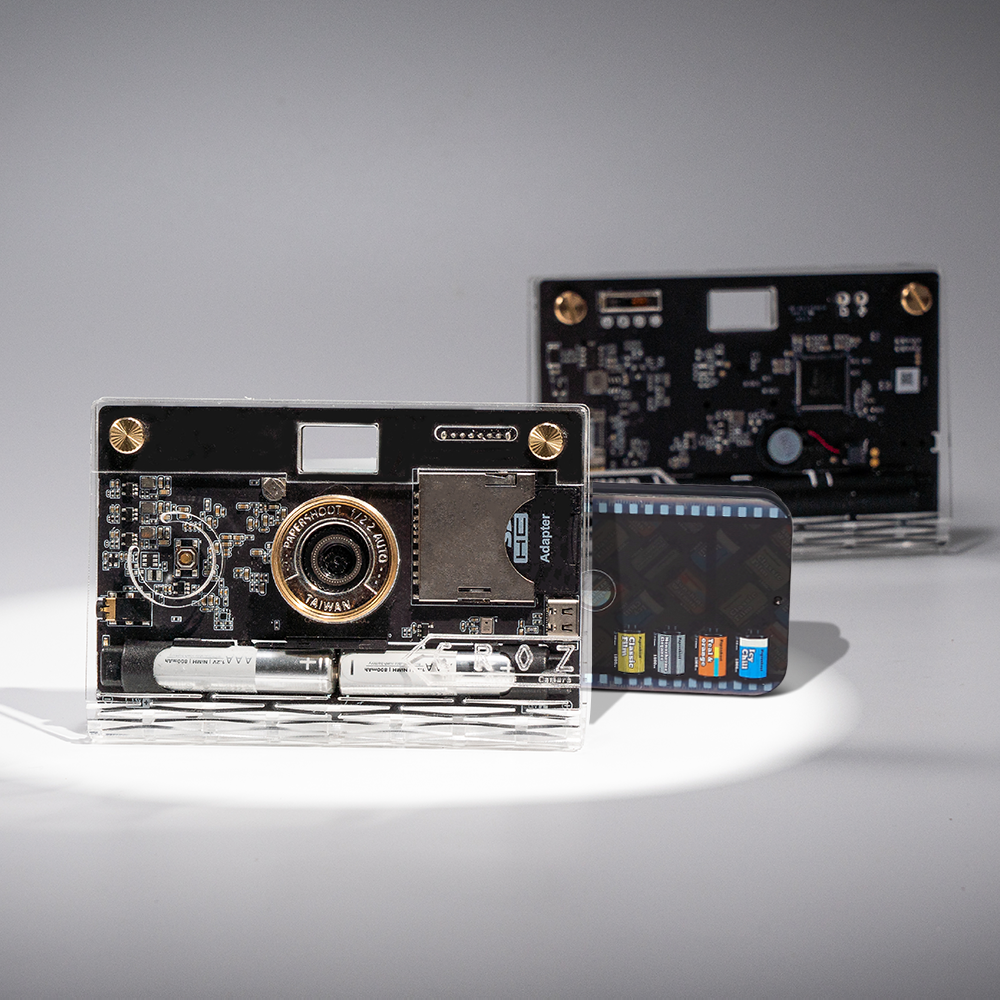
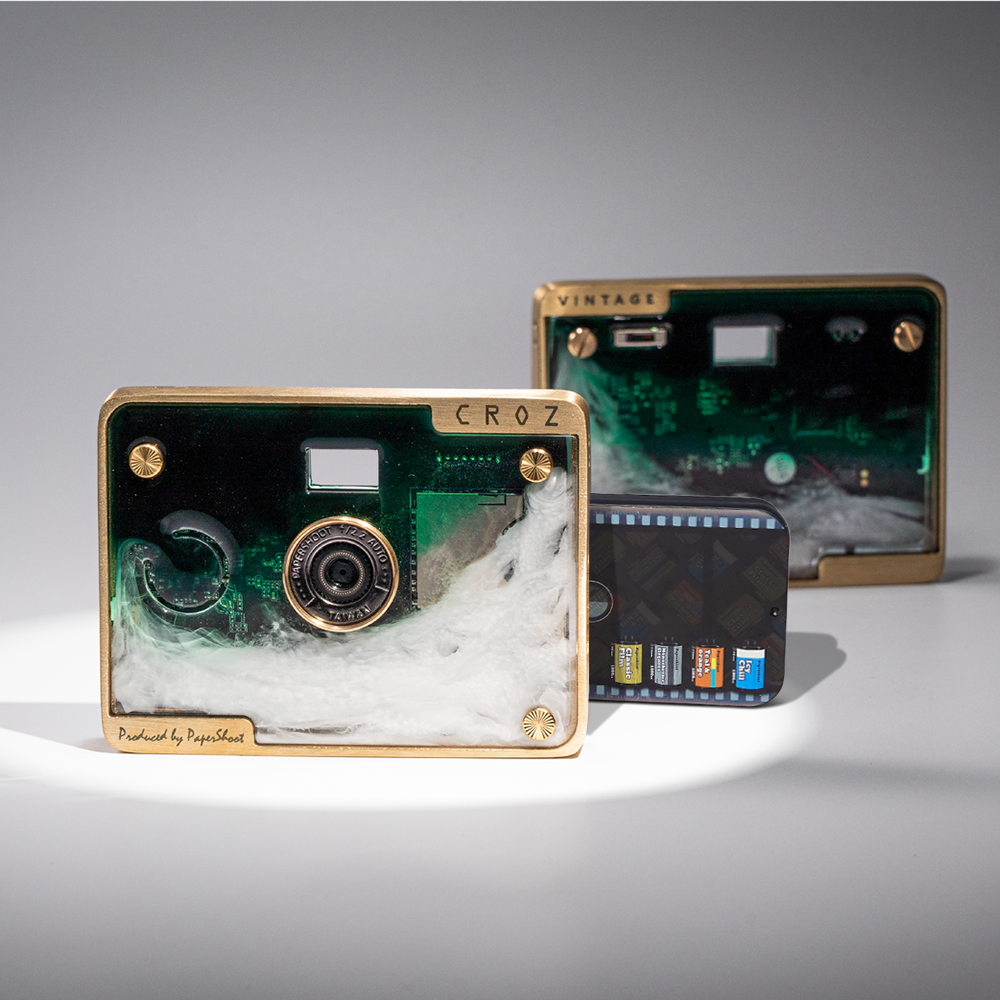
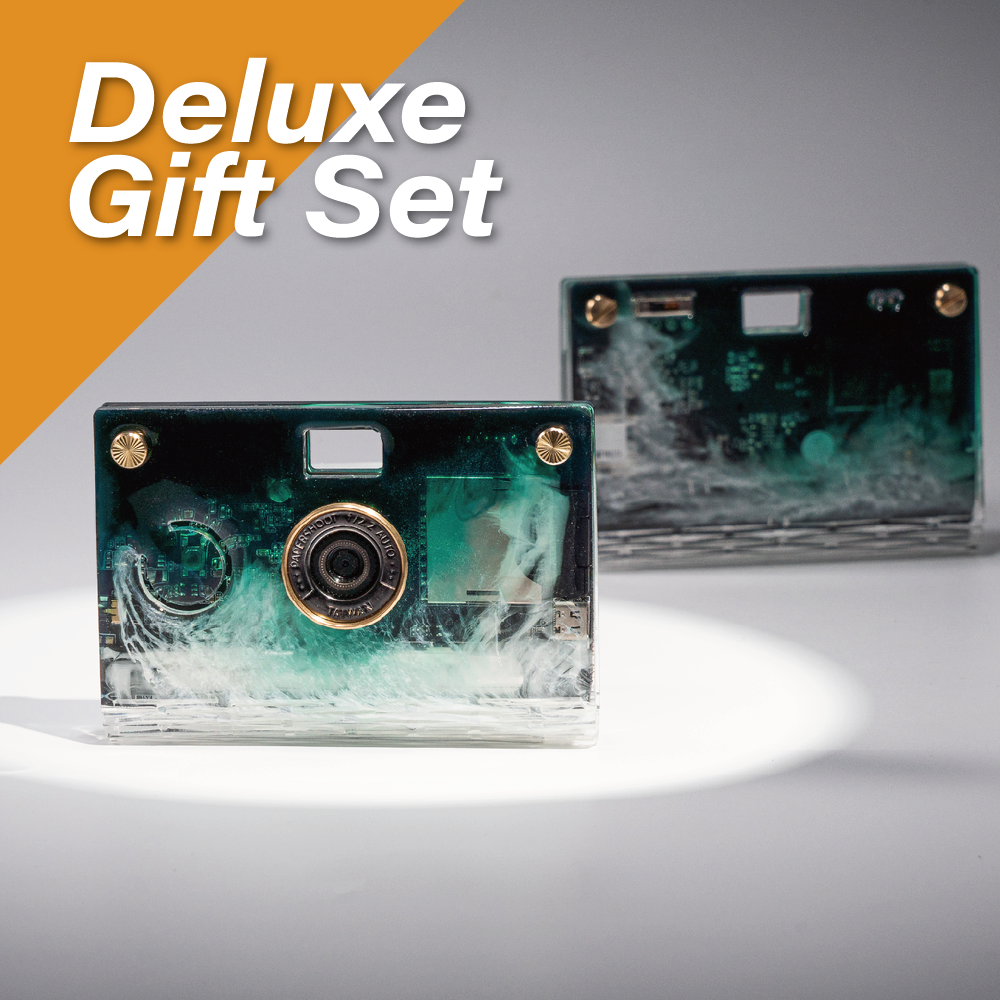
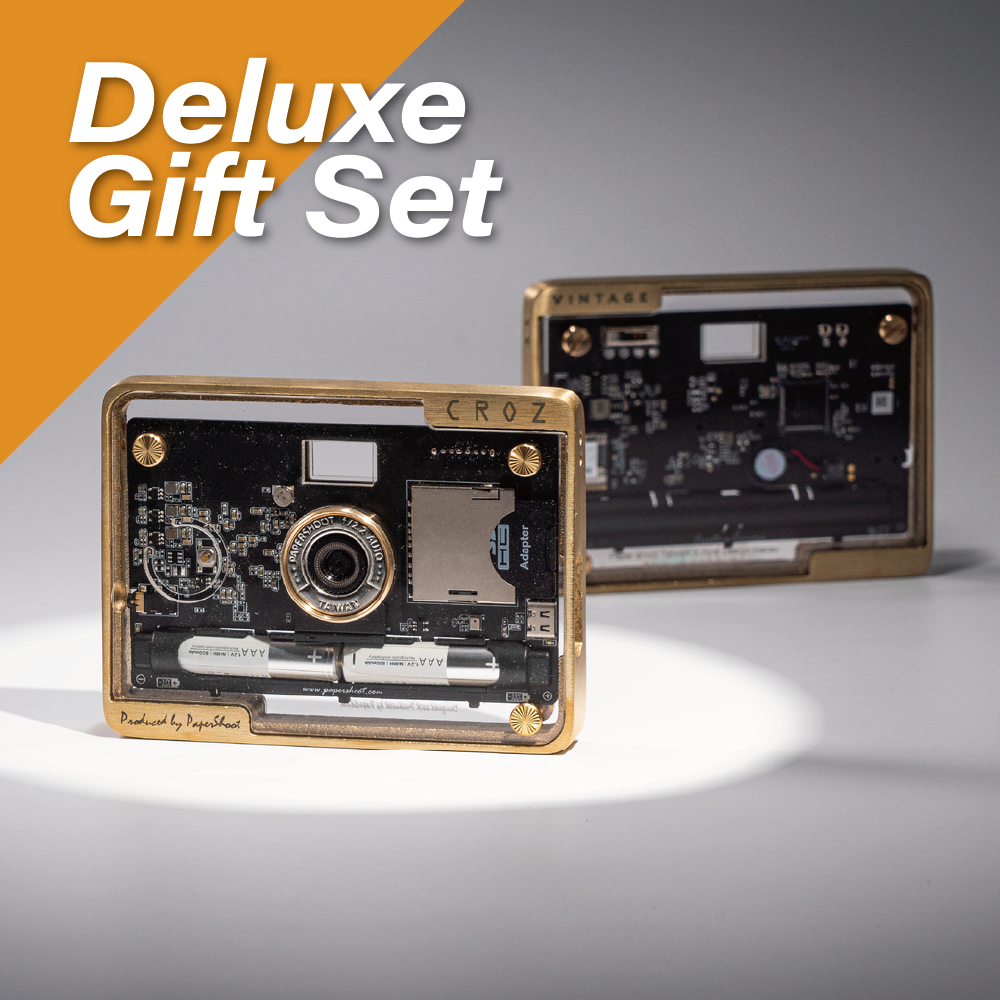
Same camera core inside — the difference is the design, material, and what’s included.
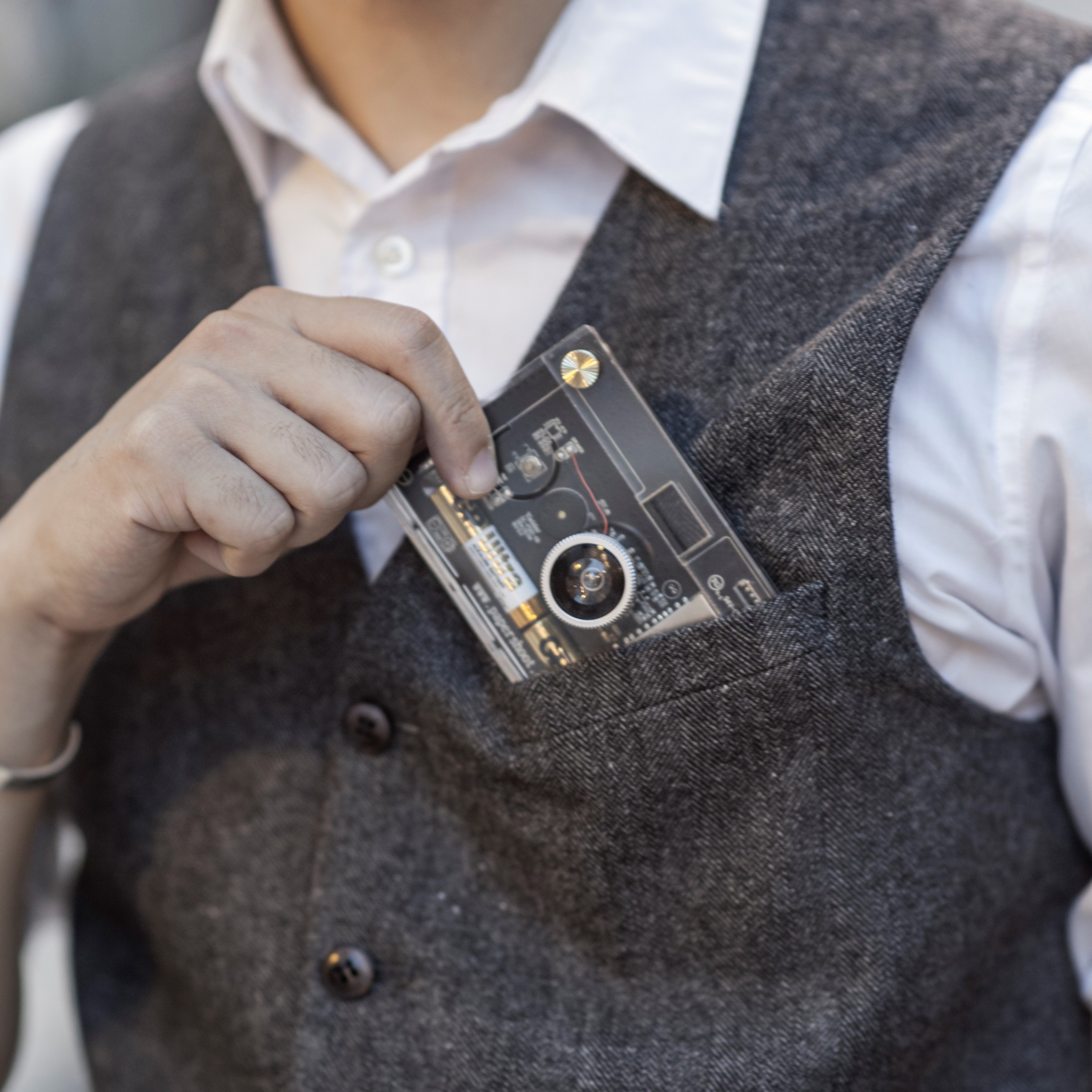
Simple to set up. Easy to carry. Designed to be used.
Featured Camera

Why start here
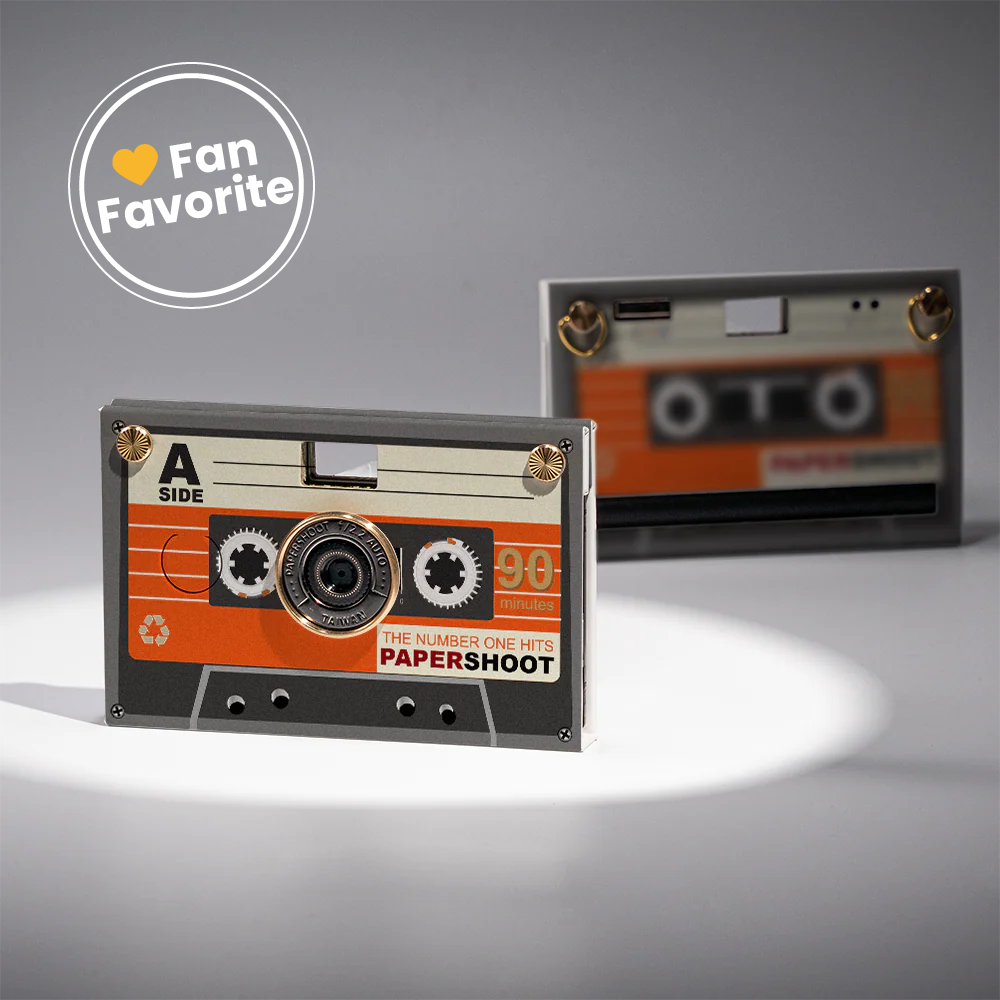
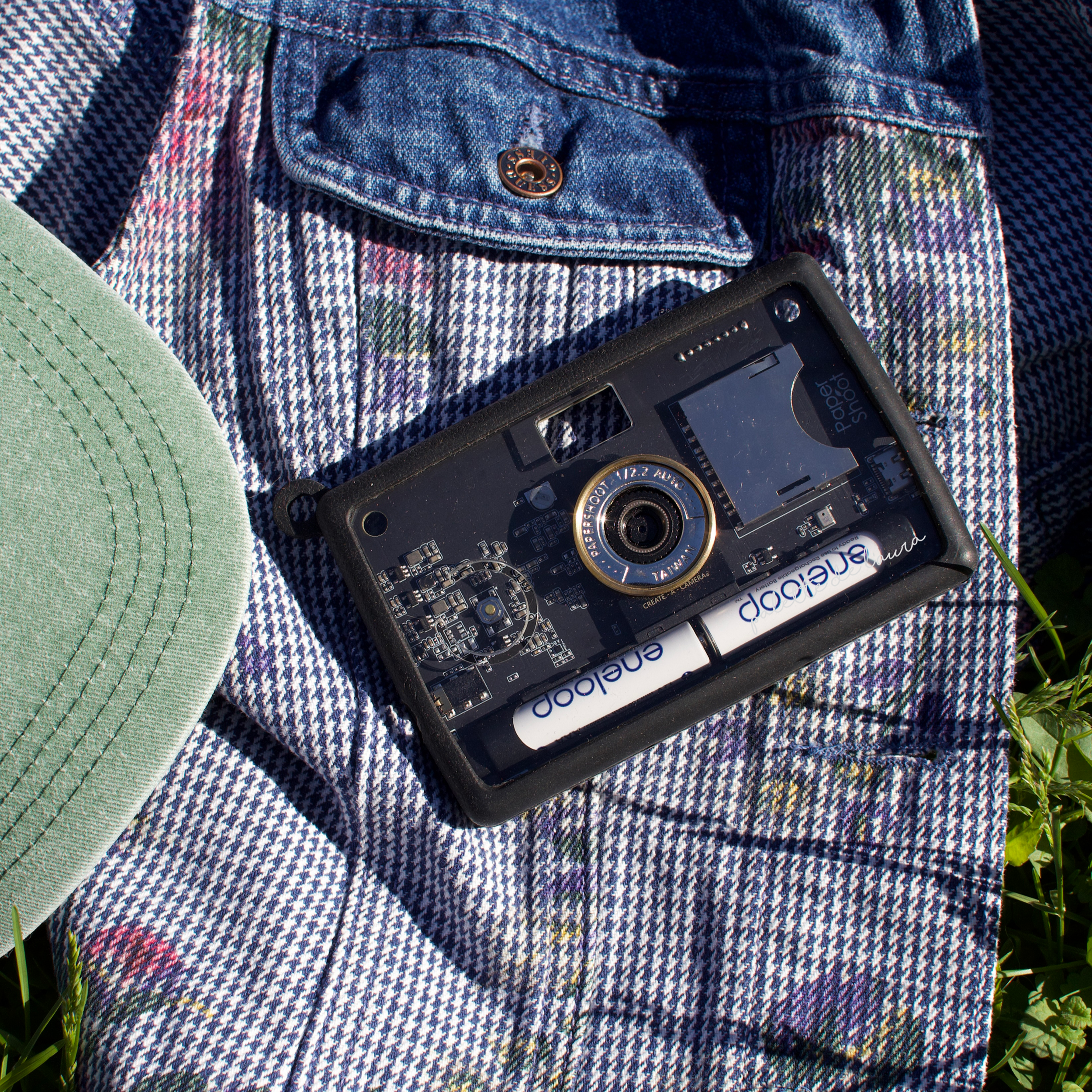
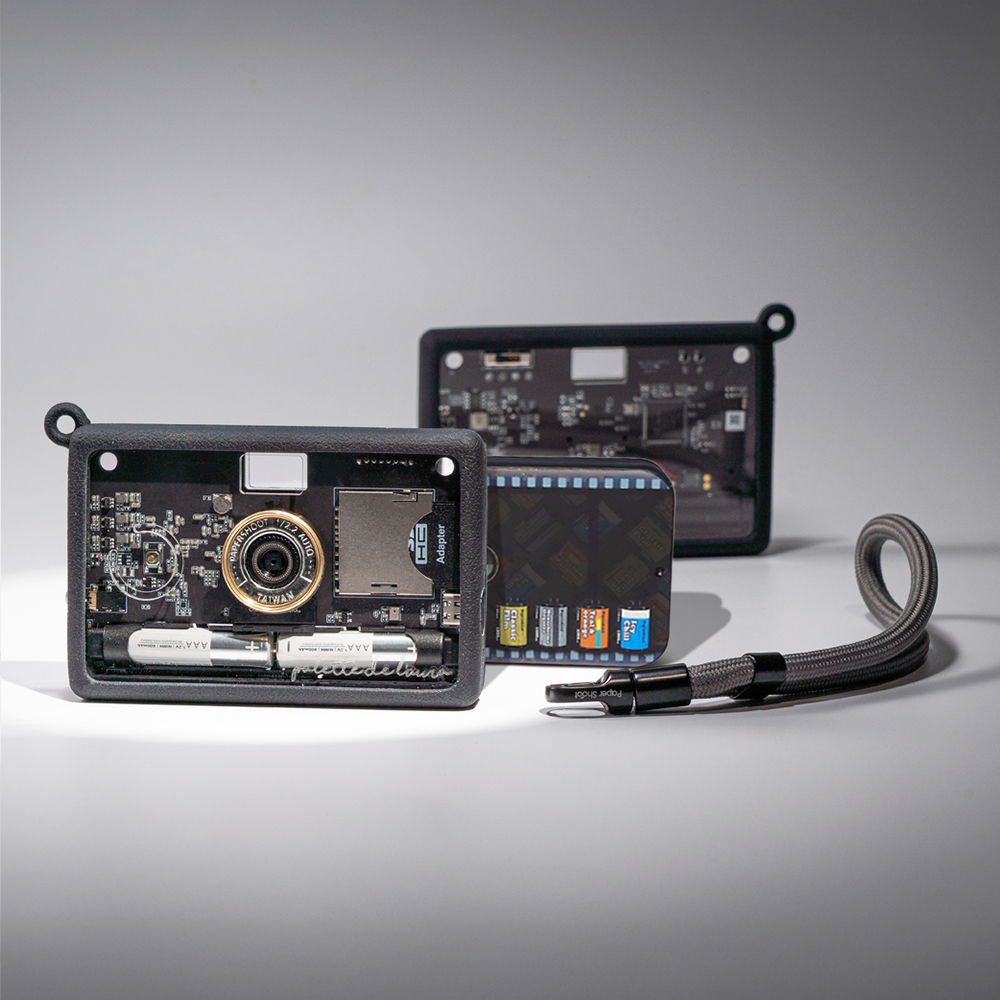
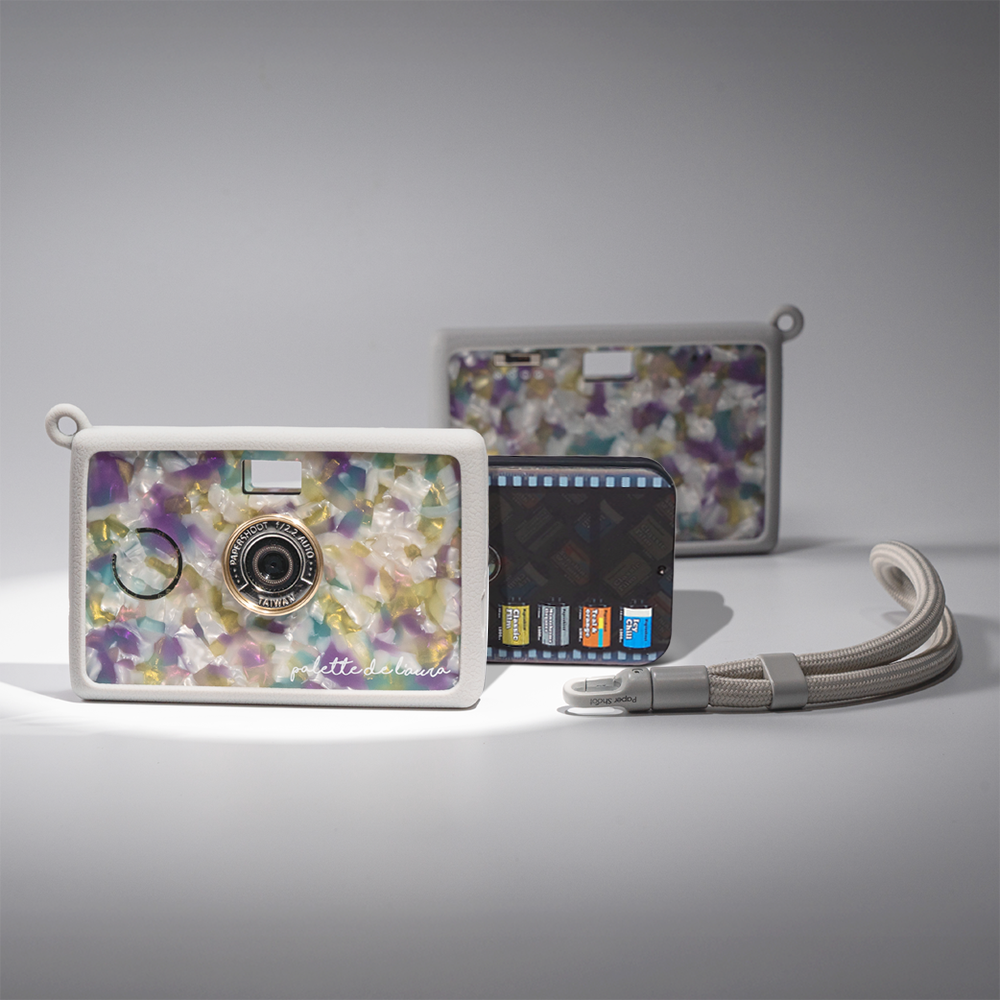
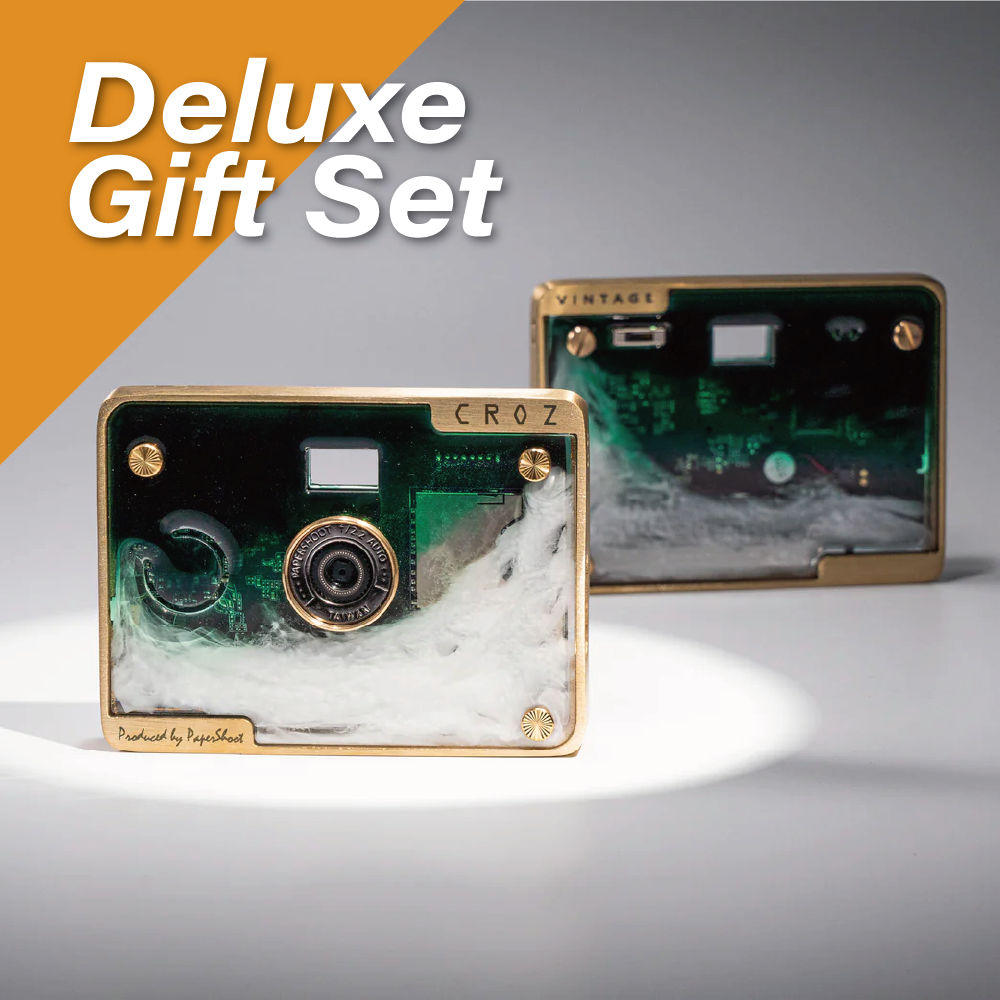
A curated lineup of Paper Shoot favorites - all built on the same camera core, with different styles, materials, and sets to choose from.
Shot on Paper Shoot
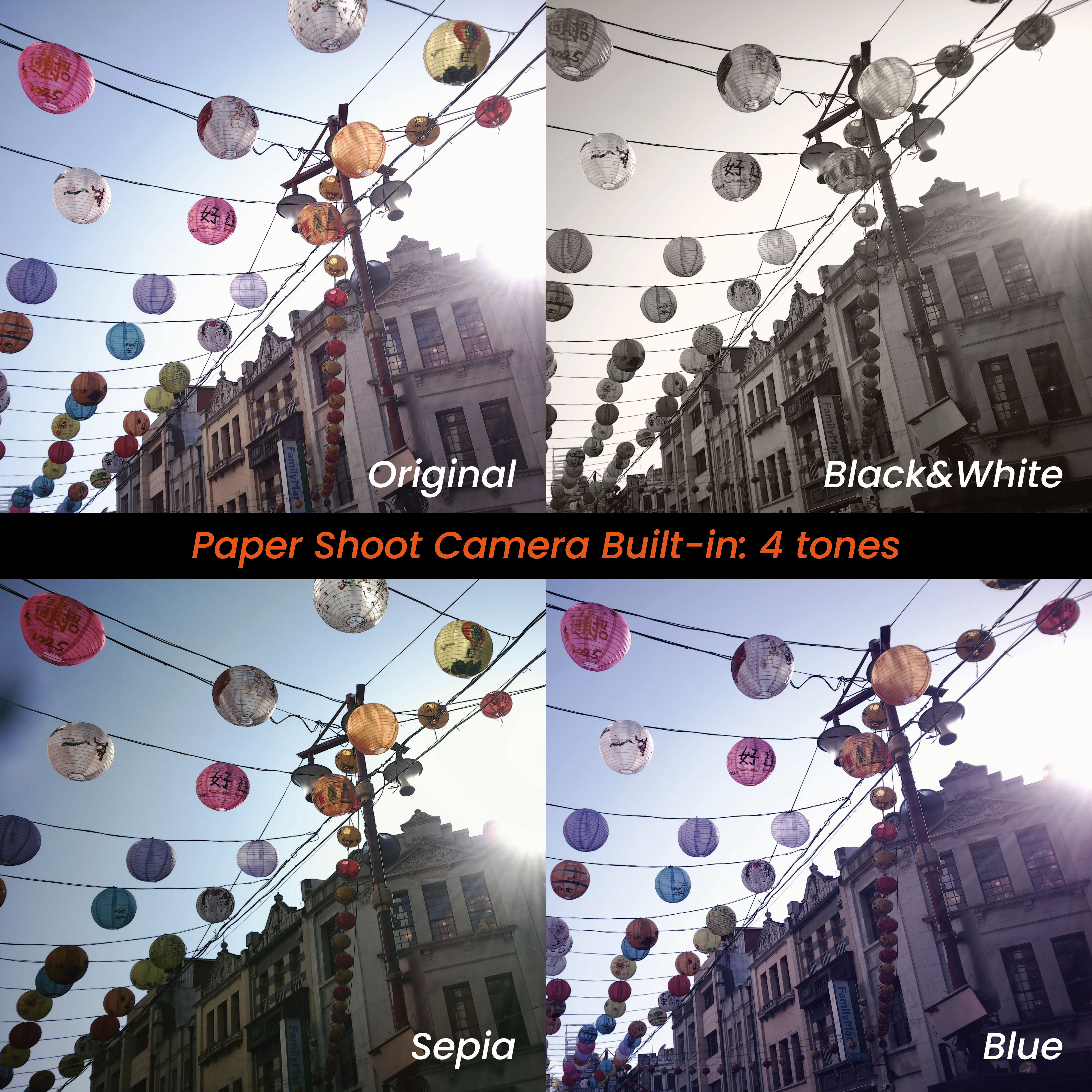
4 built-in filters, video & time-lapse.


One scene. Many moods.
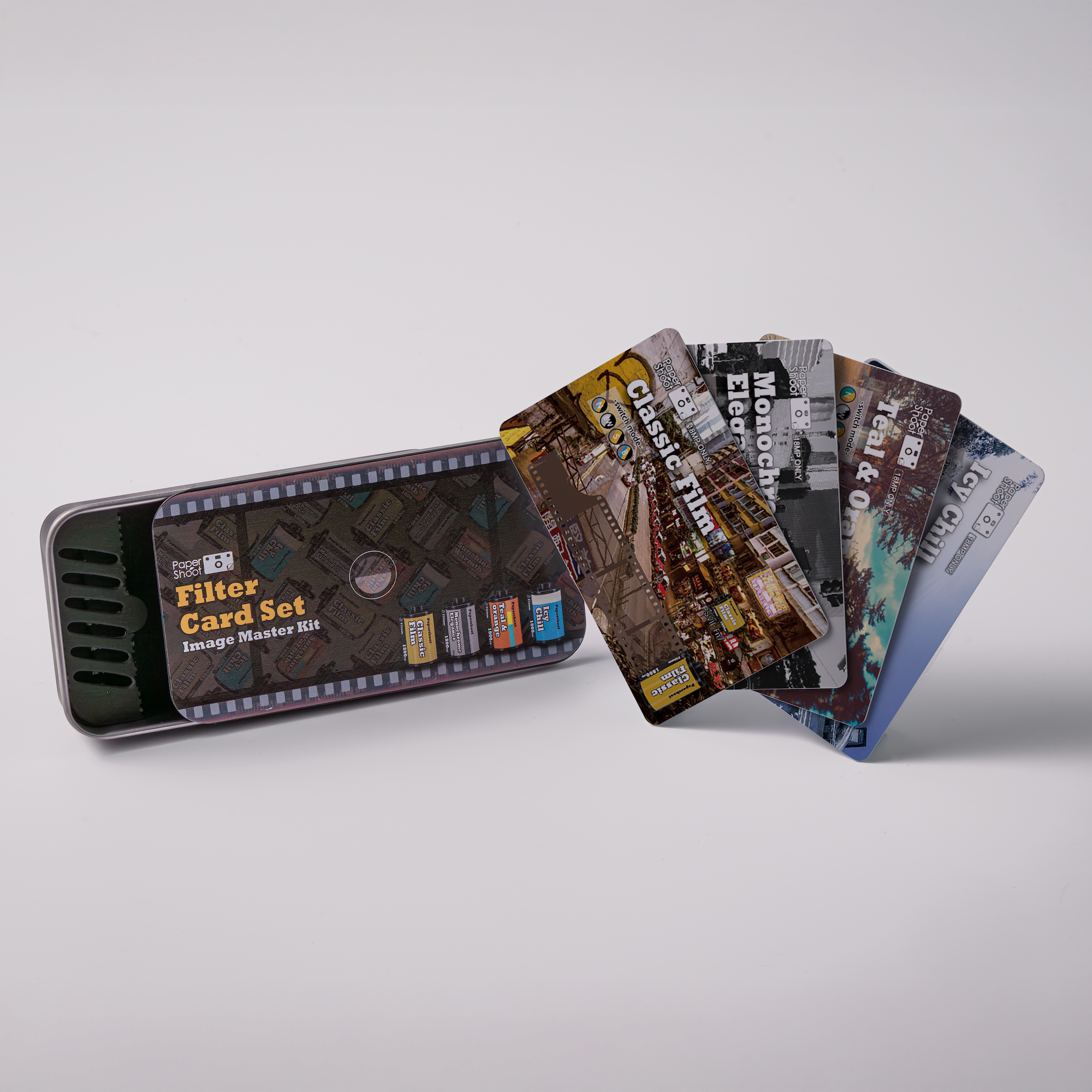
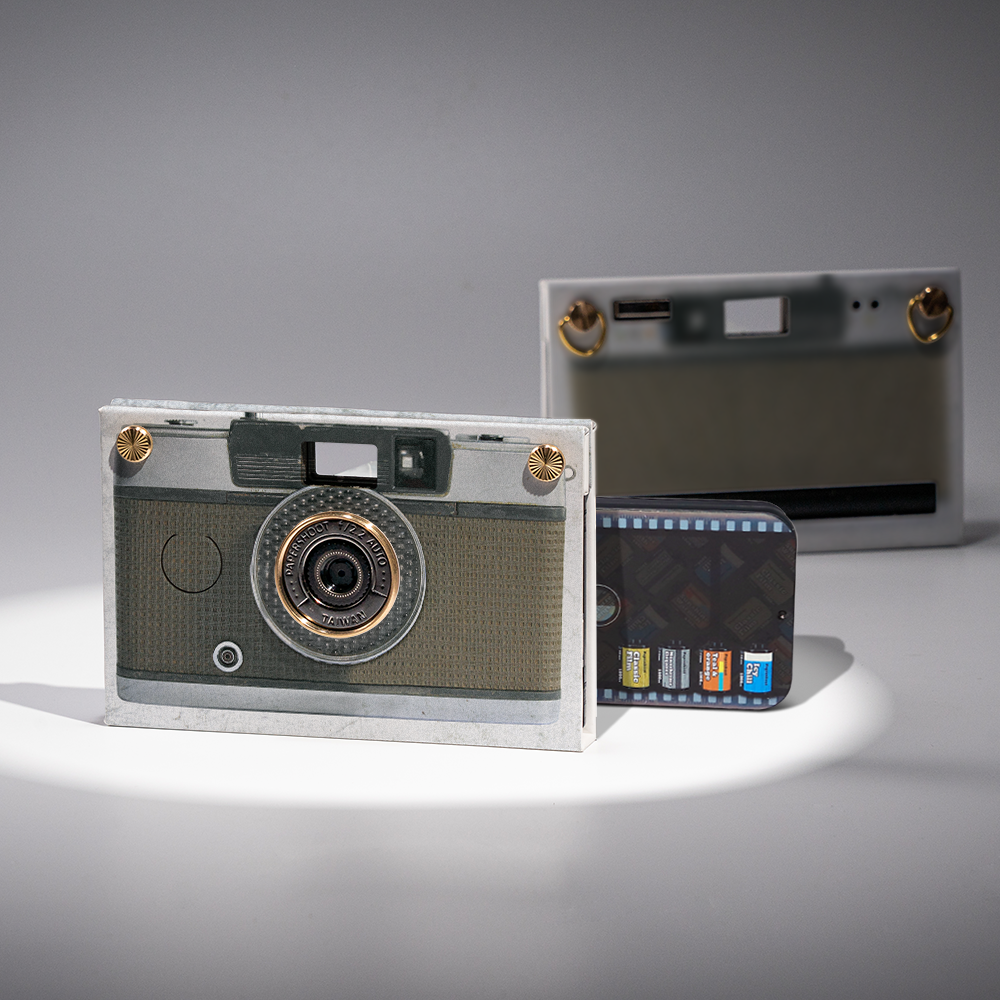
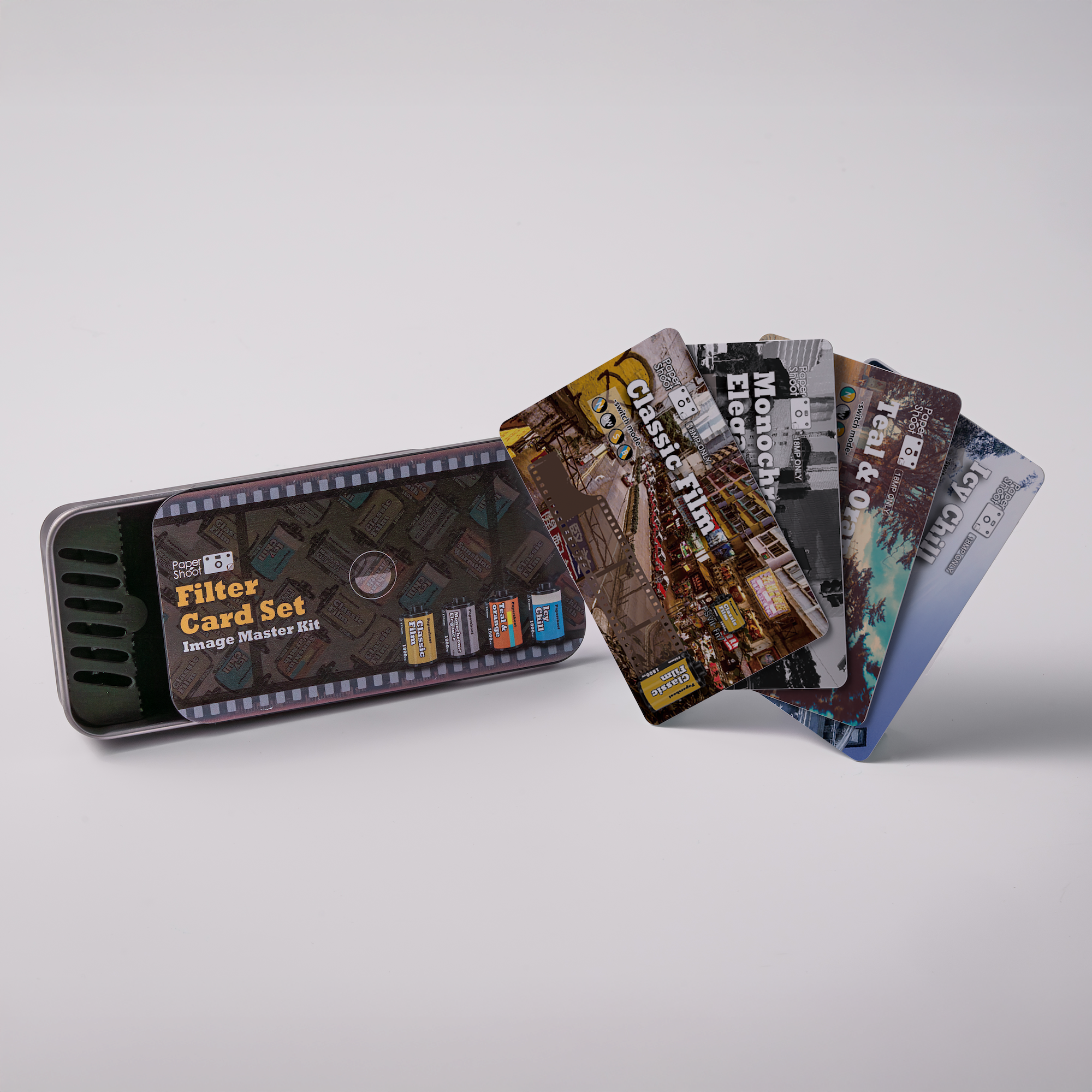
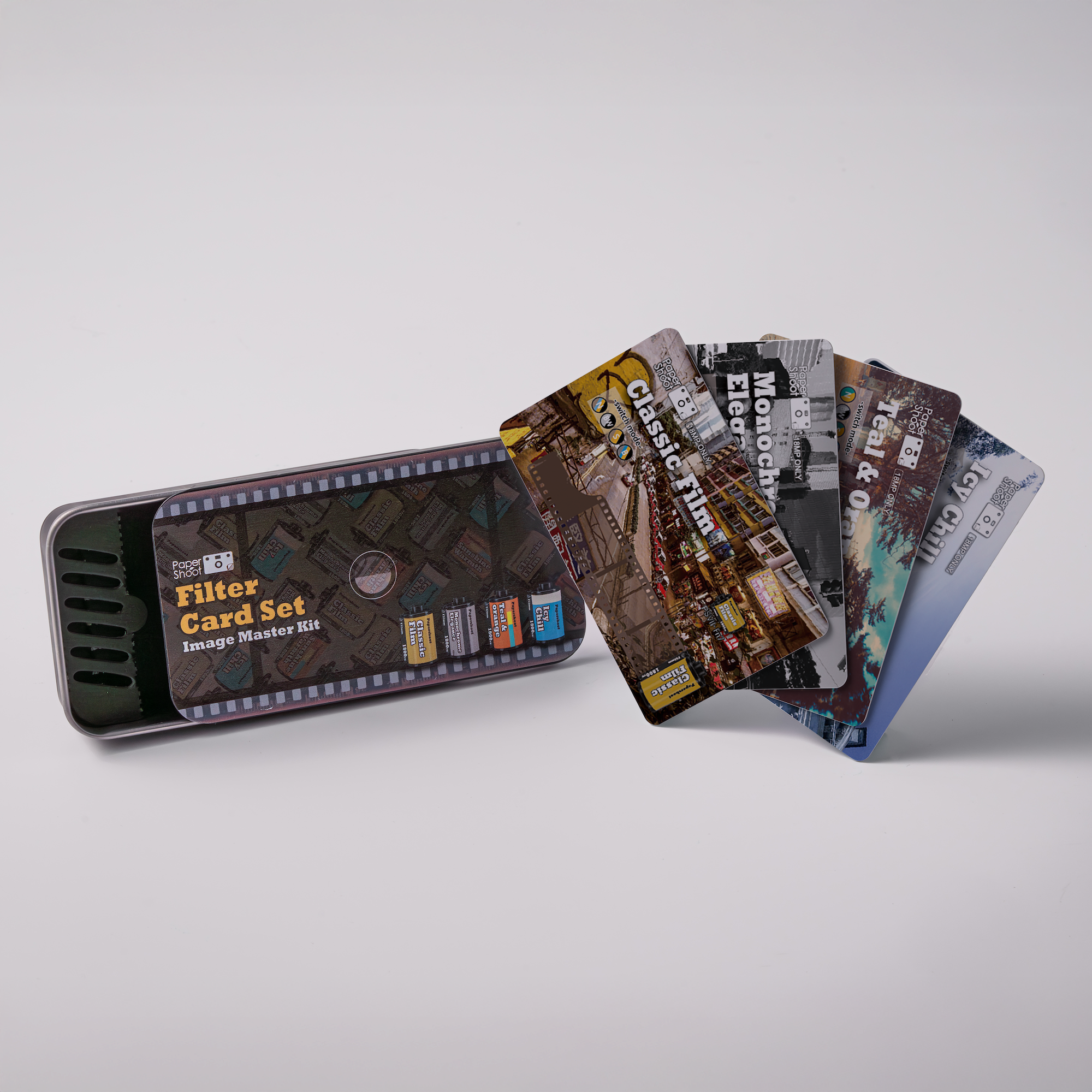
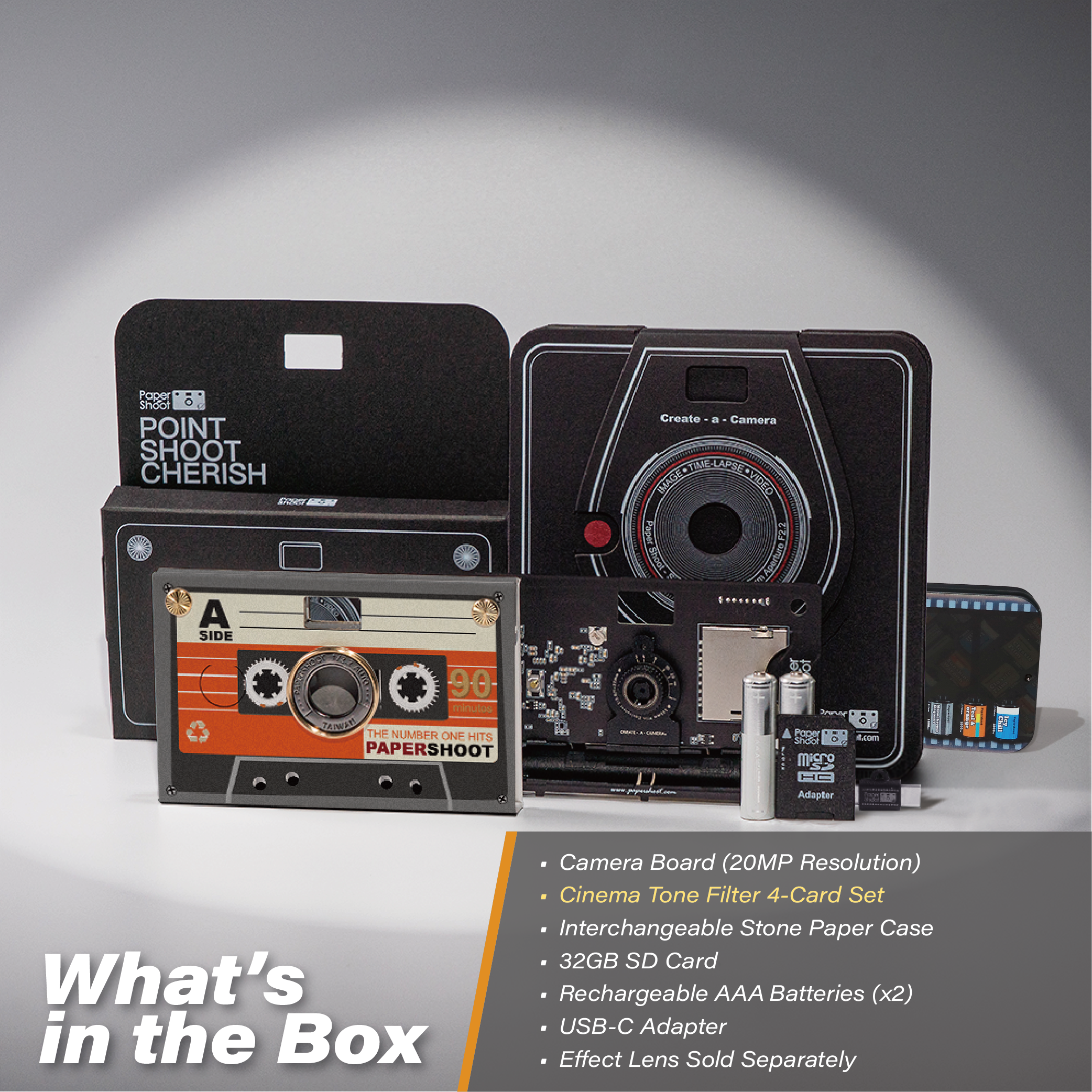
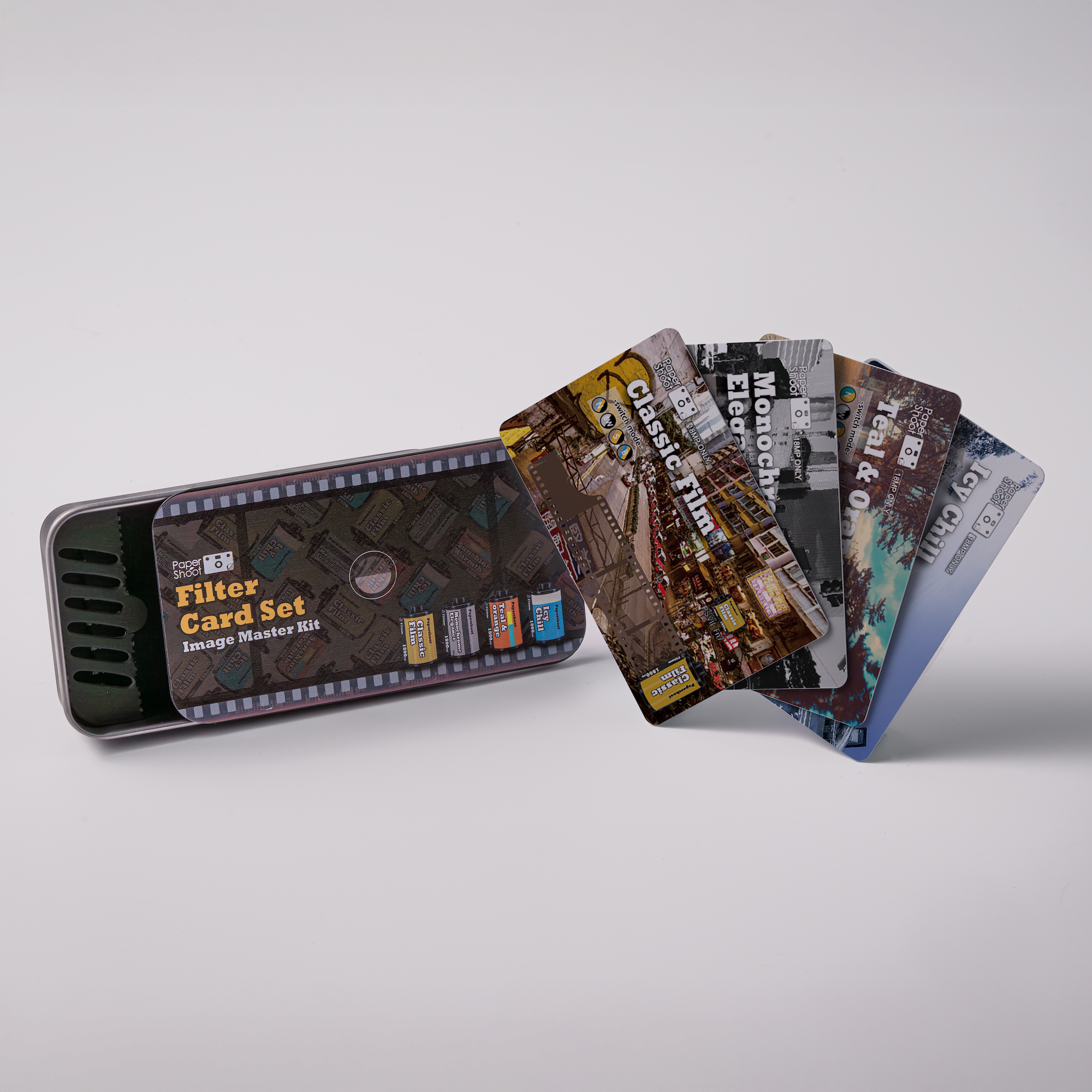
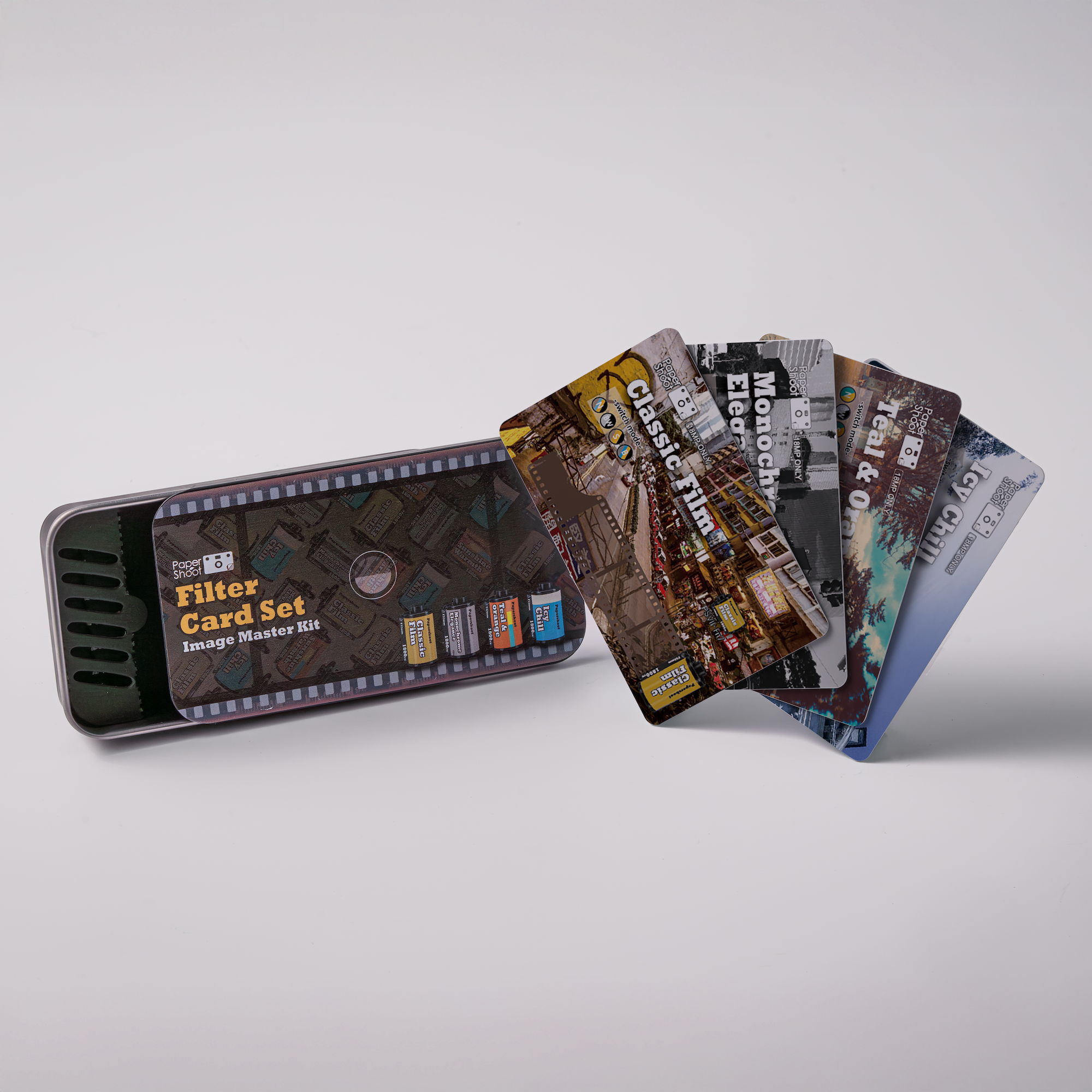
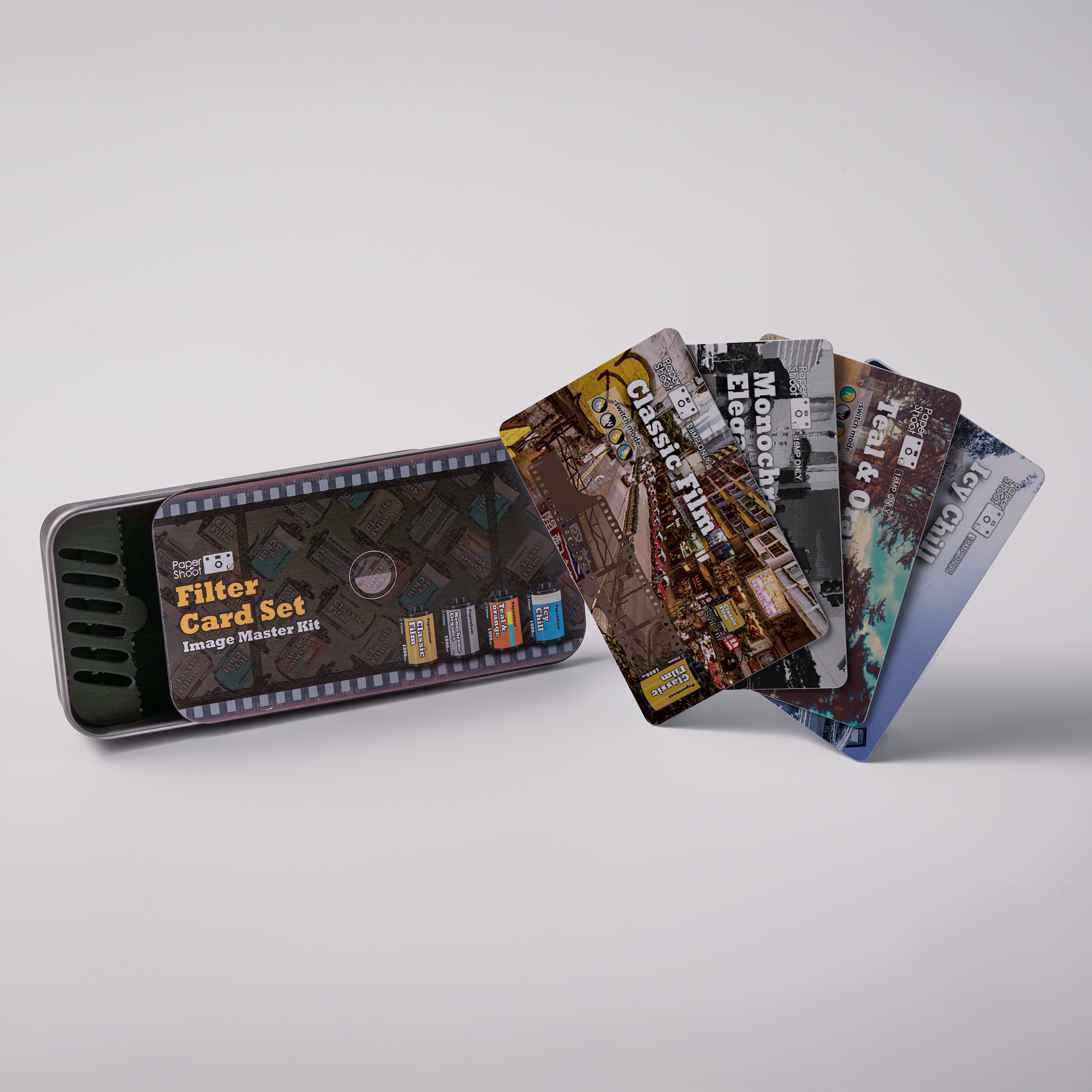
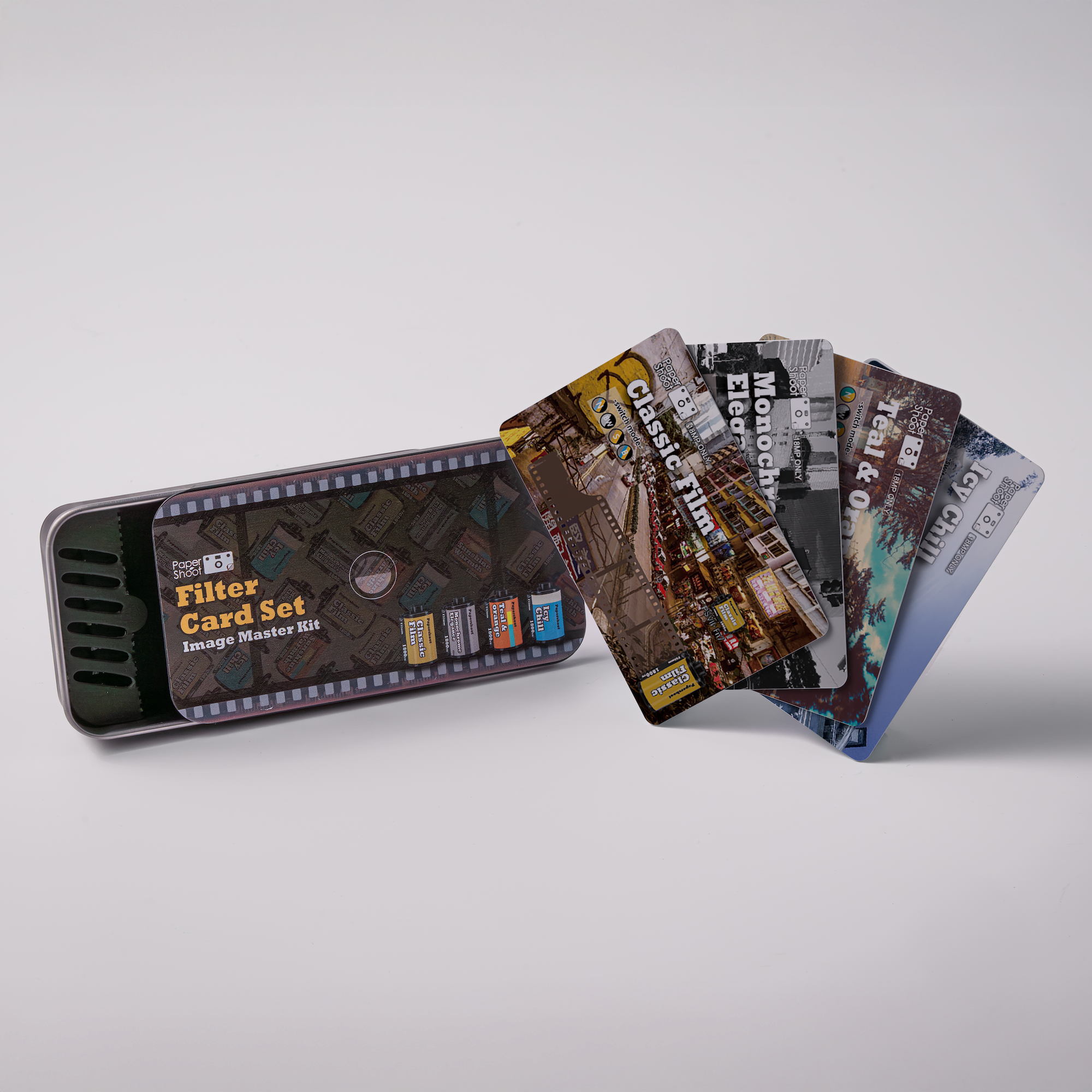
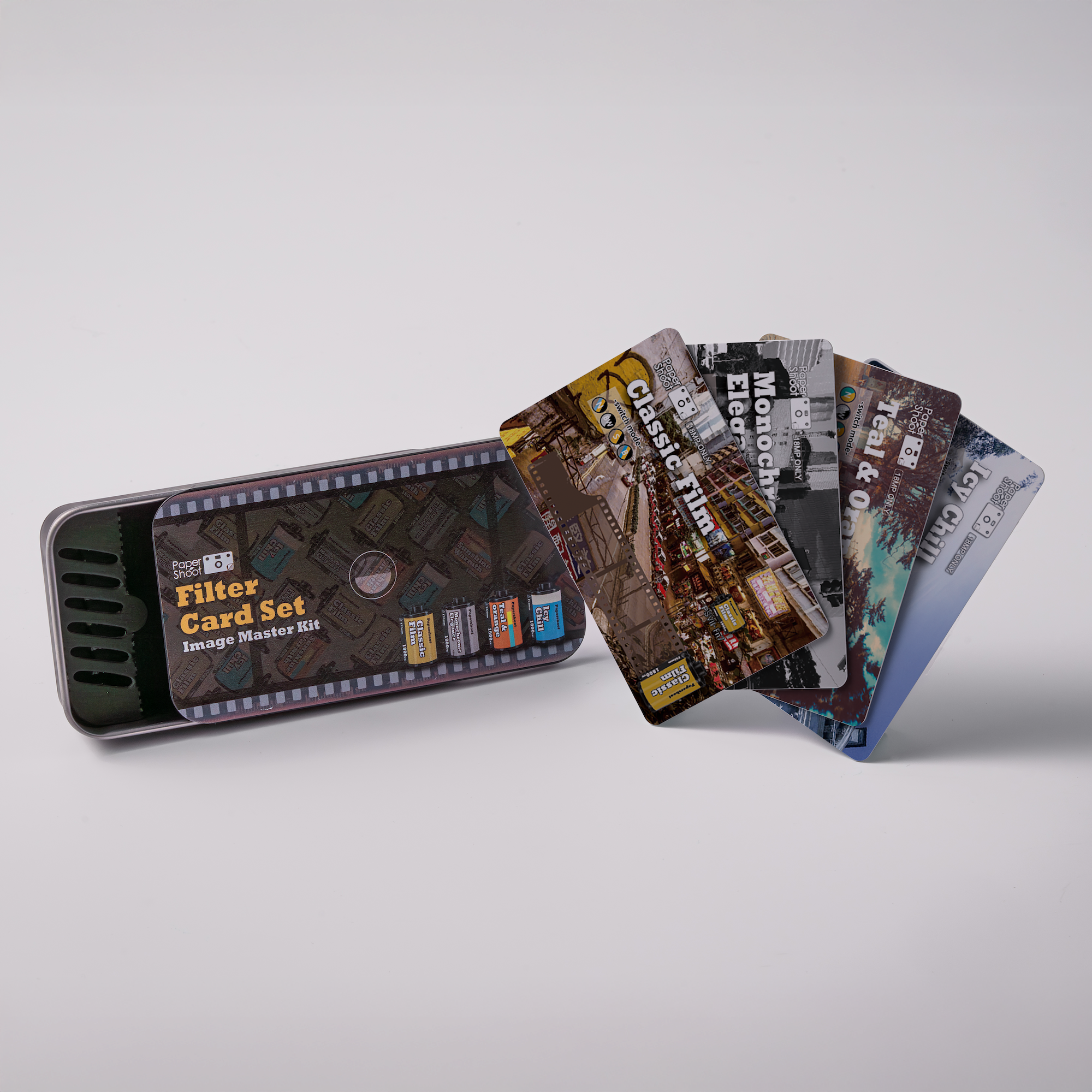
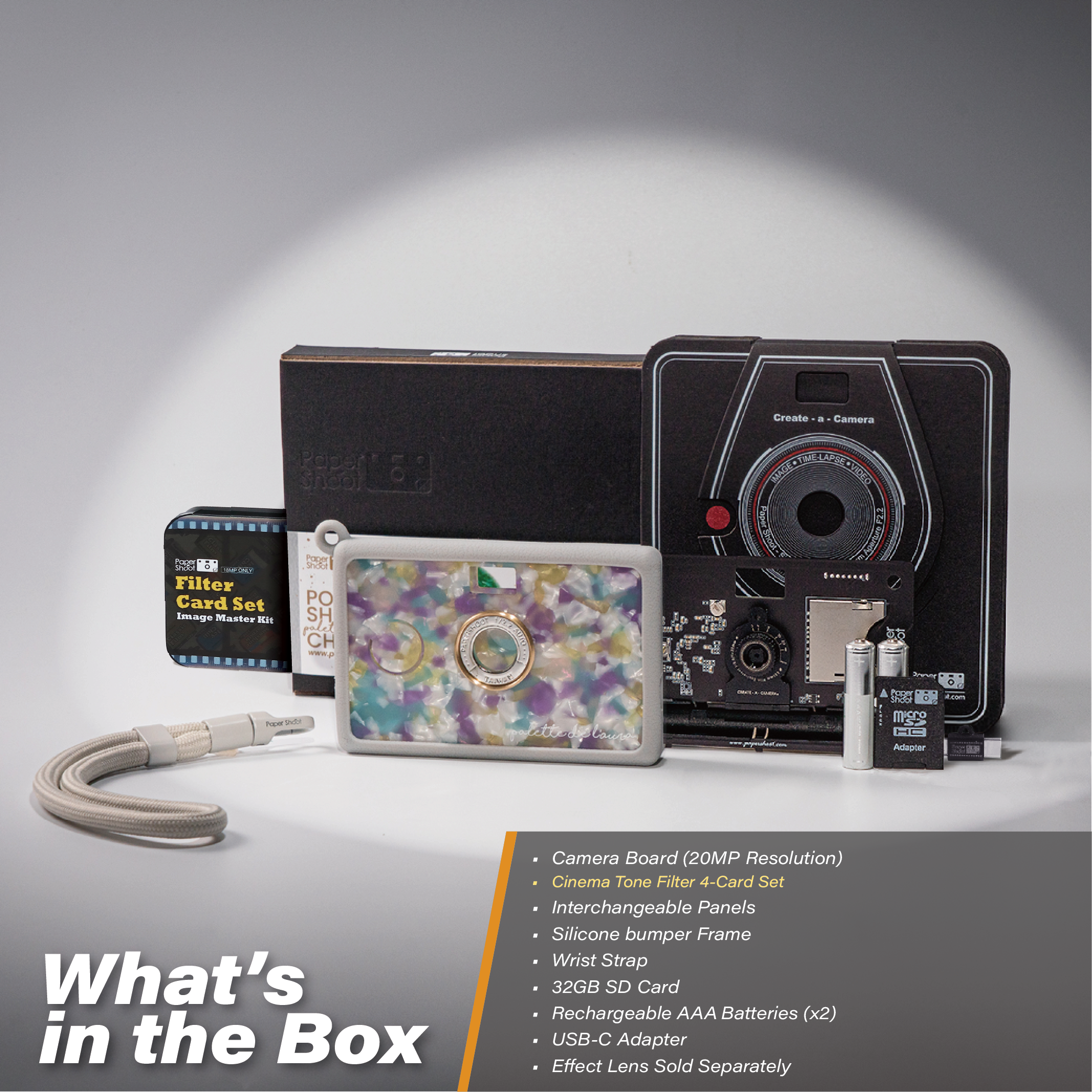
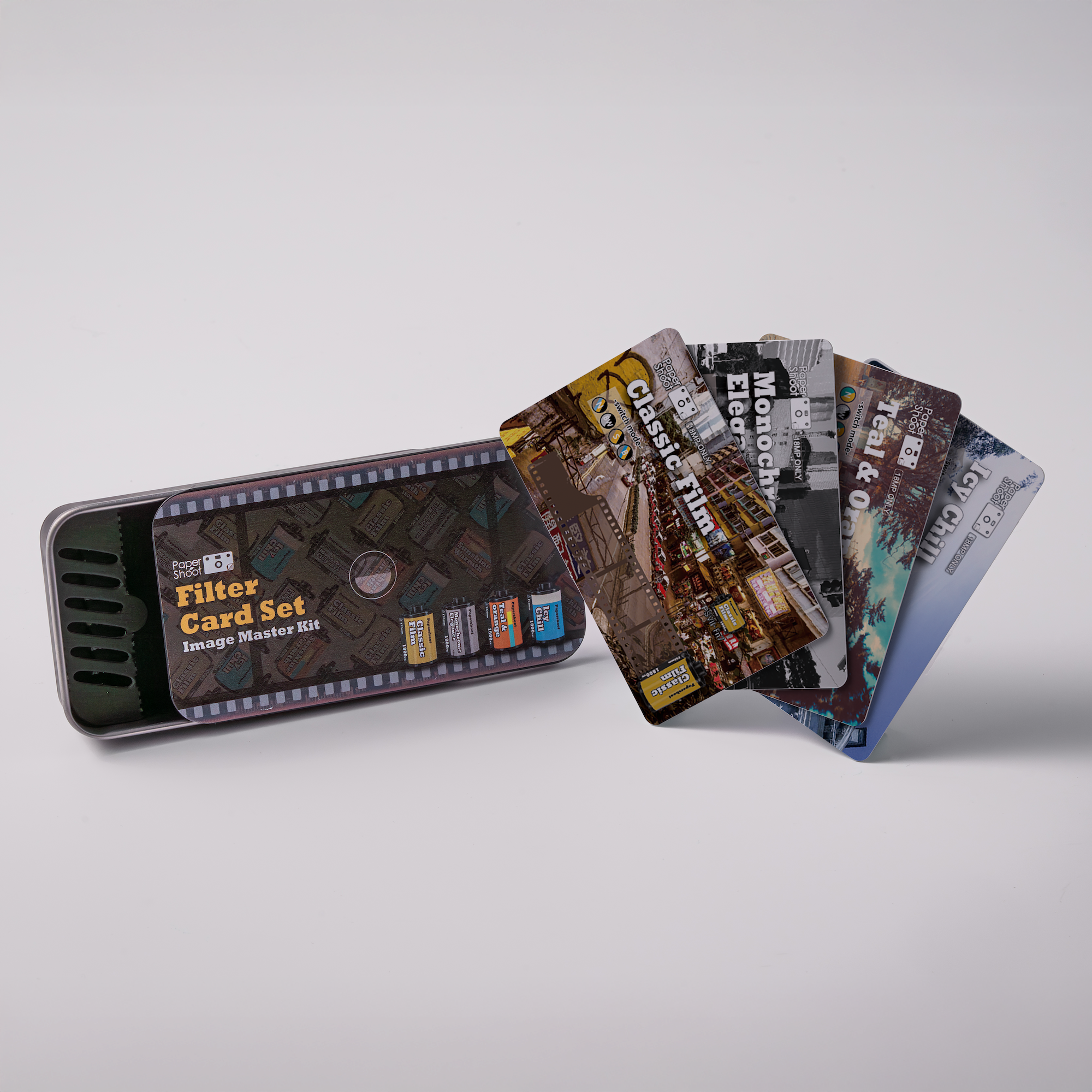
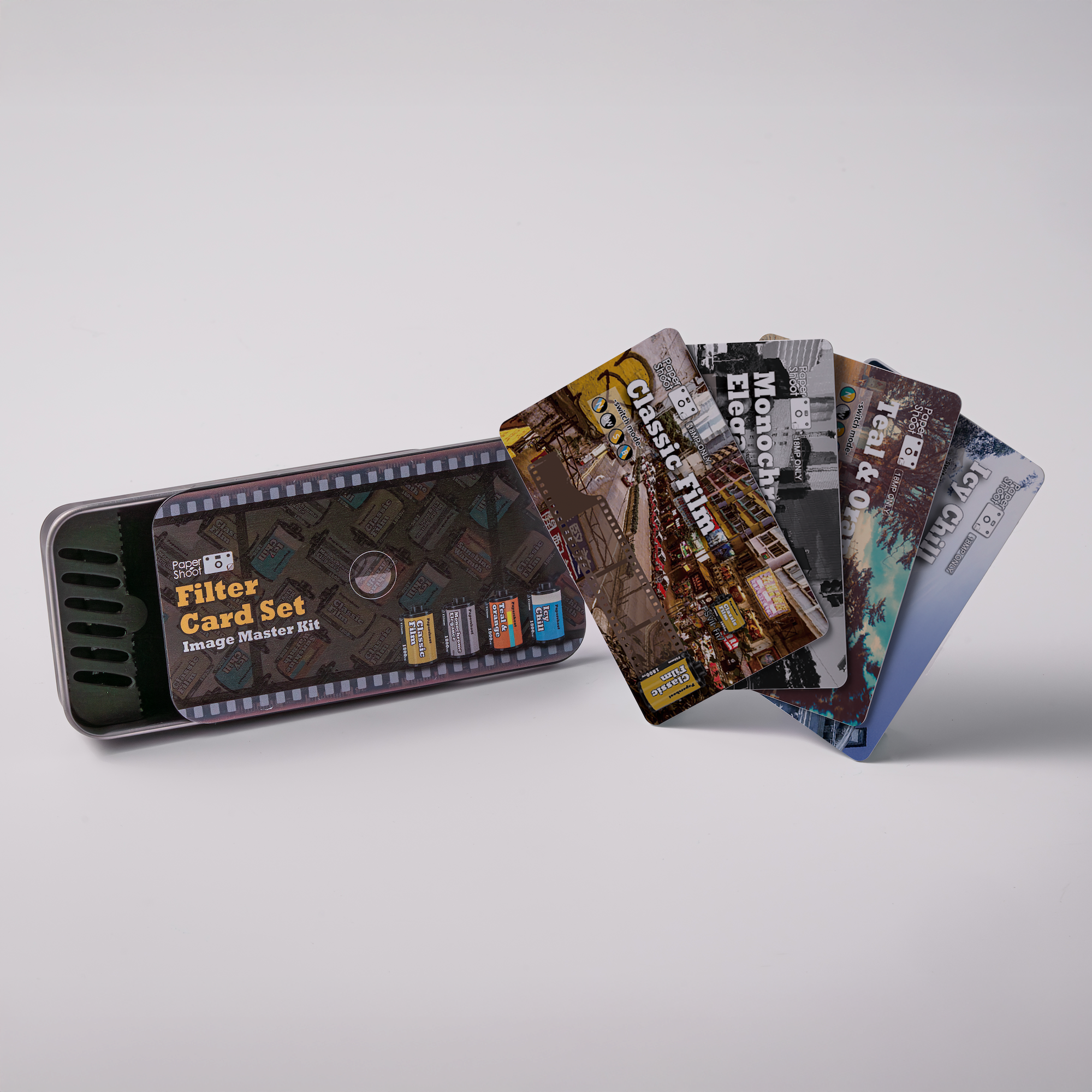
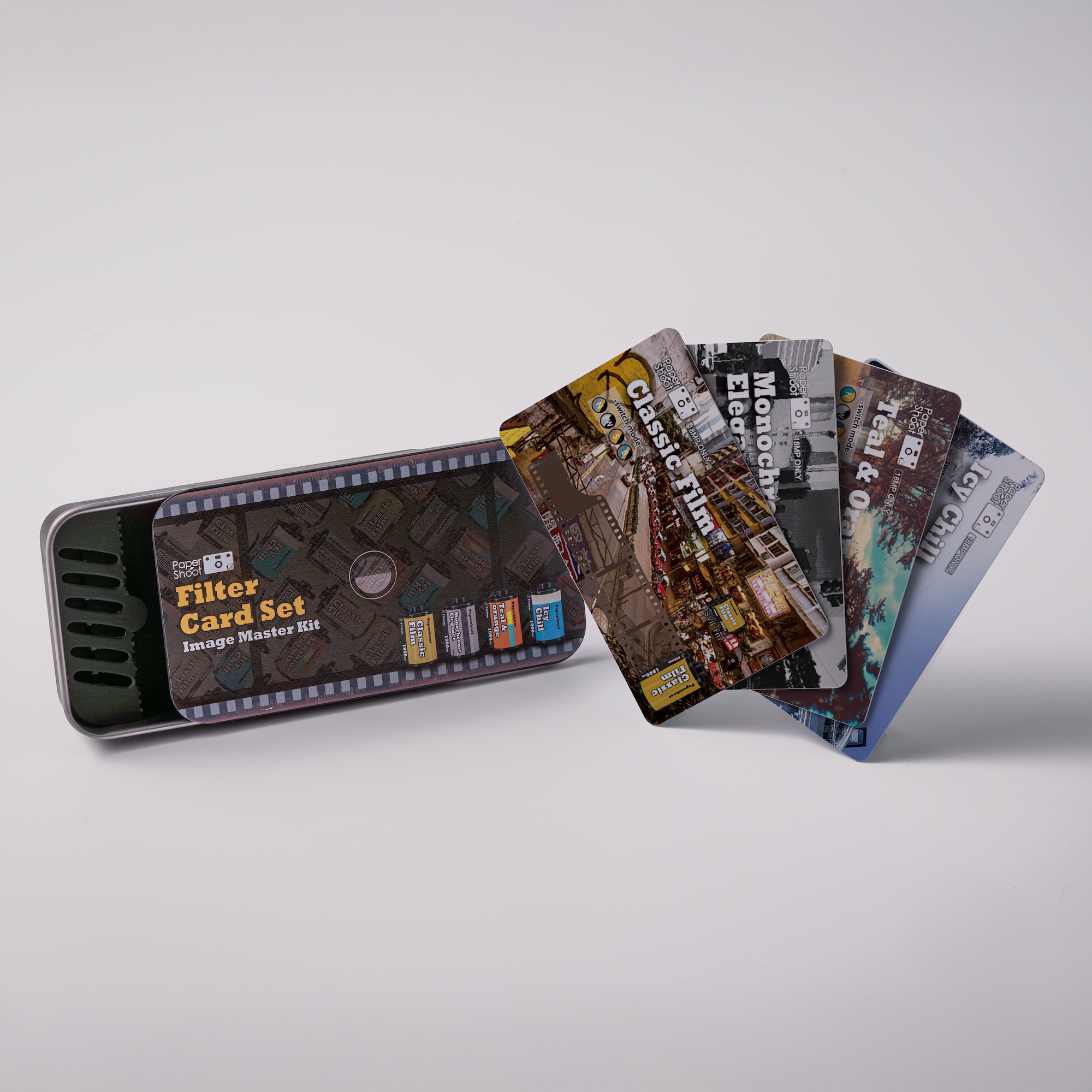
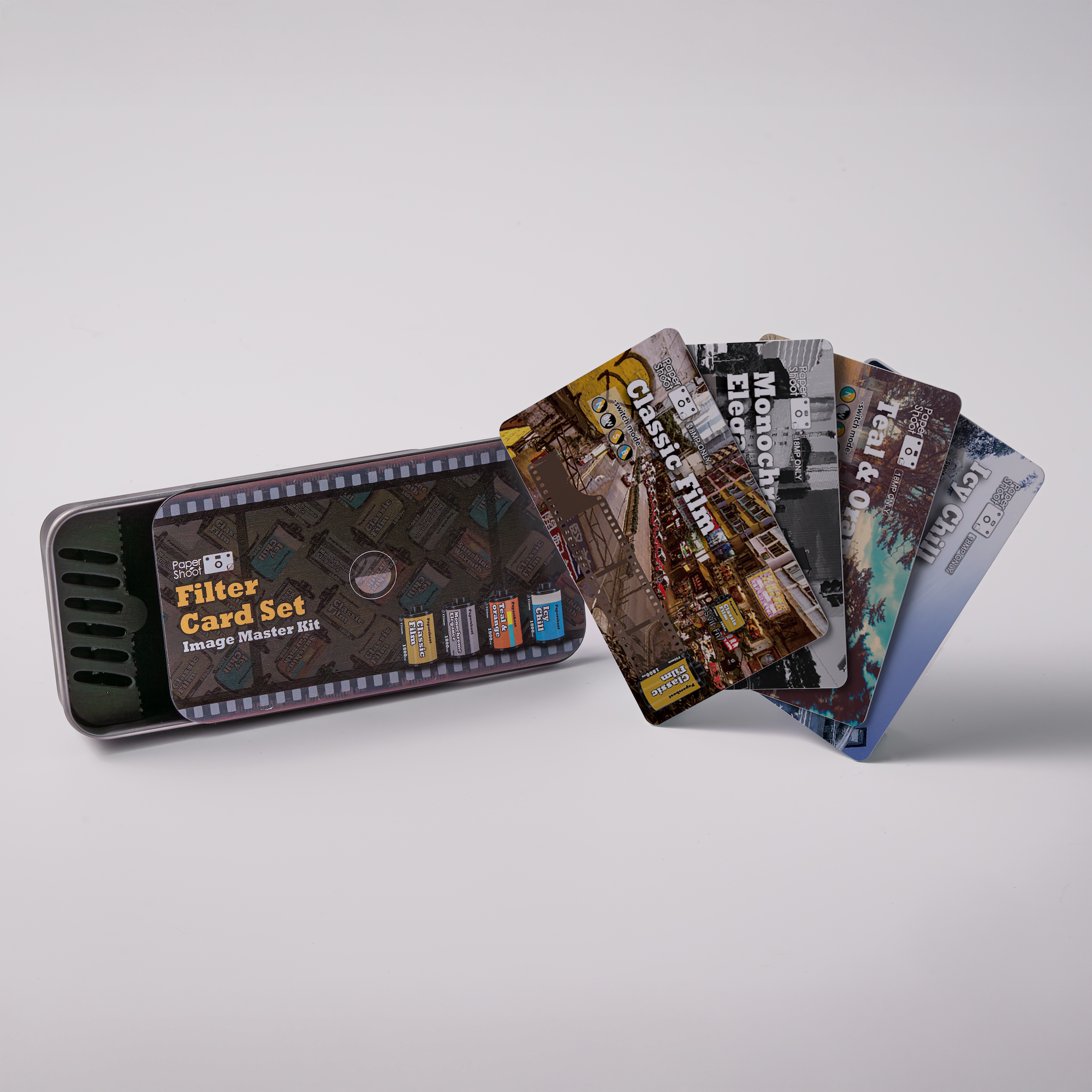
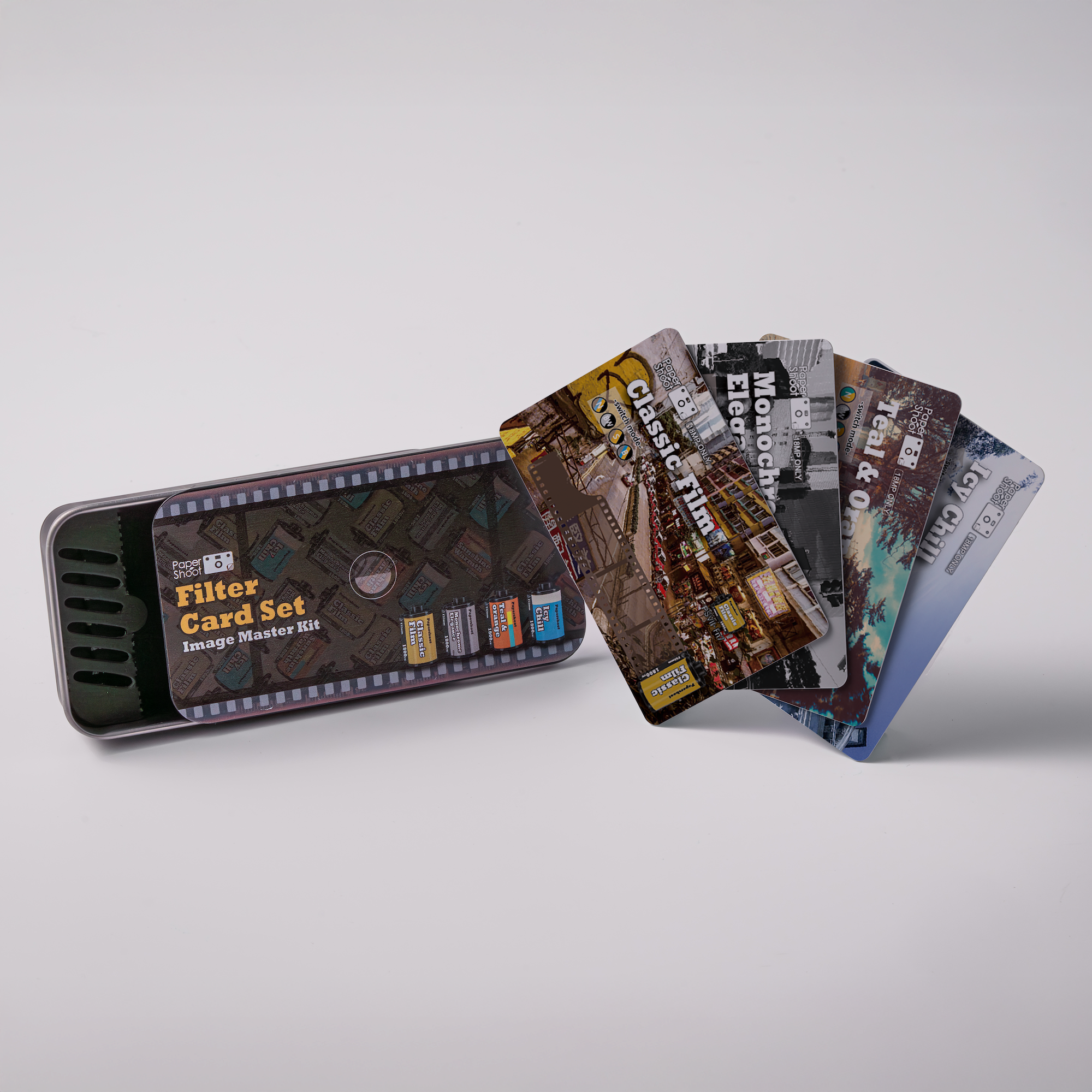
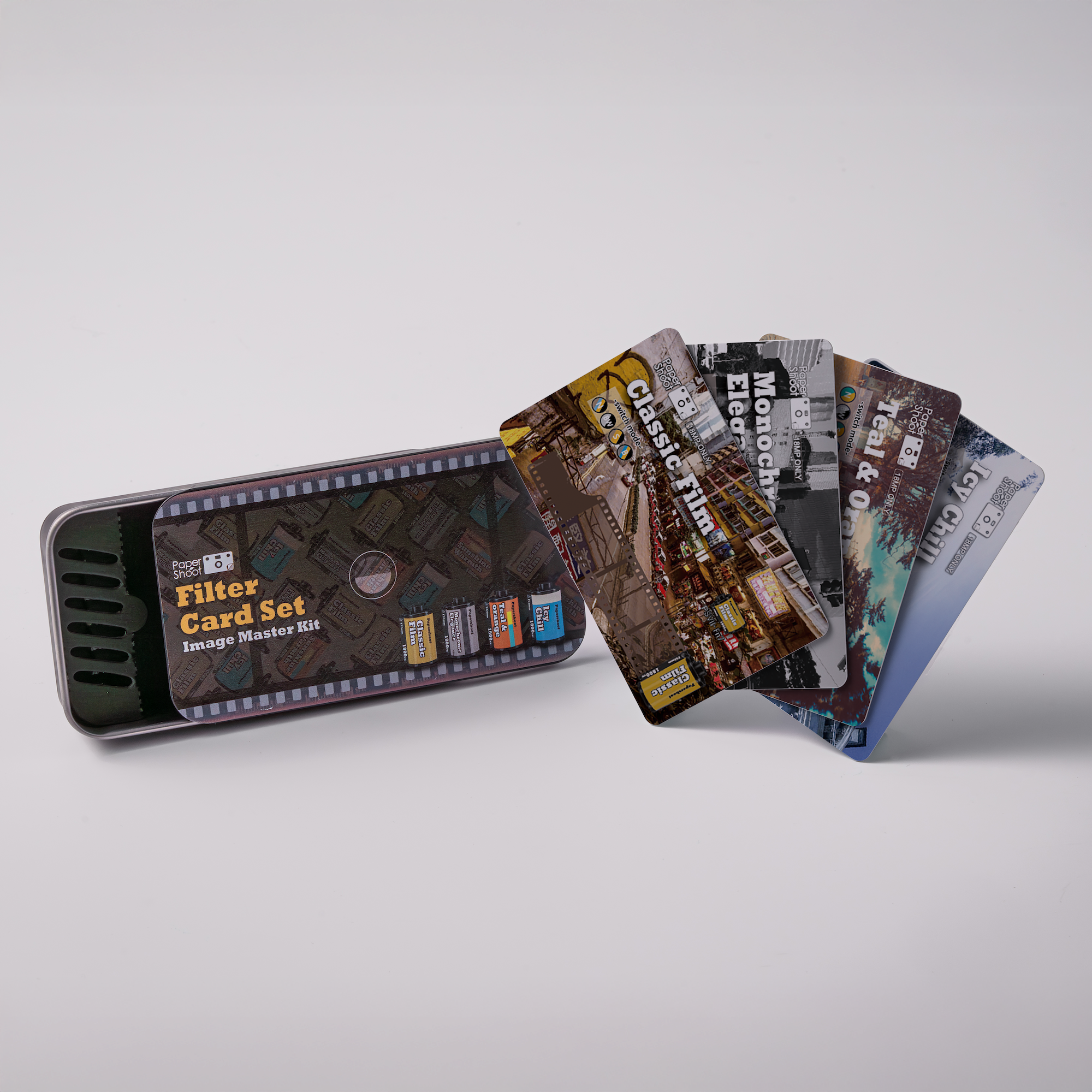
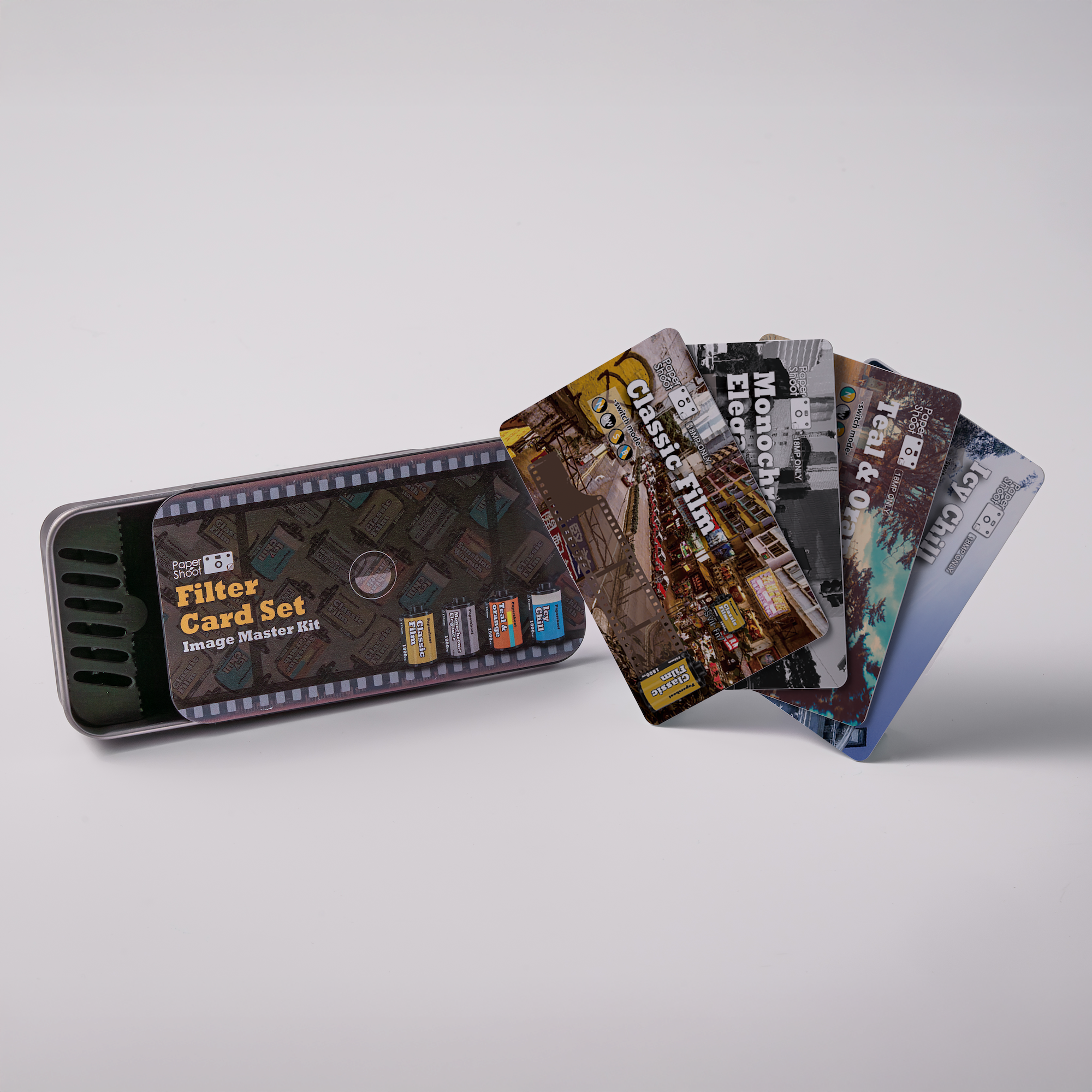
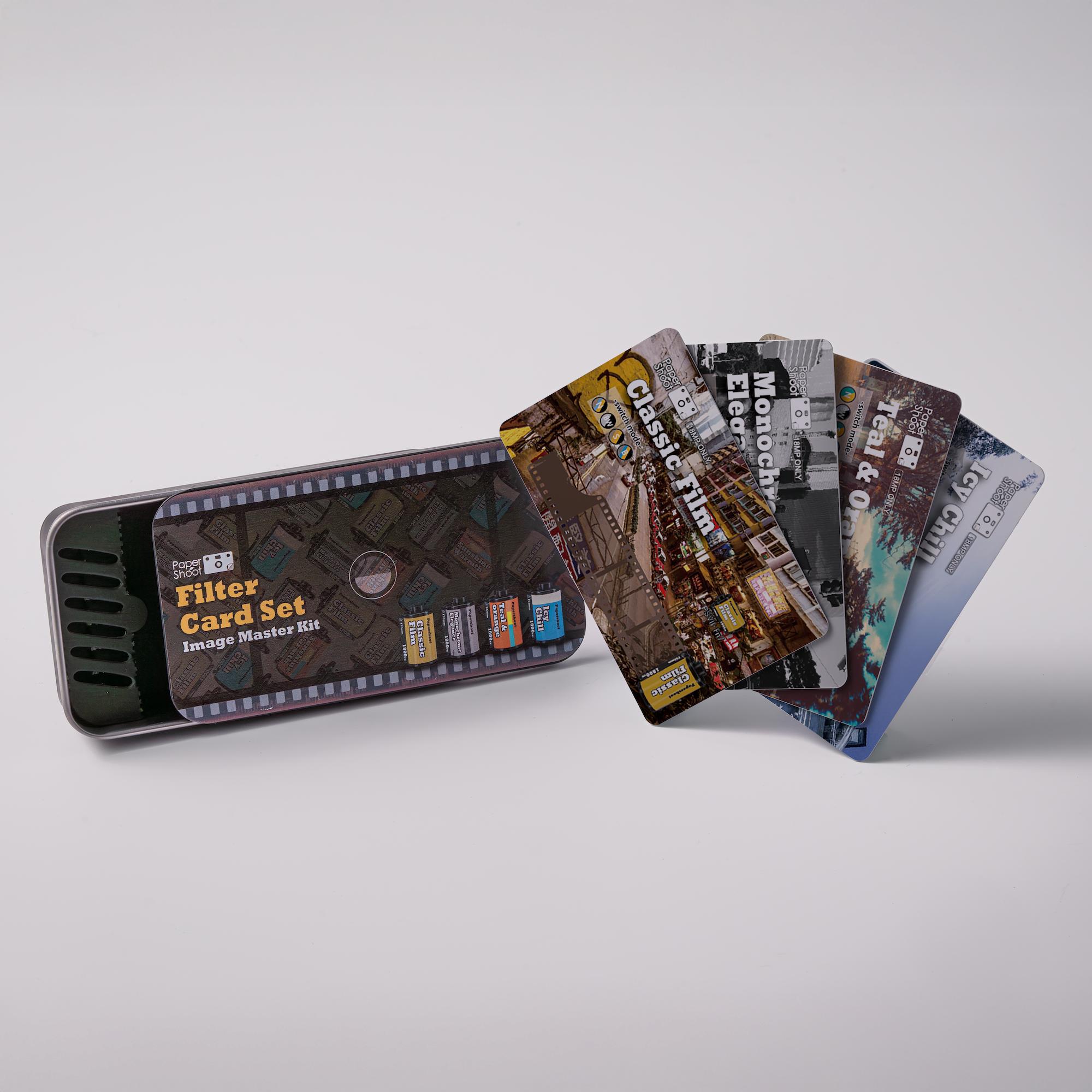
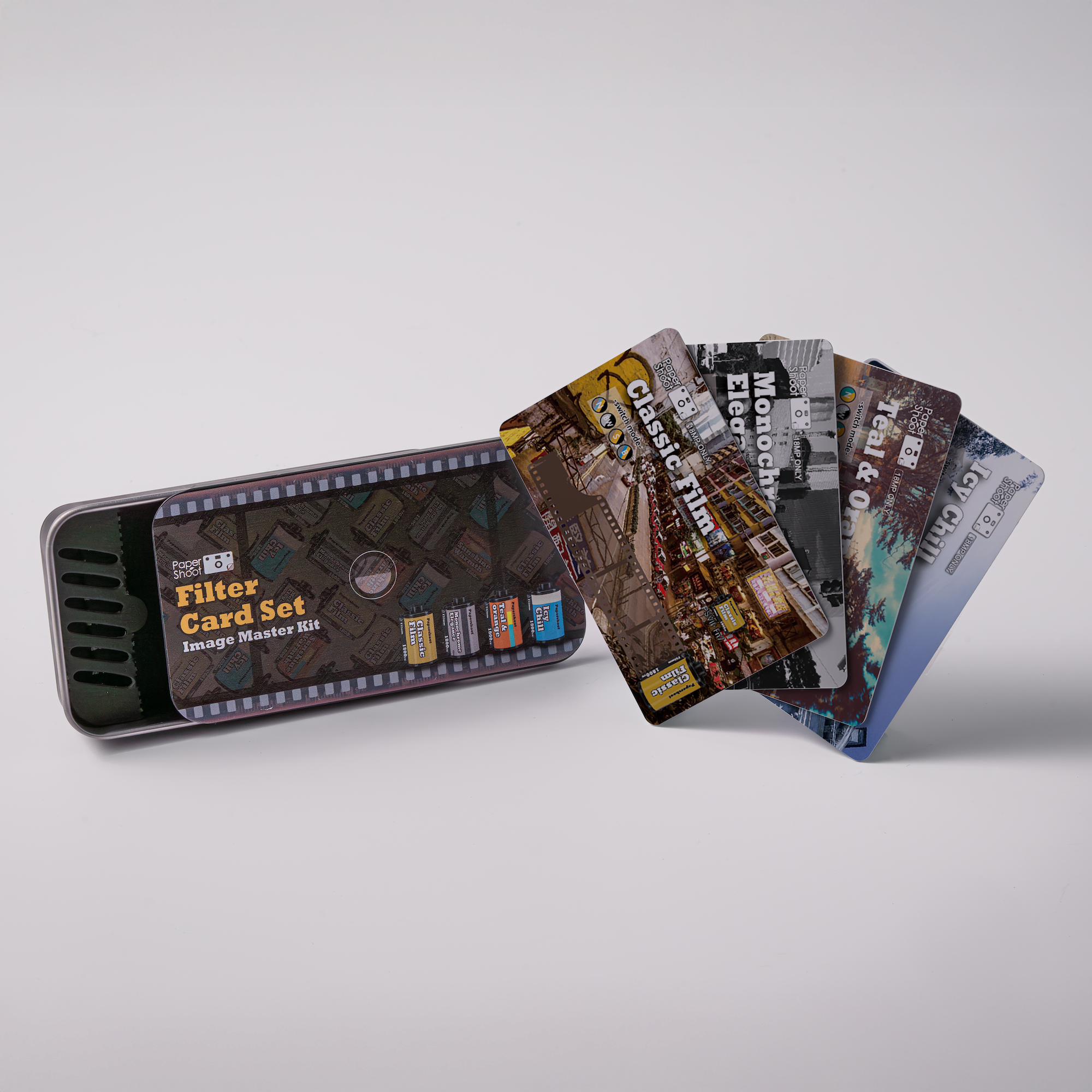
Each filter card gives your photos a different feel — a real, physical card you choose before you shoot. Never an app or preset.Want more looks? Add a Cinema Tone Filter 4-Card Set (16 filters) on this page and save.


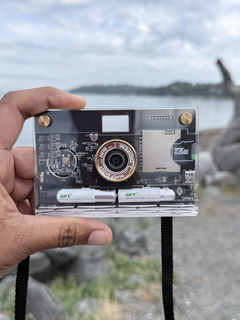
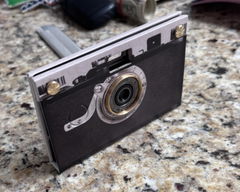
Real photos from real days — straight from the camera.


How it works
Smile. Shoot. Share.
Simple enough to start right away.
⚡ Batteries in.
🎨 Pick a tone.
📸 Press once.
🔄 Transfer by USB-C or SD.
No screen by design. Less checking. More presence.

Recognized for doing digital differently
A screen-free camera experience shaped by years of design, refinement, and real-world use.
TIME
Photos come out with a filmlike quality but without film’s high price tag and environmental impact.
— Best Inventions 2021

Why it feels different
Paper Shoot keeps photography simple on purpose — with thoughtful design, refined materials, and a camera system that grows with you.
Simple to start
No screen. No menu maze. Just choose a tone and start shooting.
Thoughtfully made
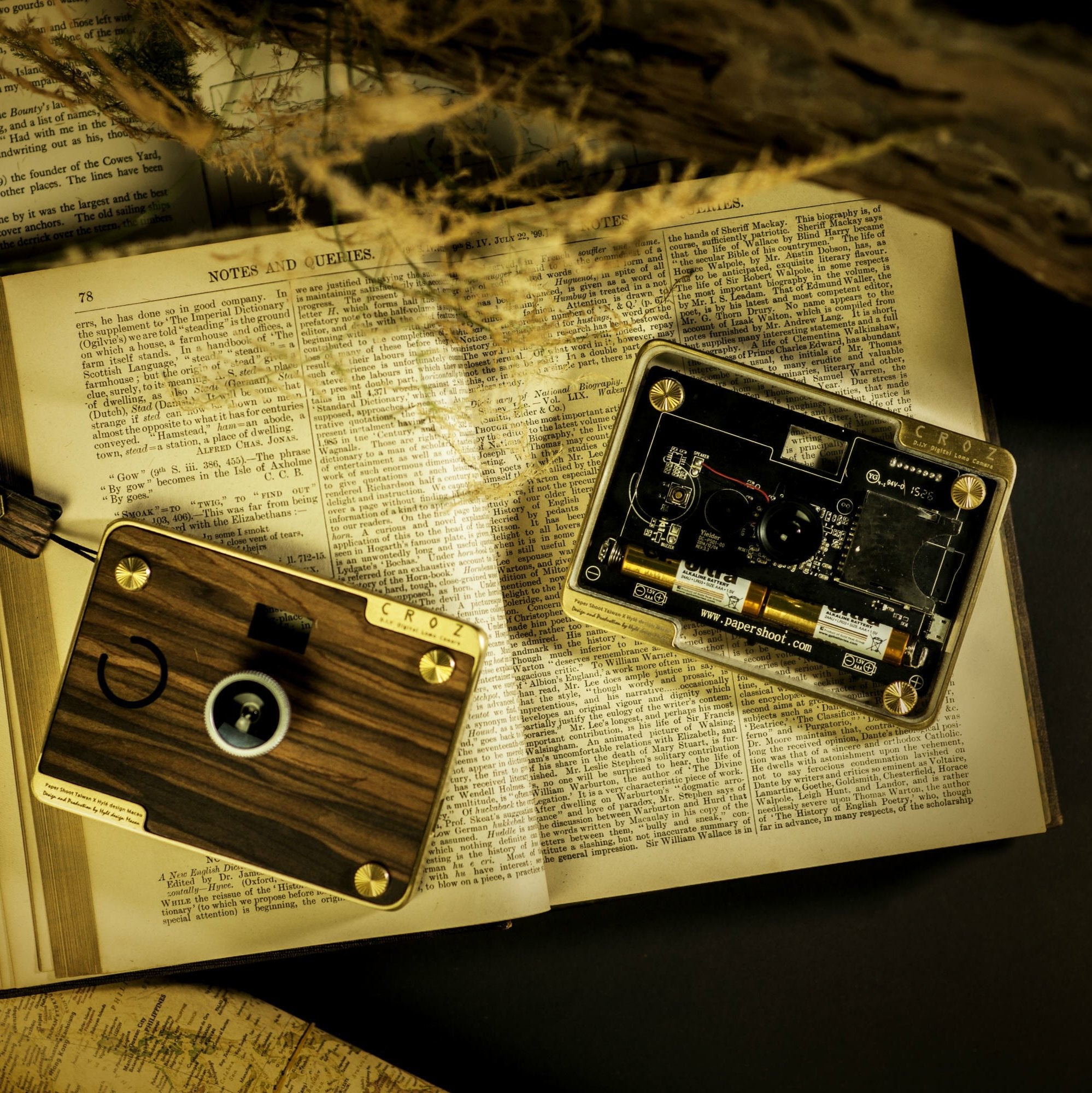
Carefully considered materials and construction make it feel intentional from day one.
Made to grow
Start with built-in tones, then expand with filter cards, accessories, and more ways to make it your own.

More ways to make it yours
Start simple. Expand anytime.
Built-in tones get you started. Filter cards, lenses, and creative add-ons let you explore more when you’re ready.
No extra add-ons required to enjoy the camera from day one.
Product Details
Paper Camera Dimensions & Weight
** /
Materials
Glass-fiber, Optical lens, Stone paper, Card board, Brass.
Camera Specifications
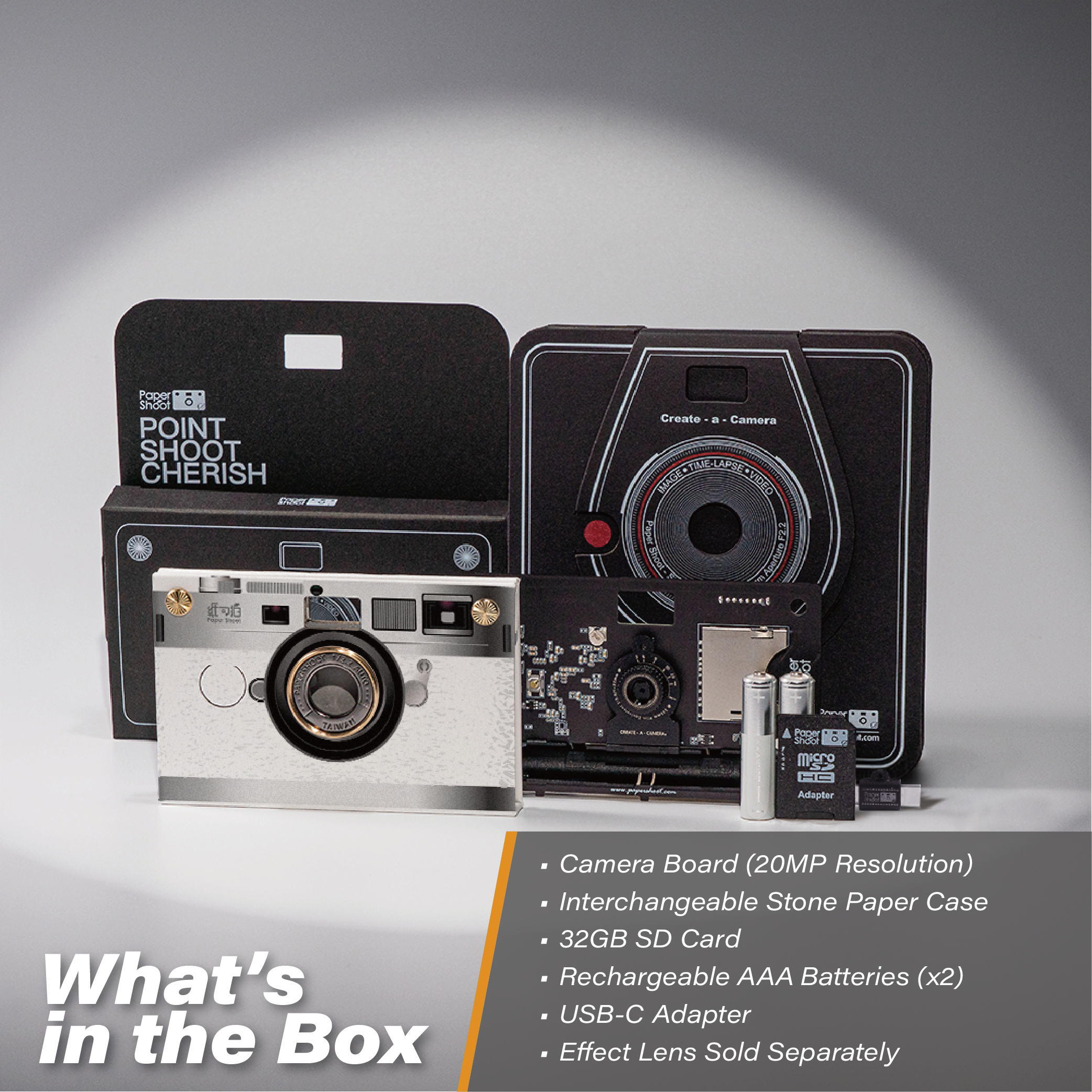
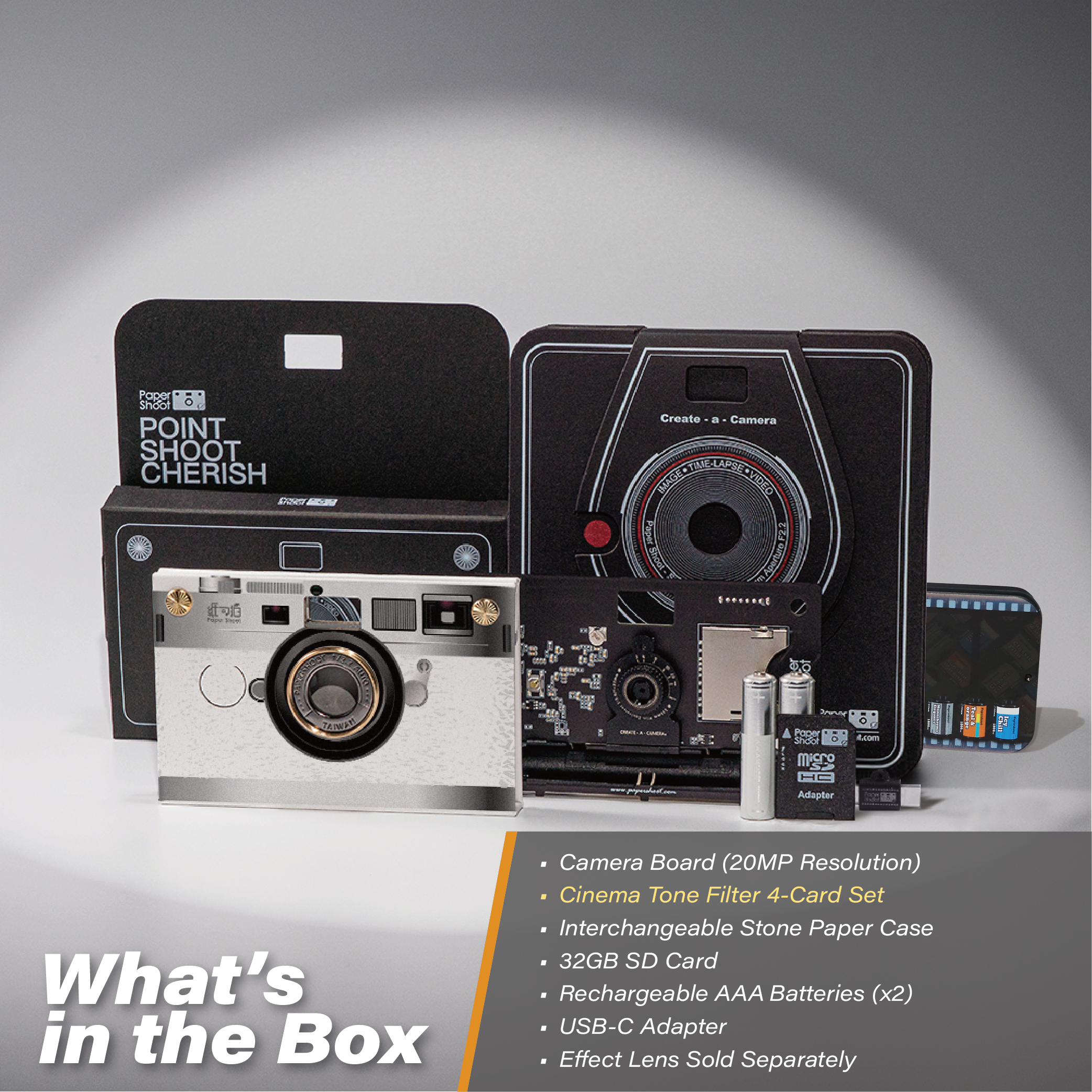
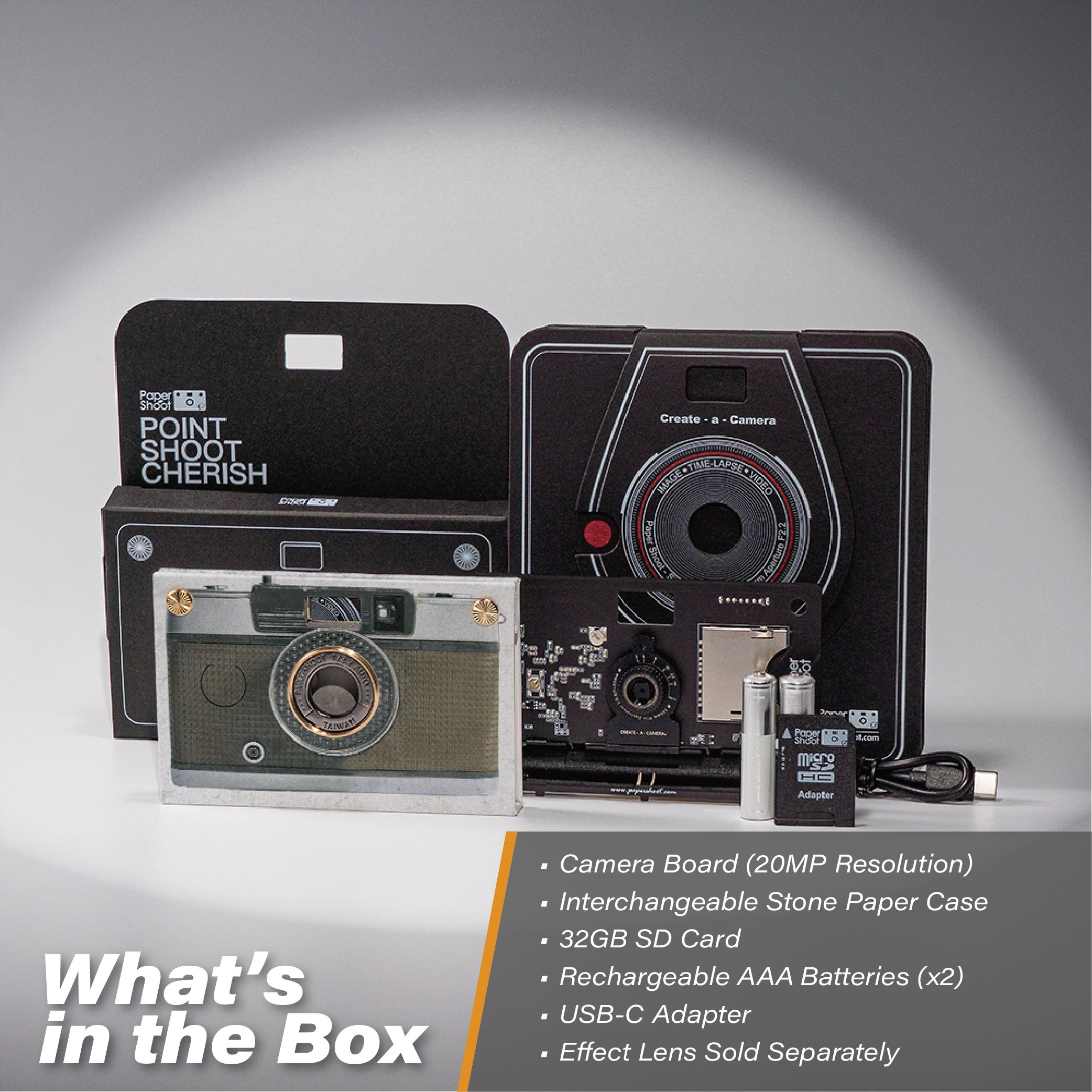
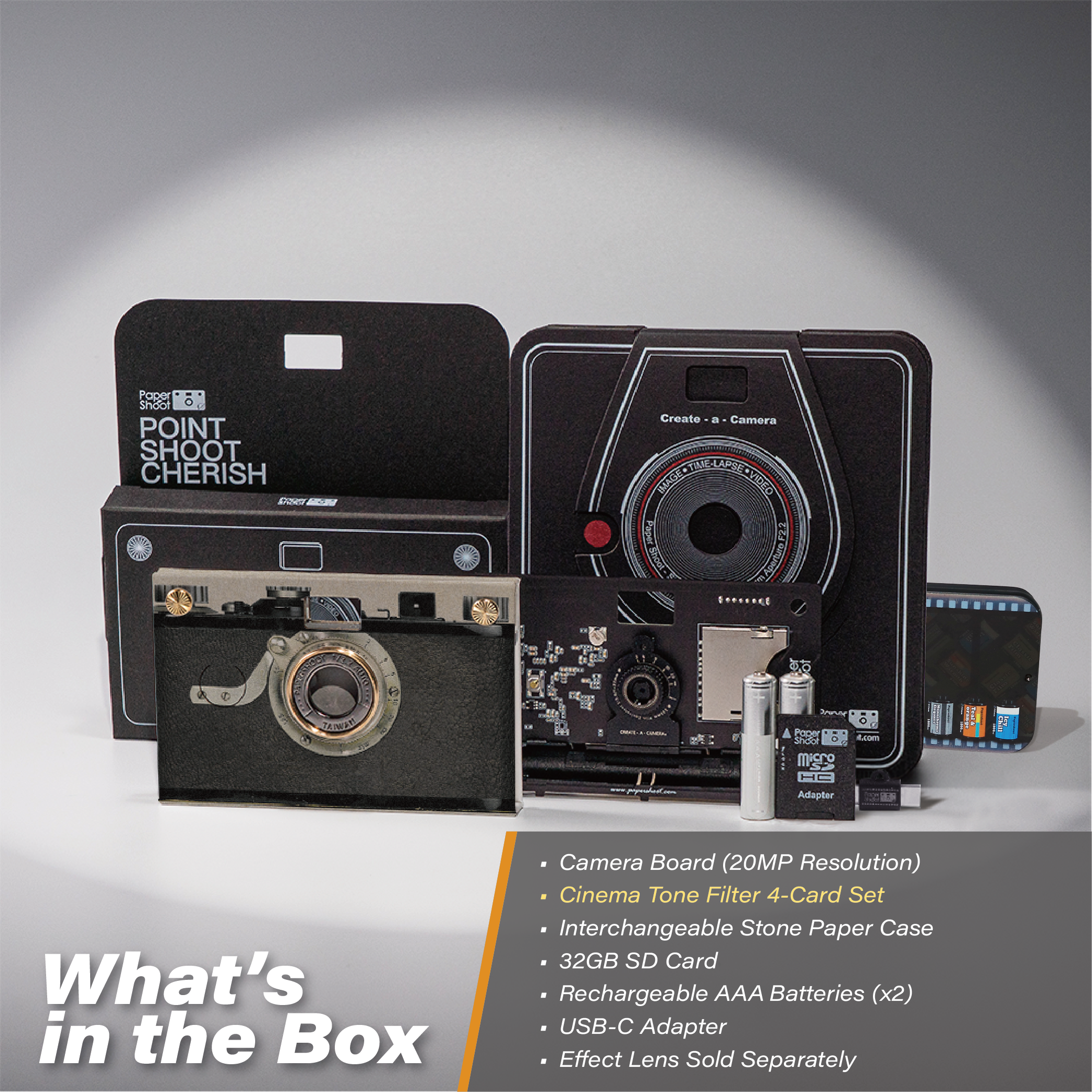
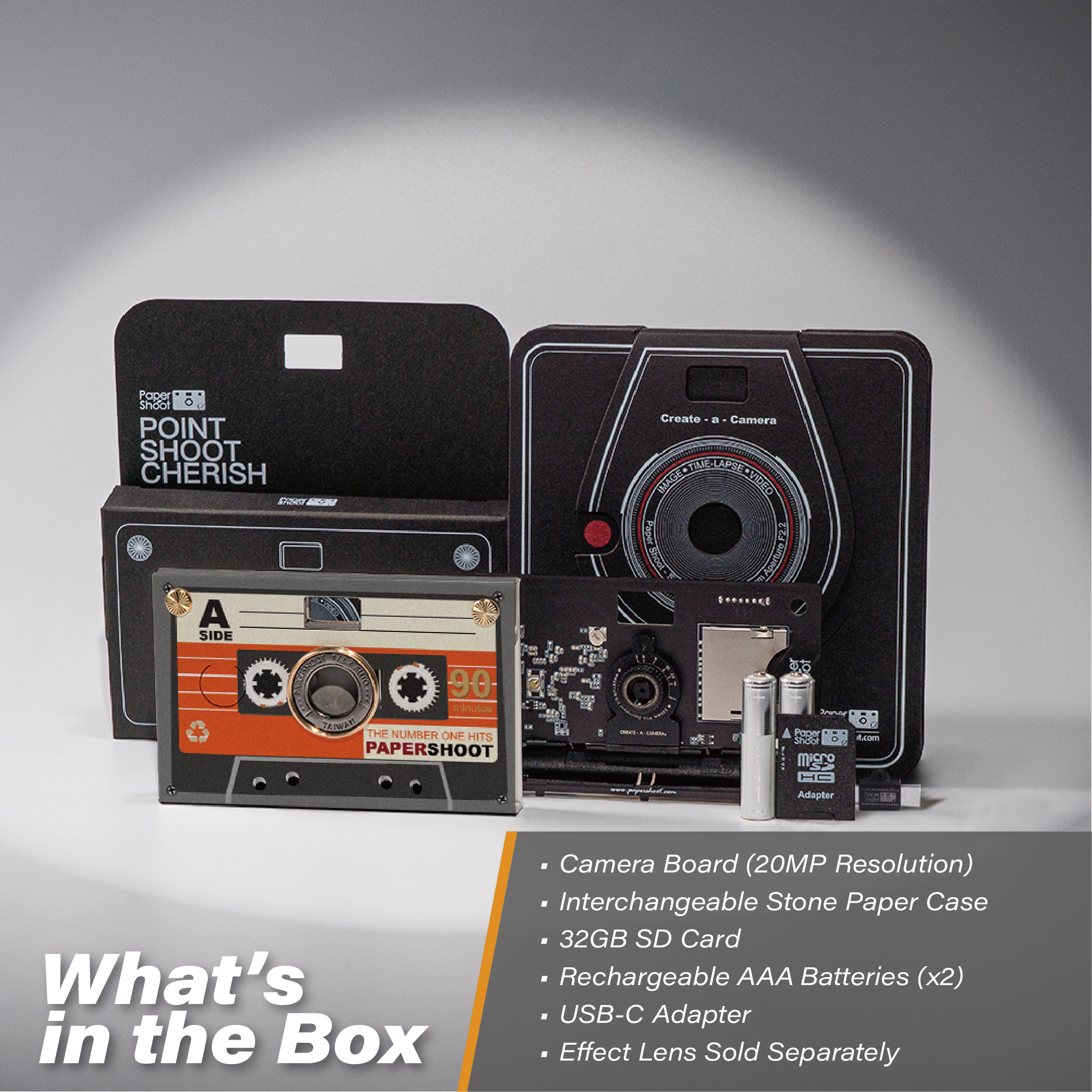
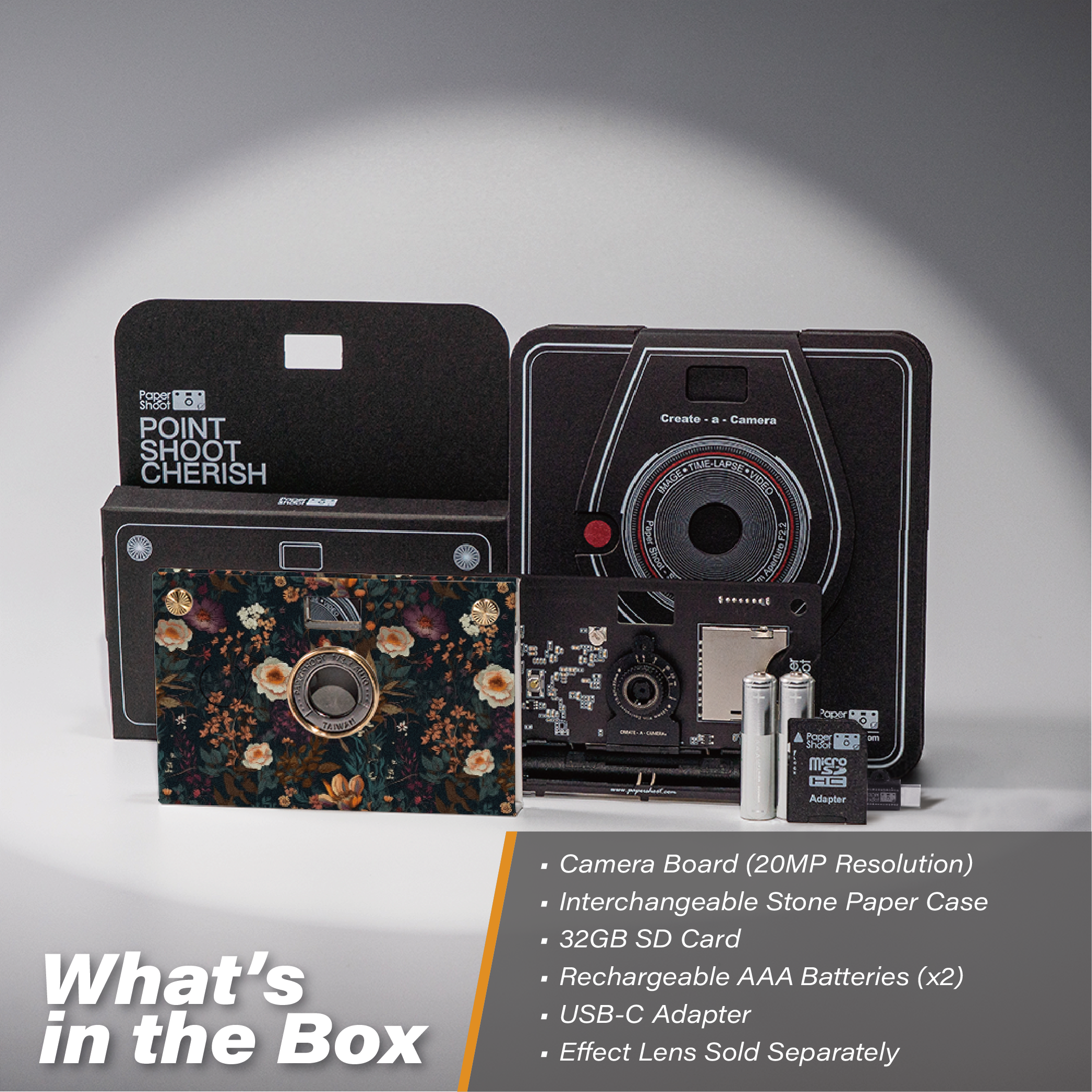
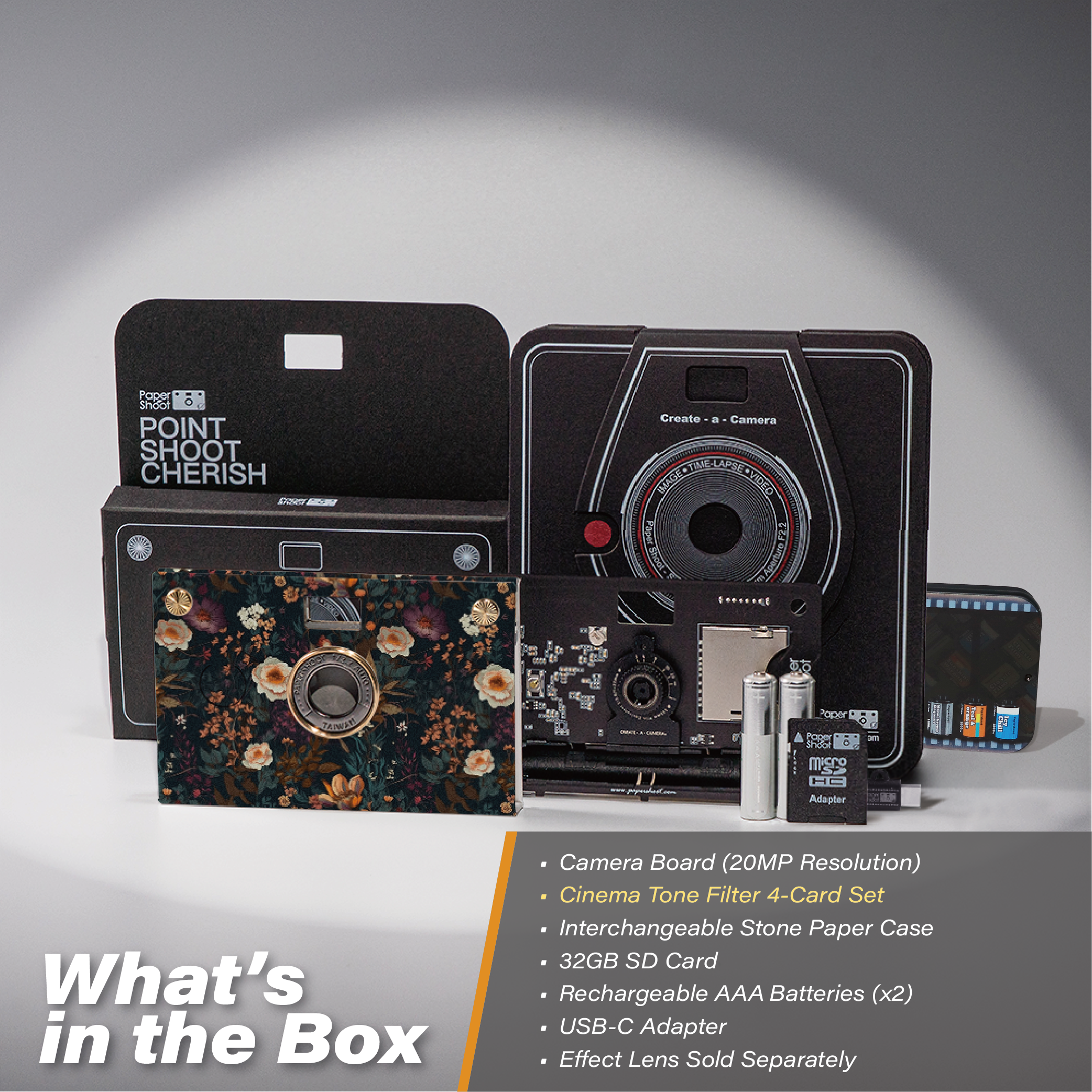
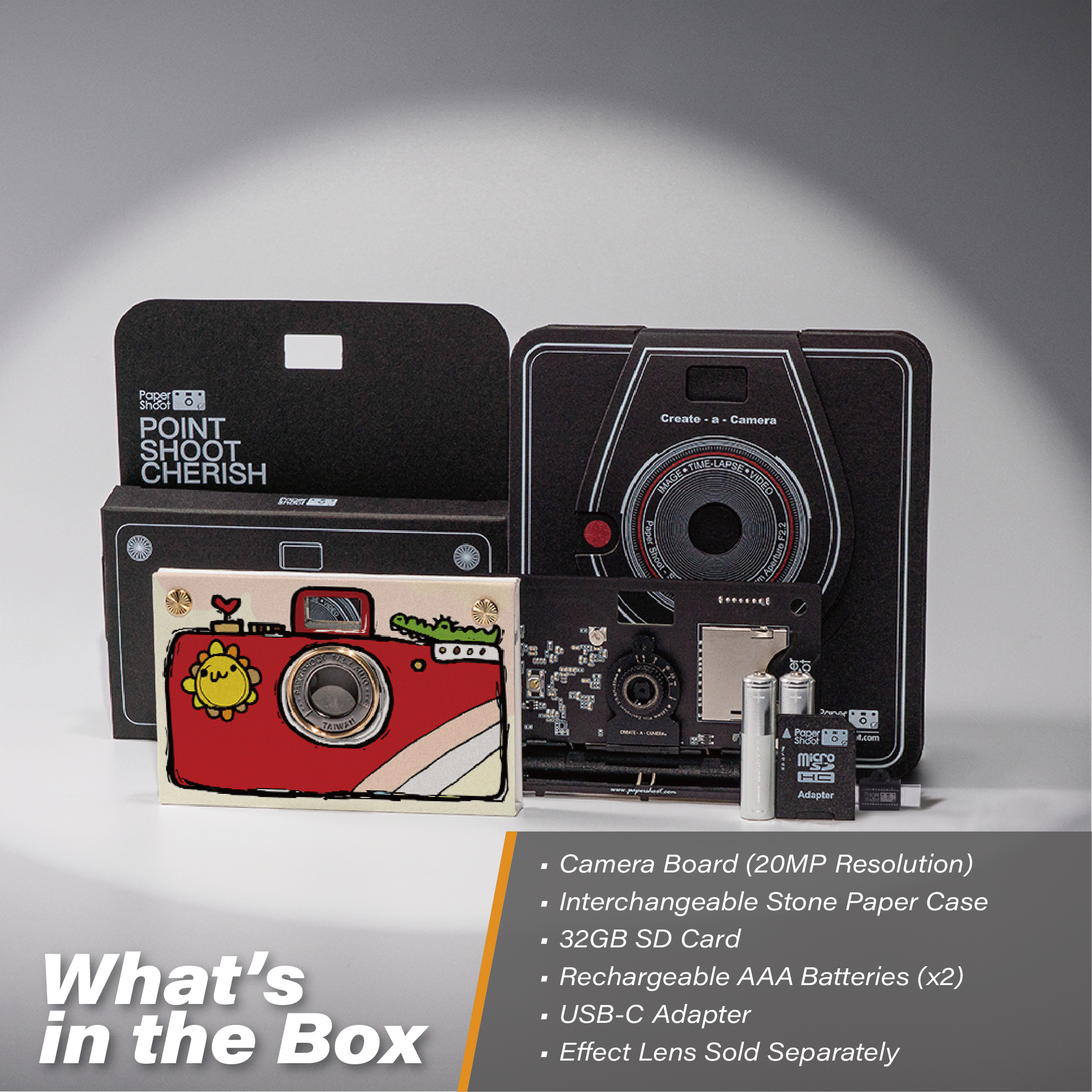
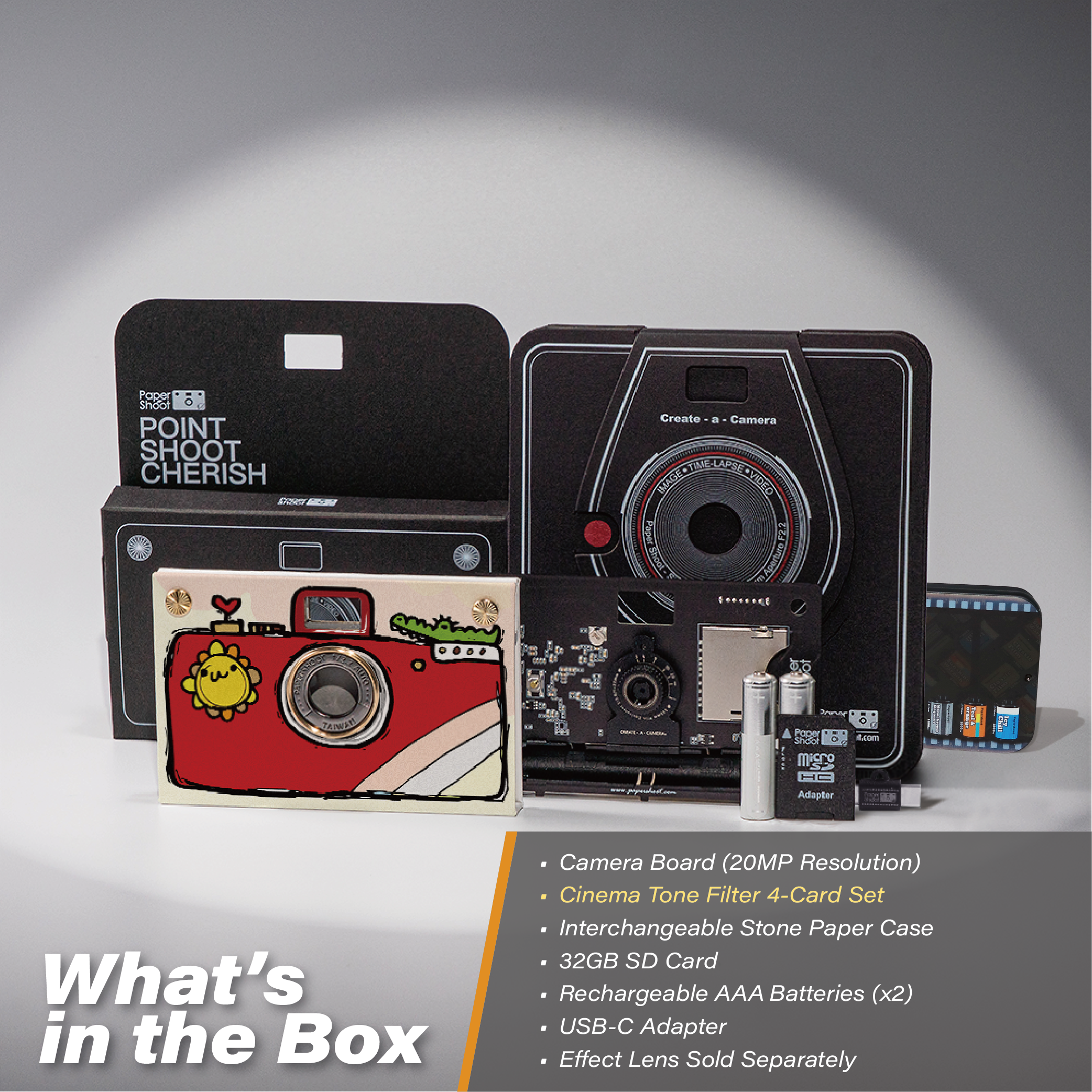
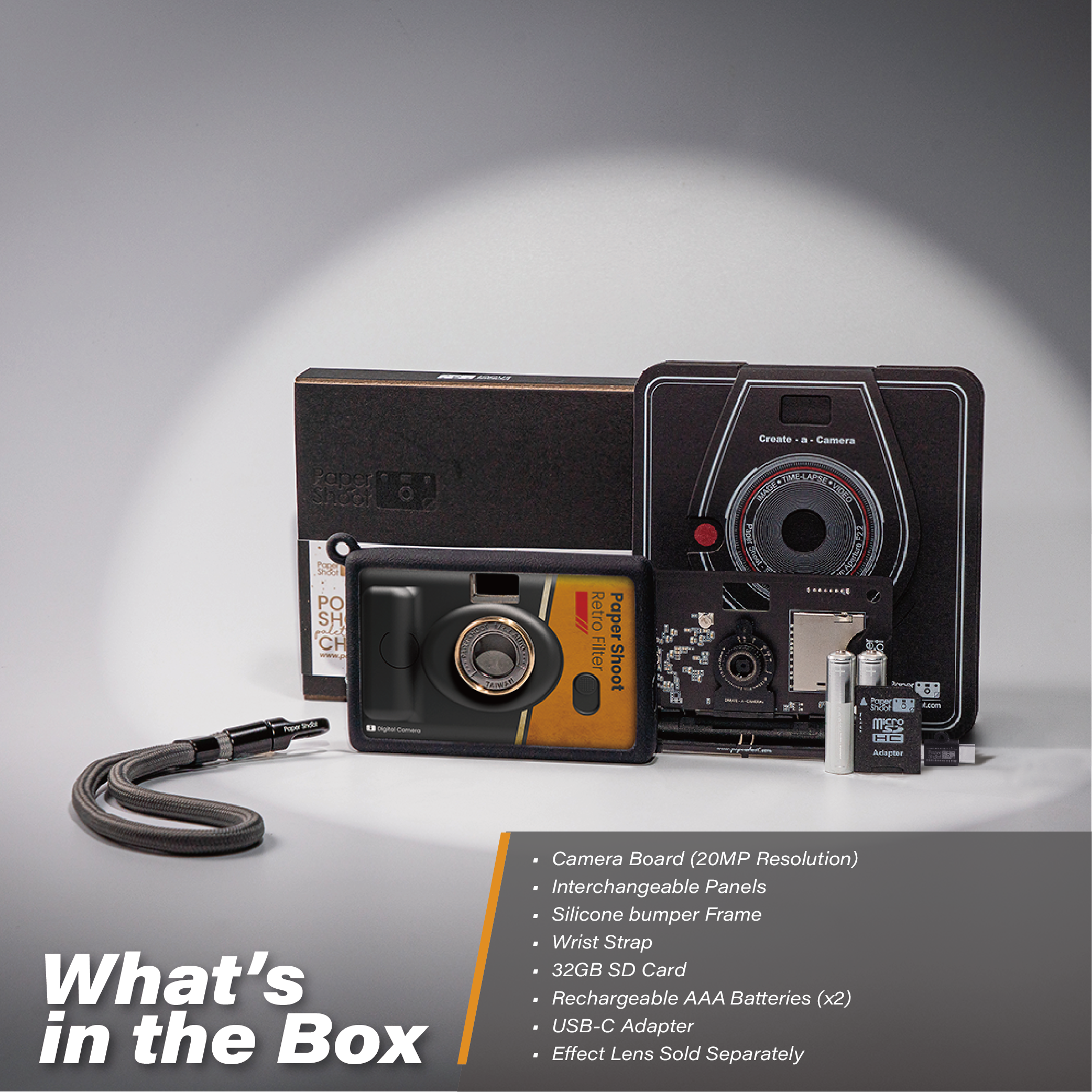
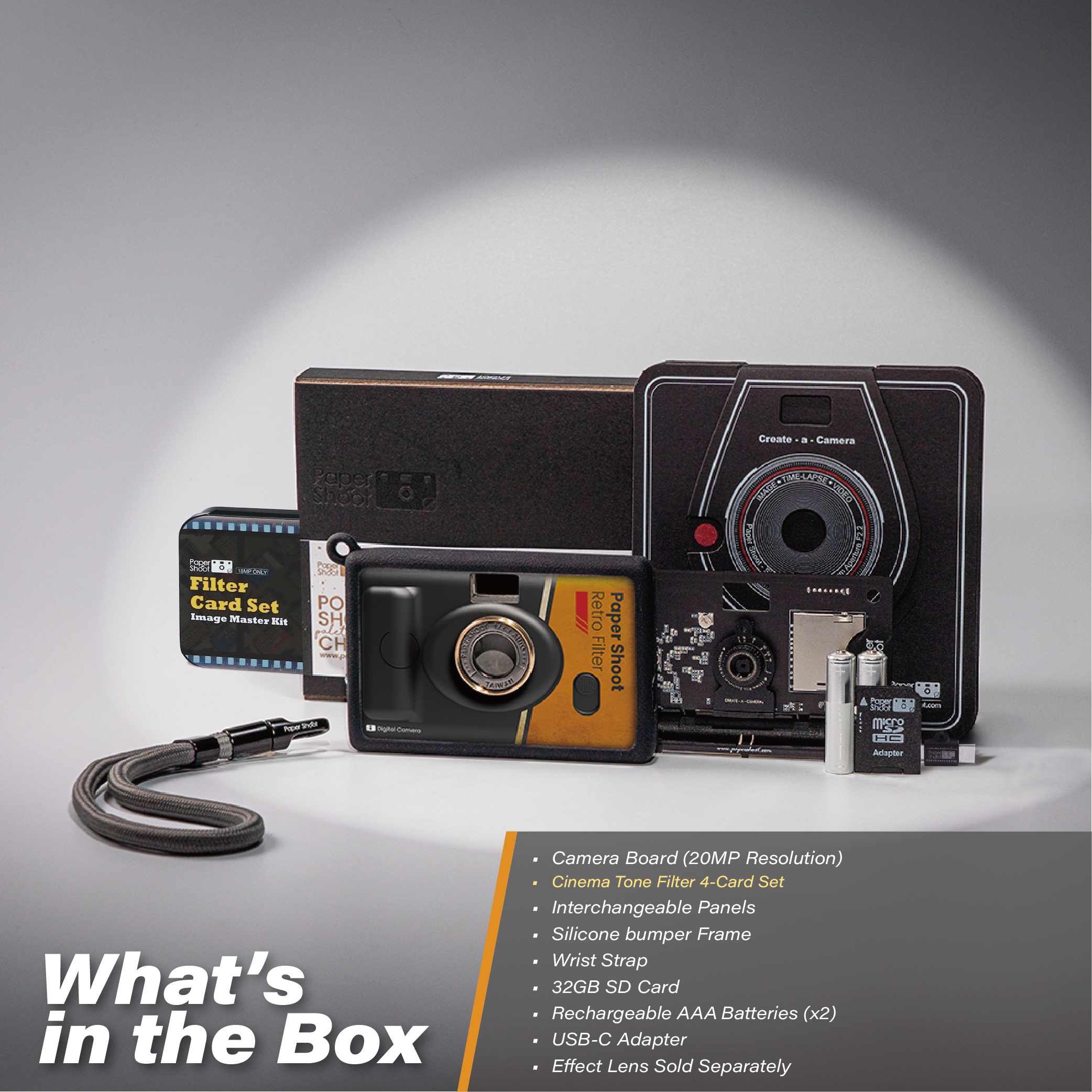
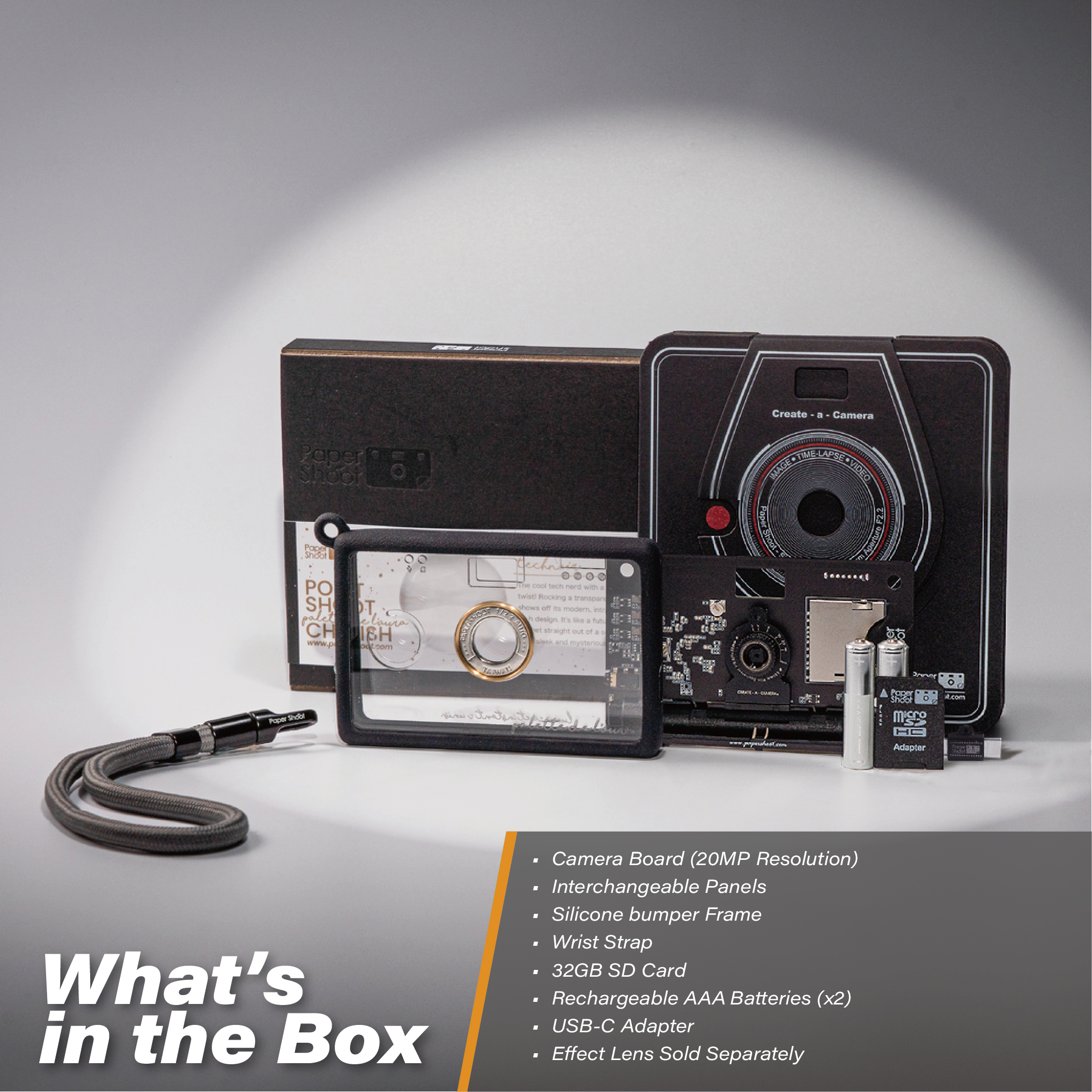
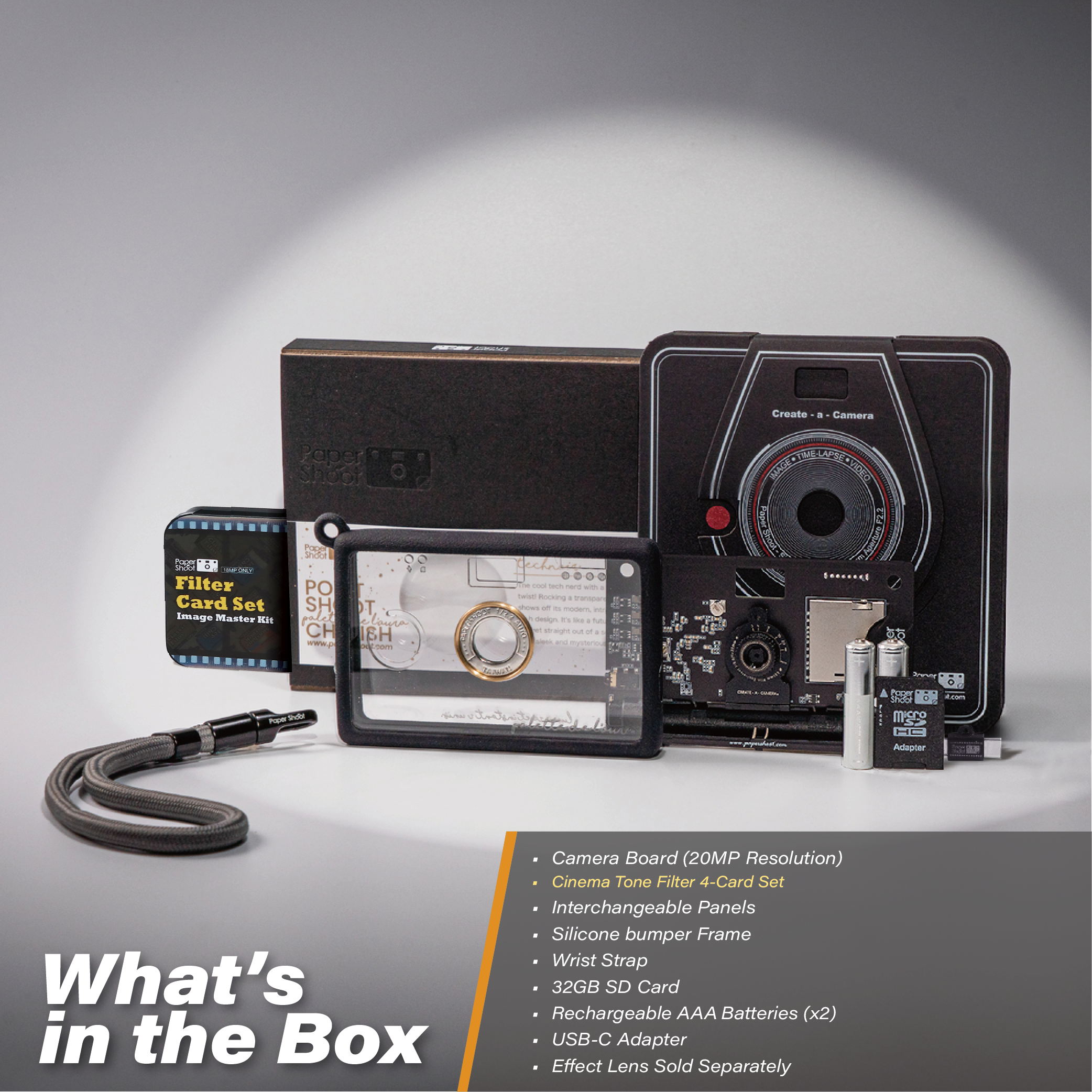
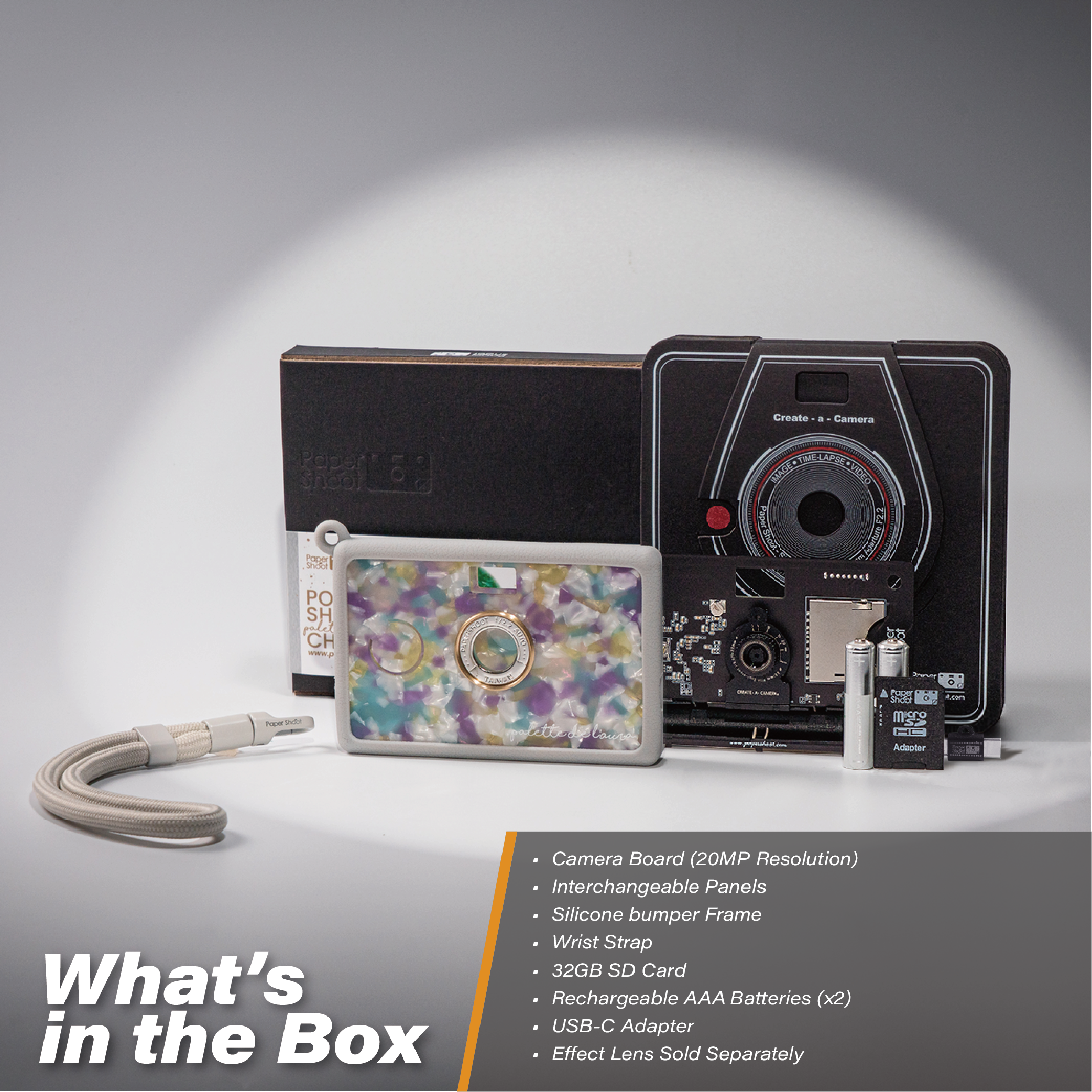
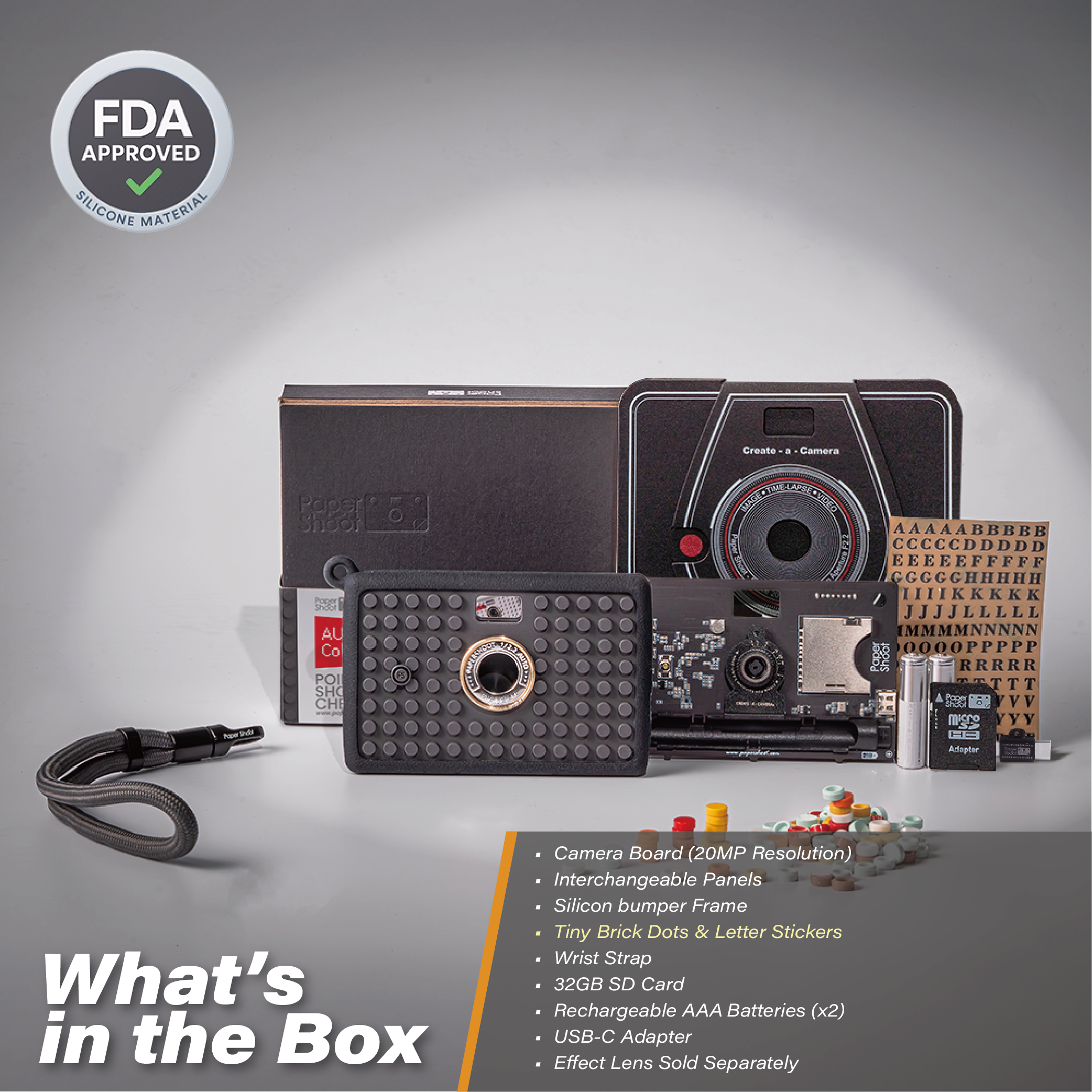
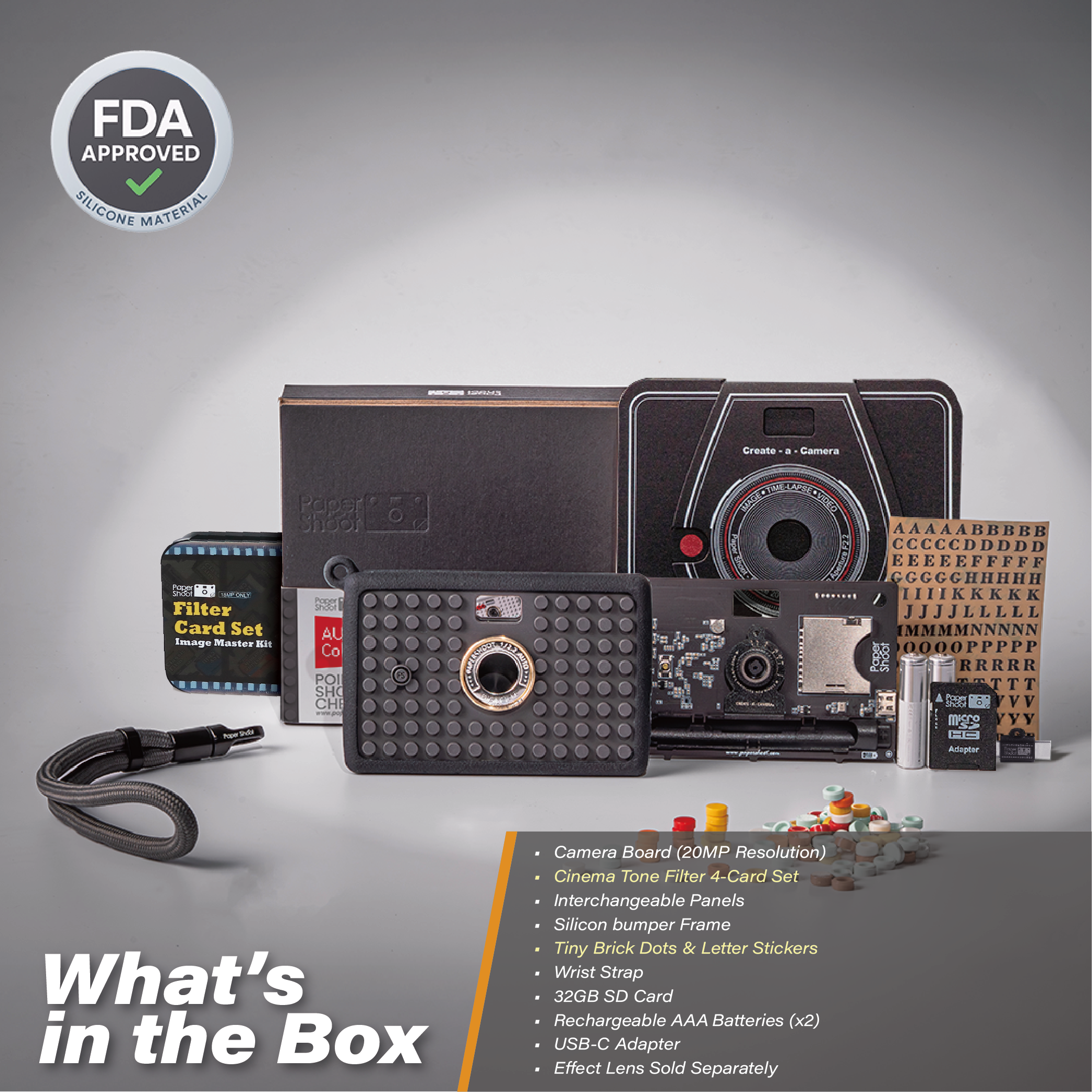
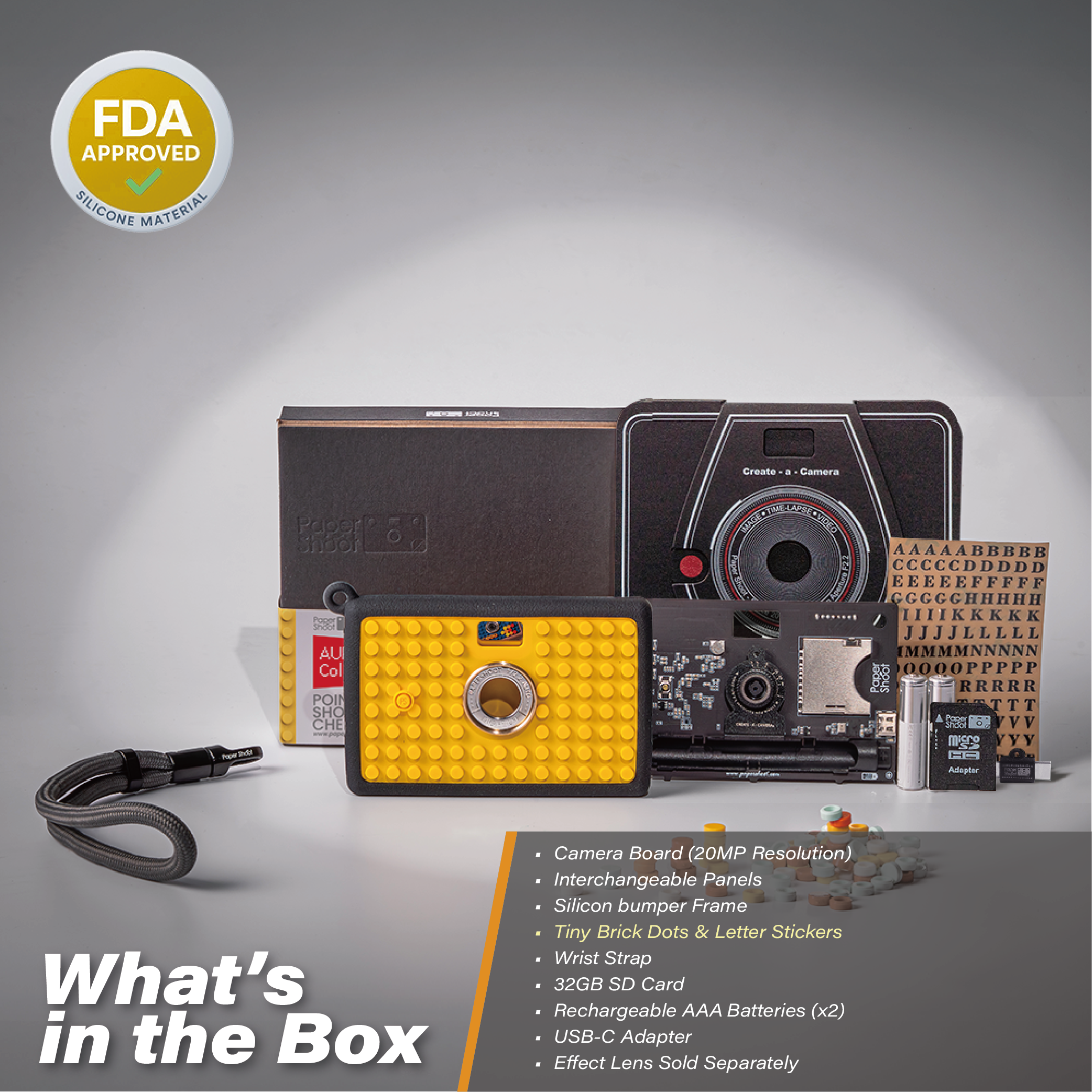
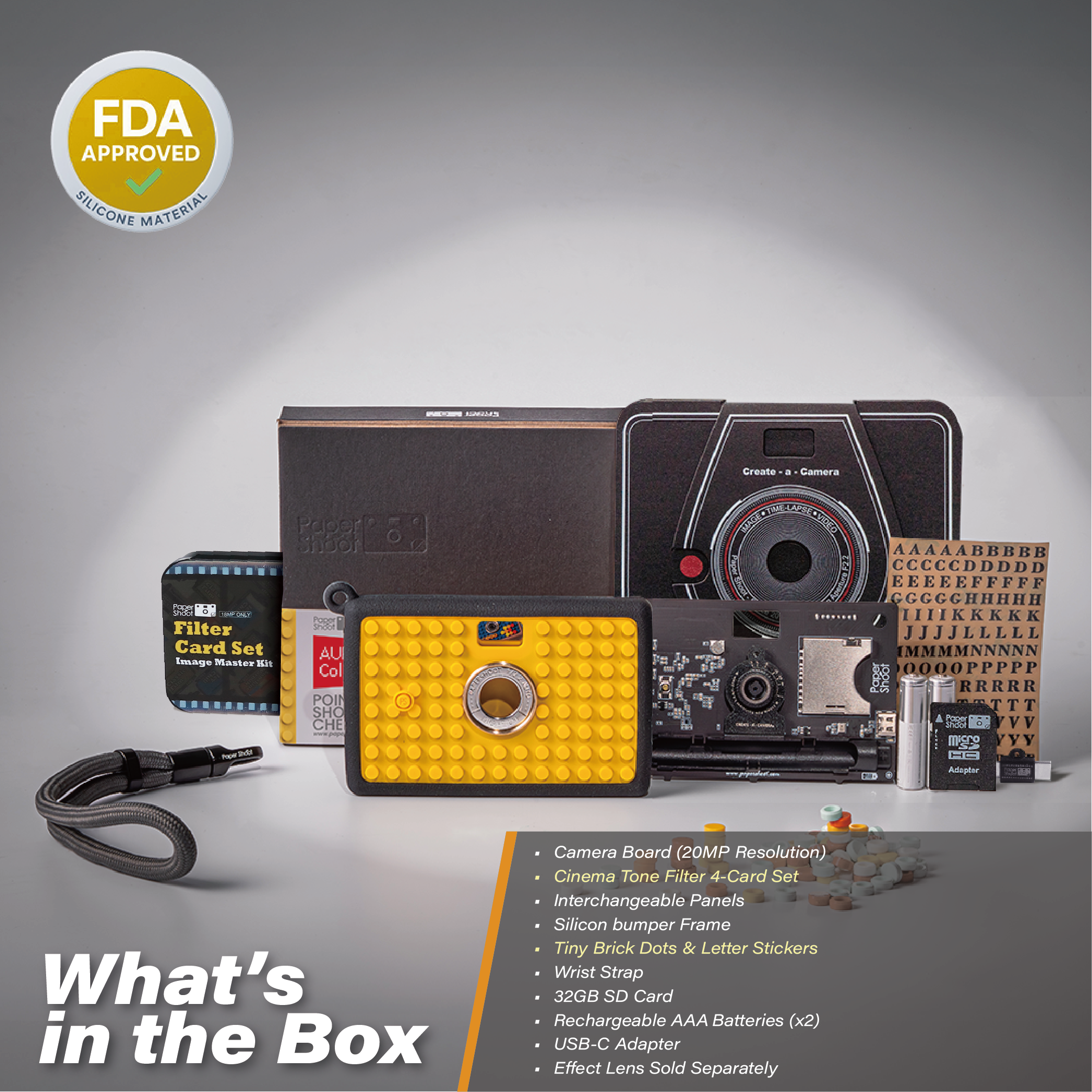
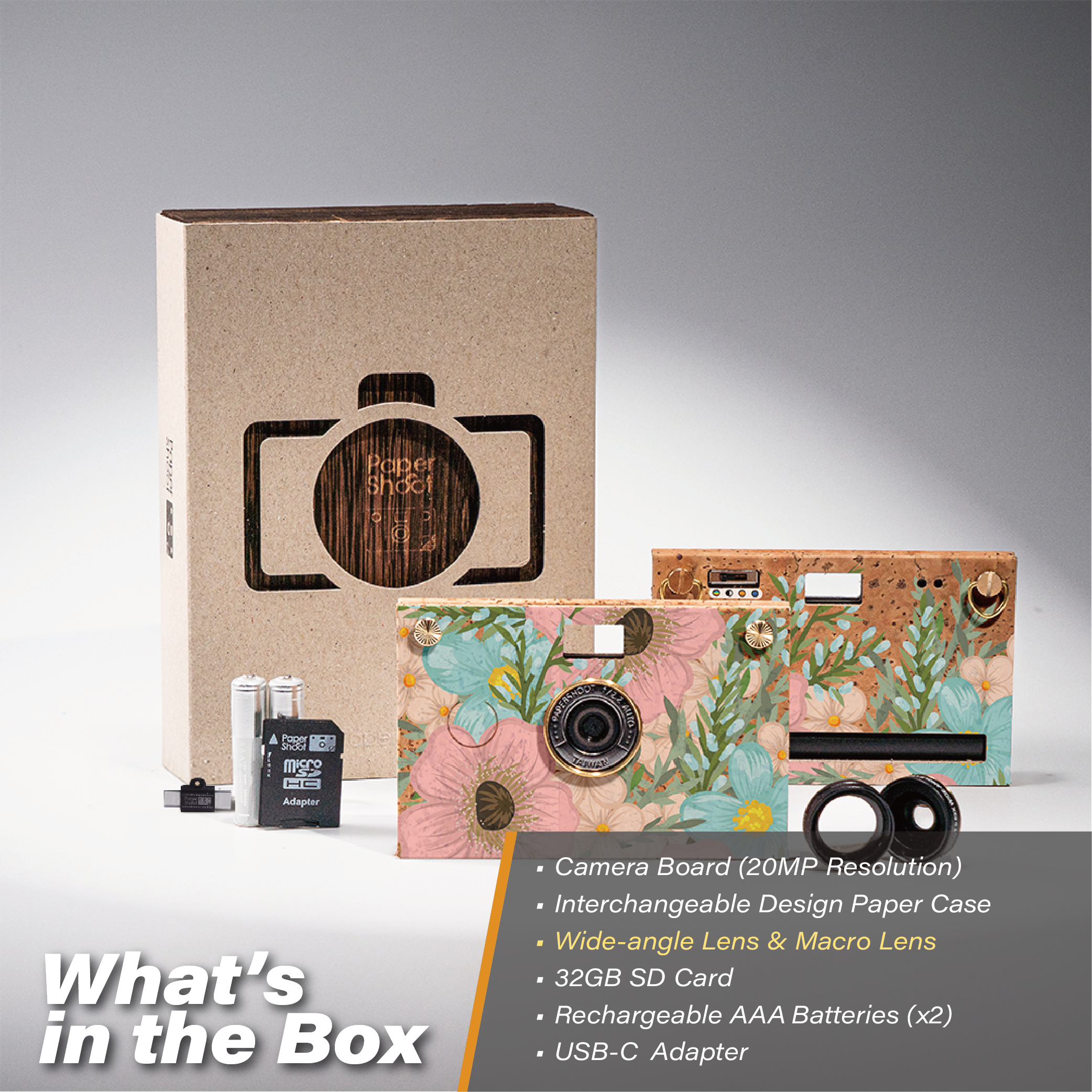
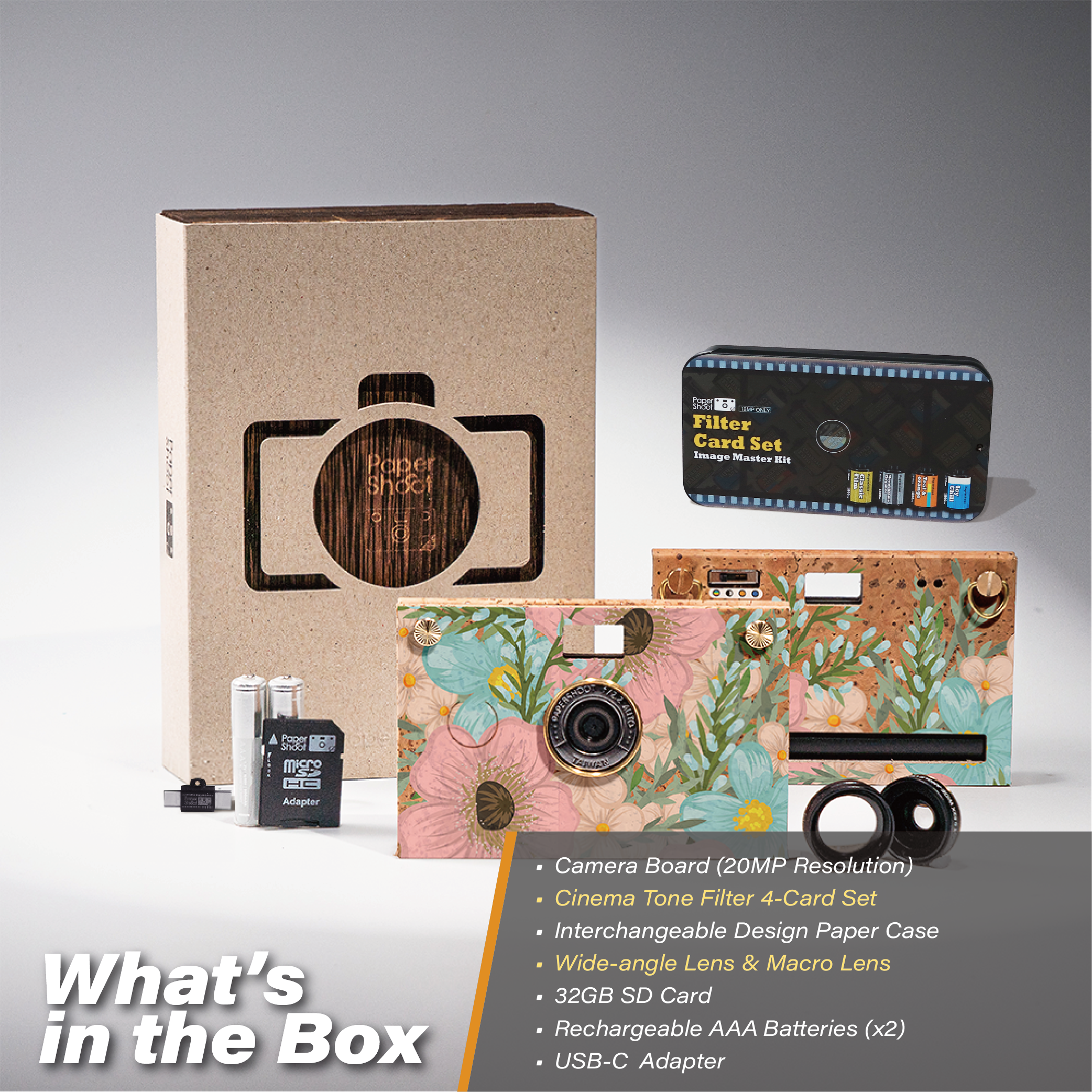
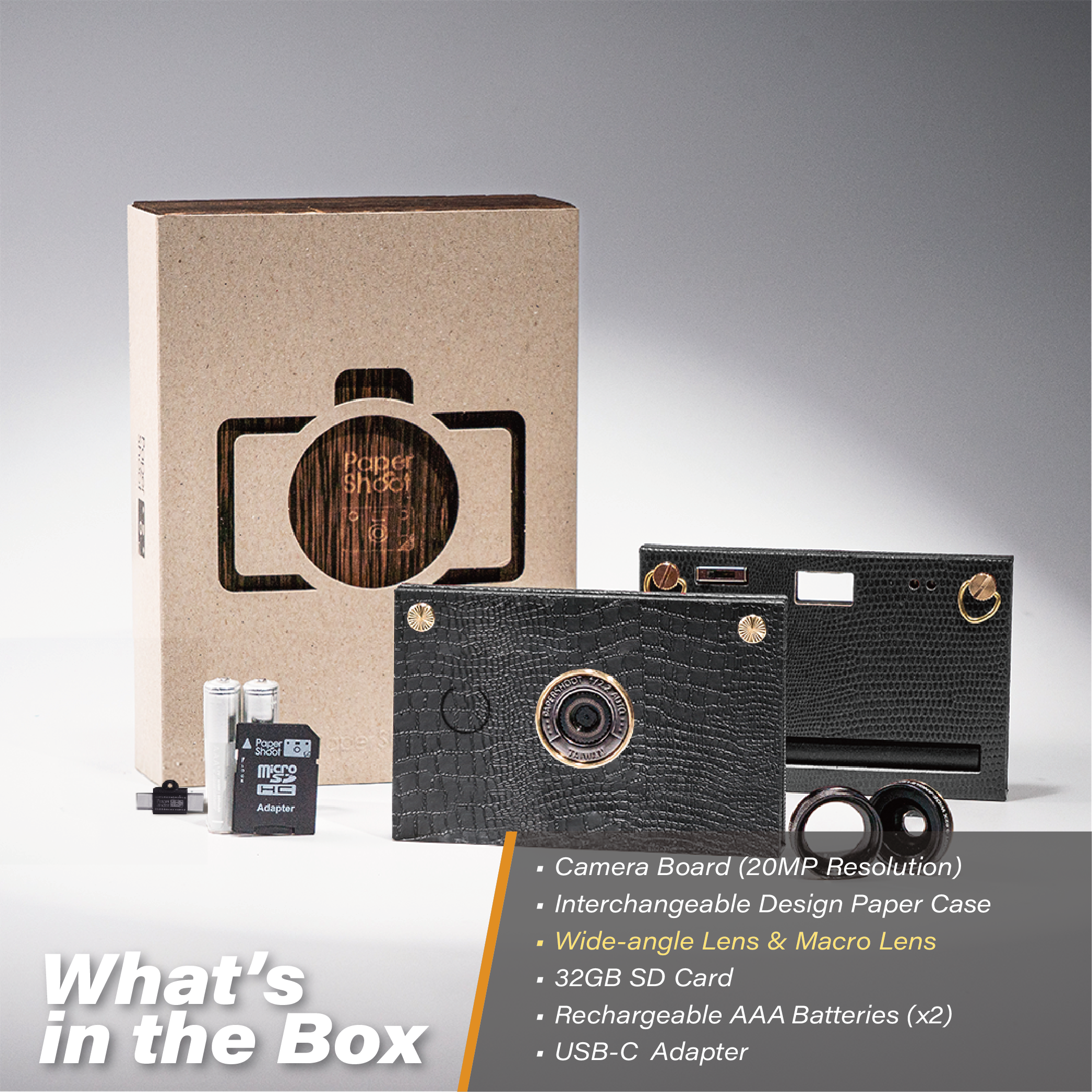
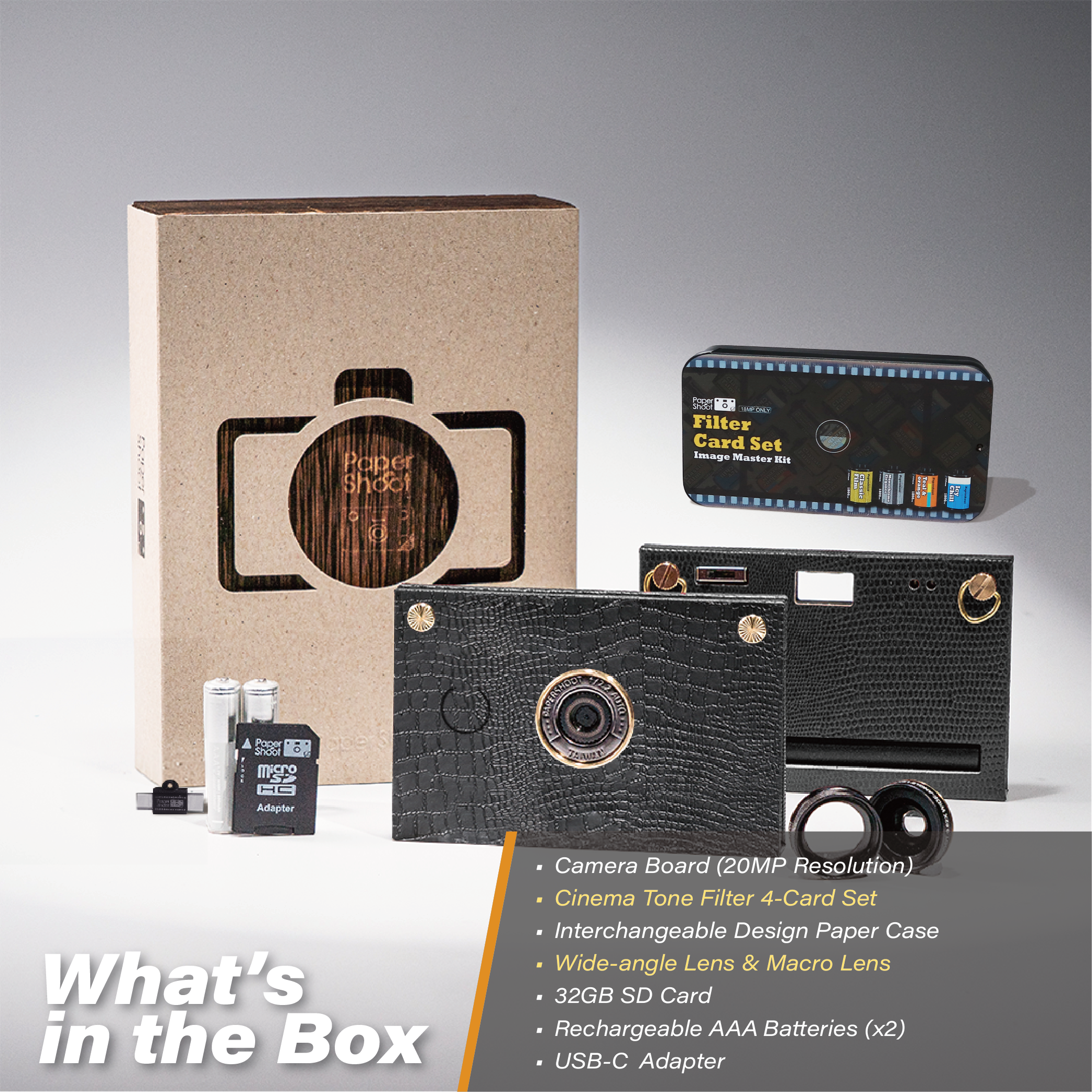
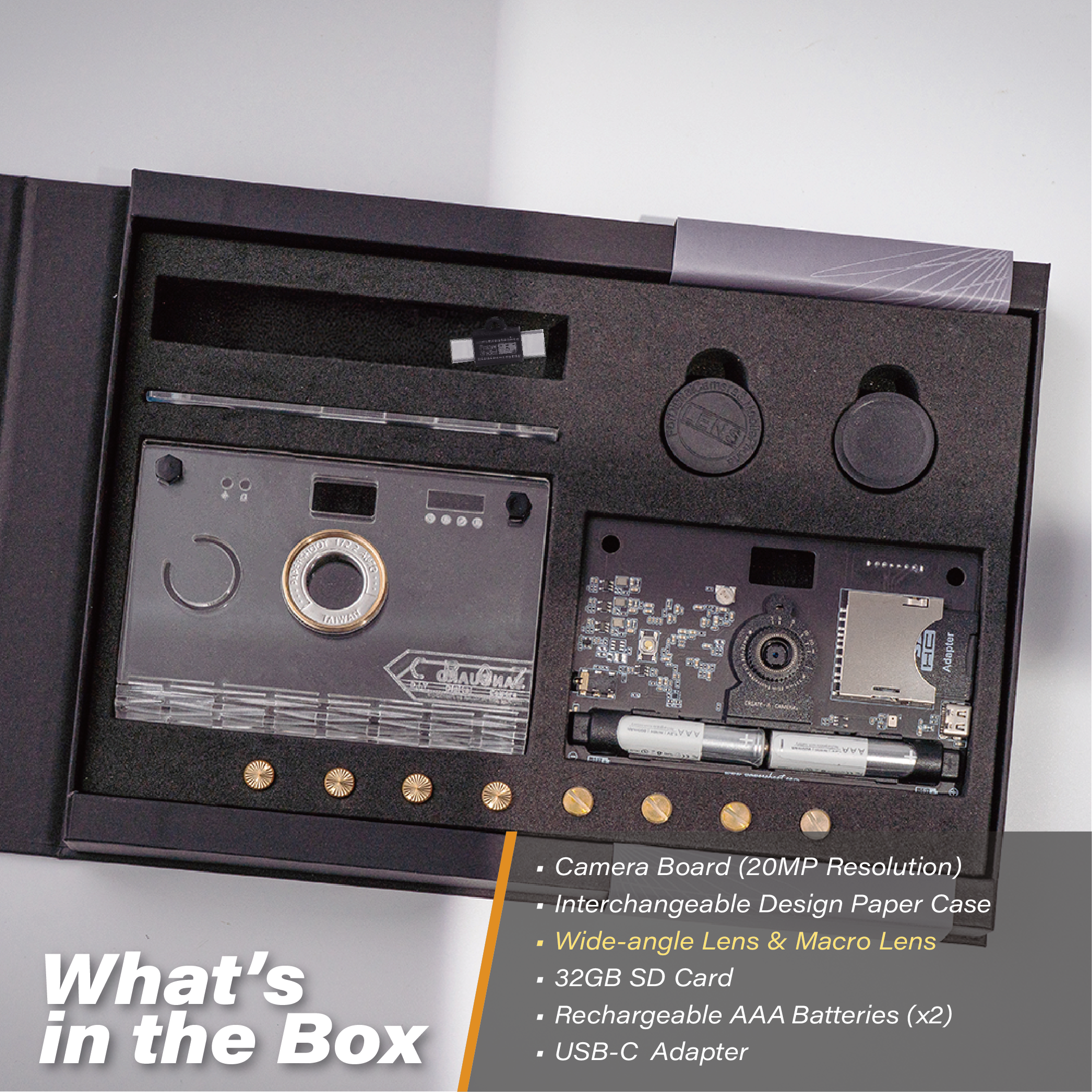
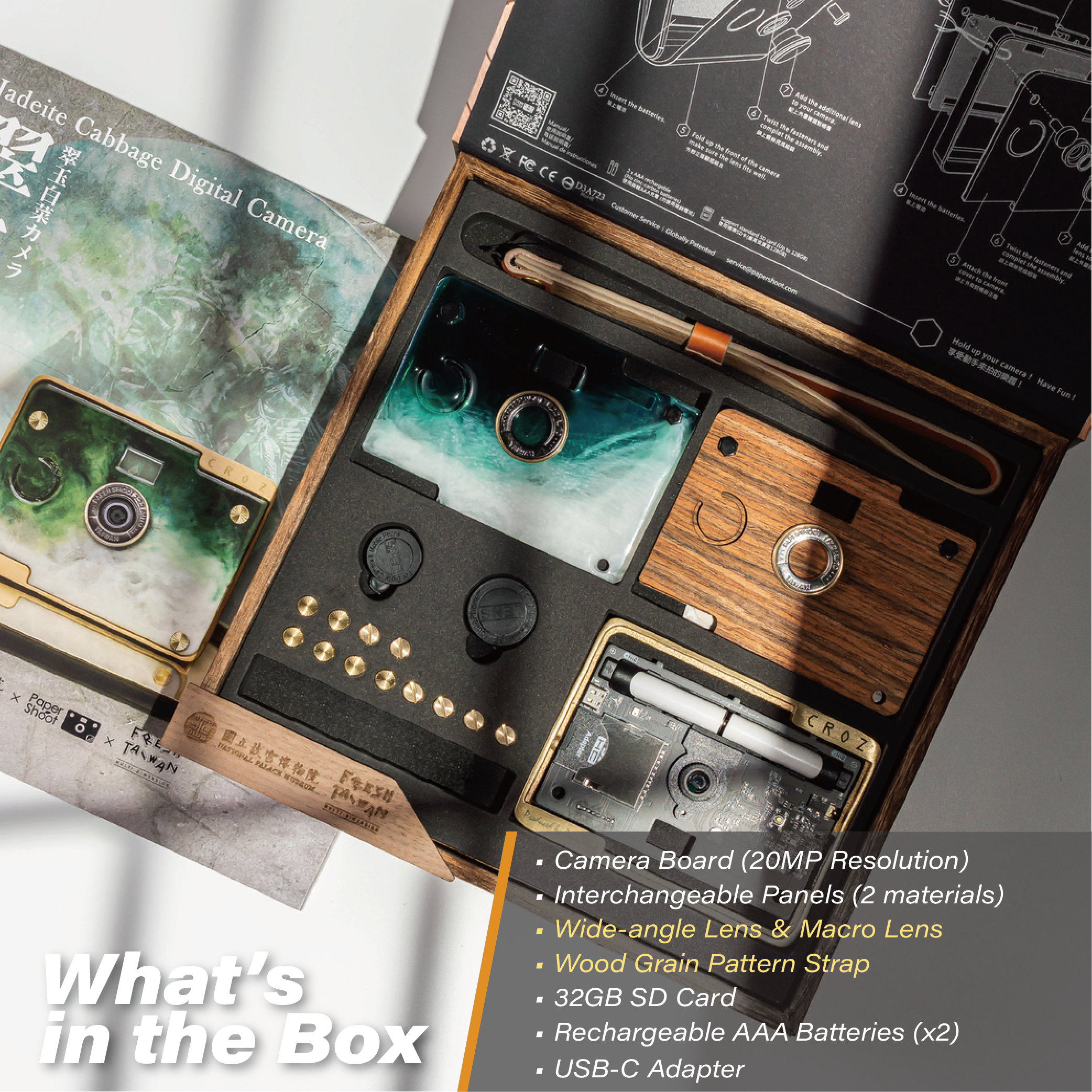
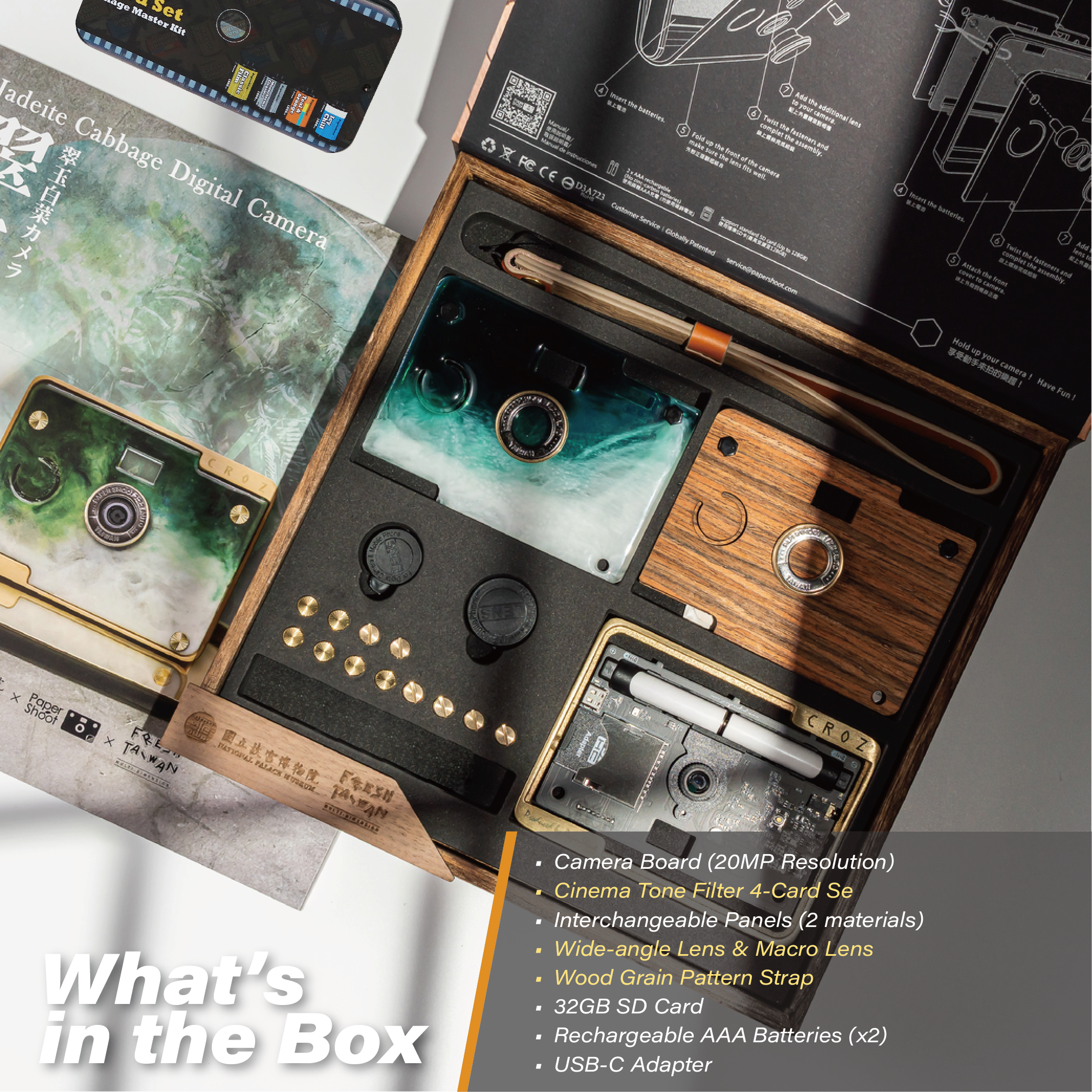
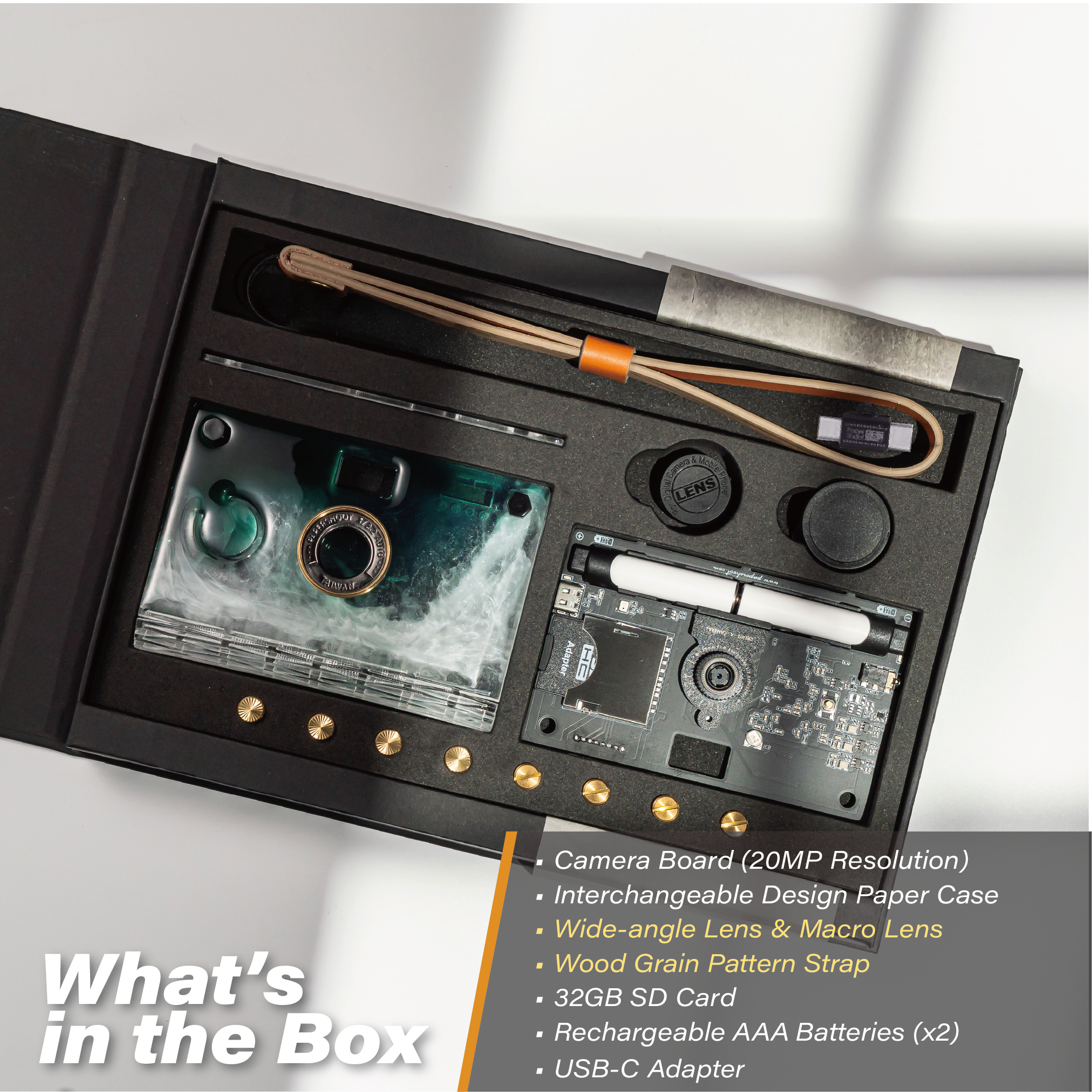
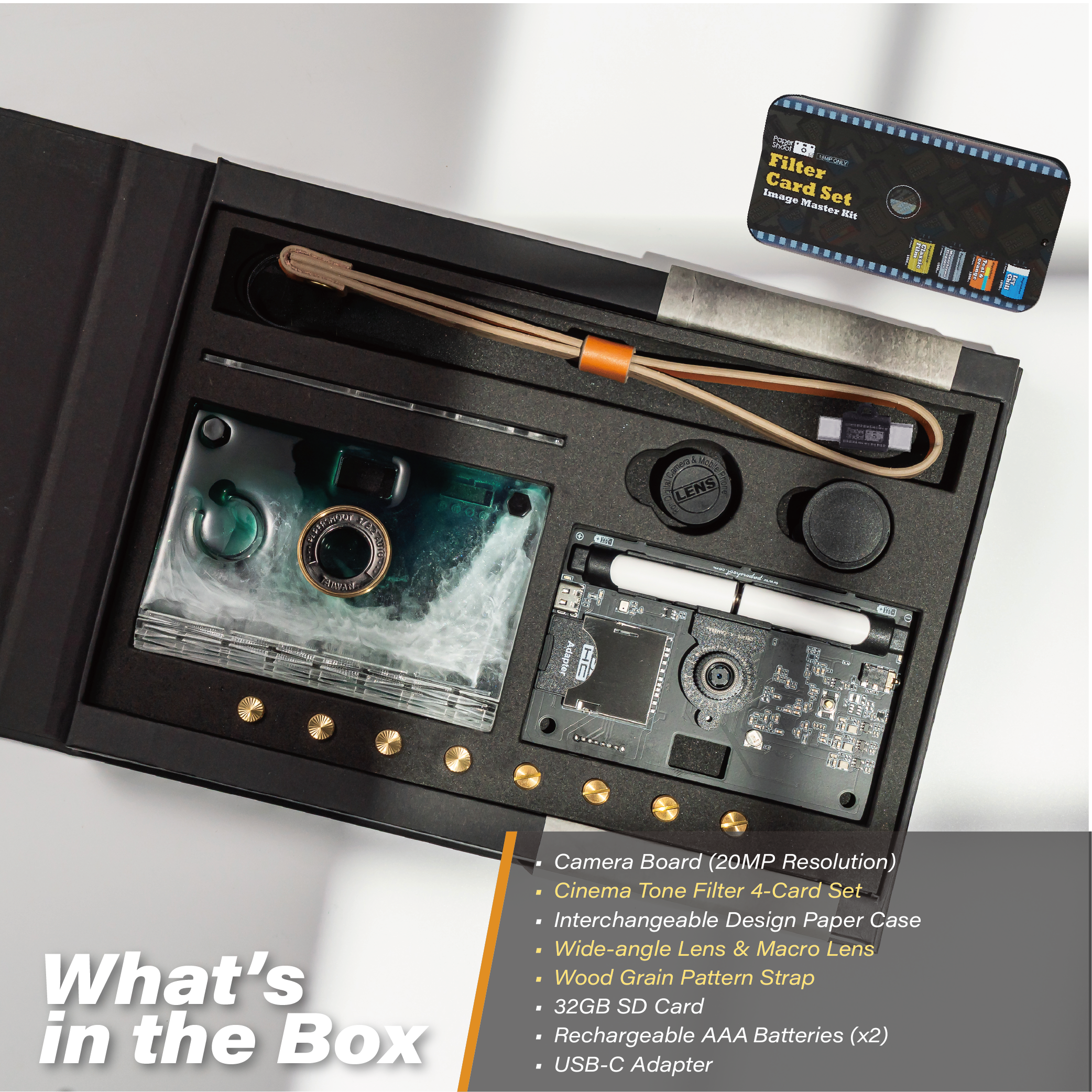
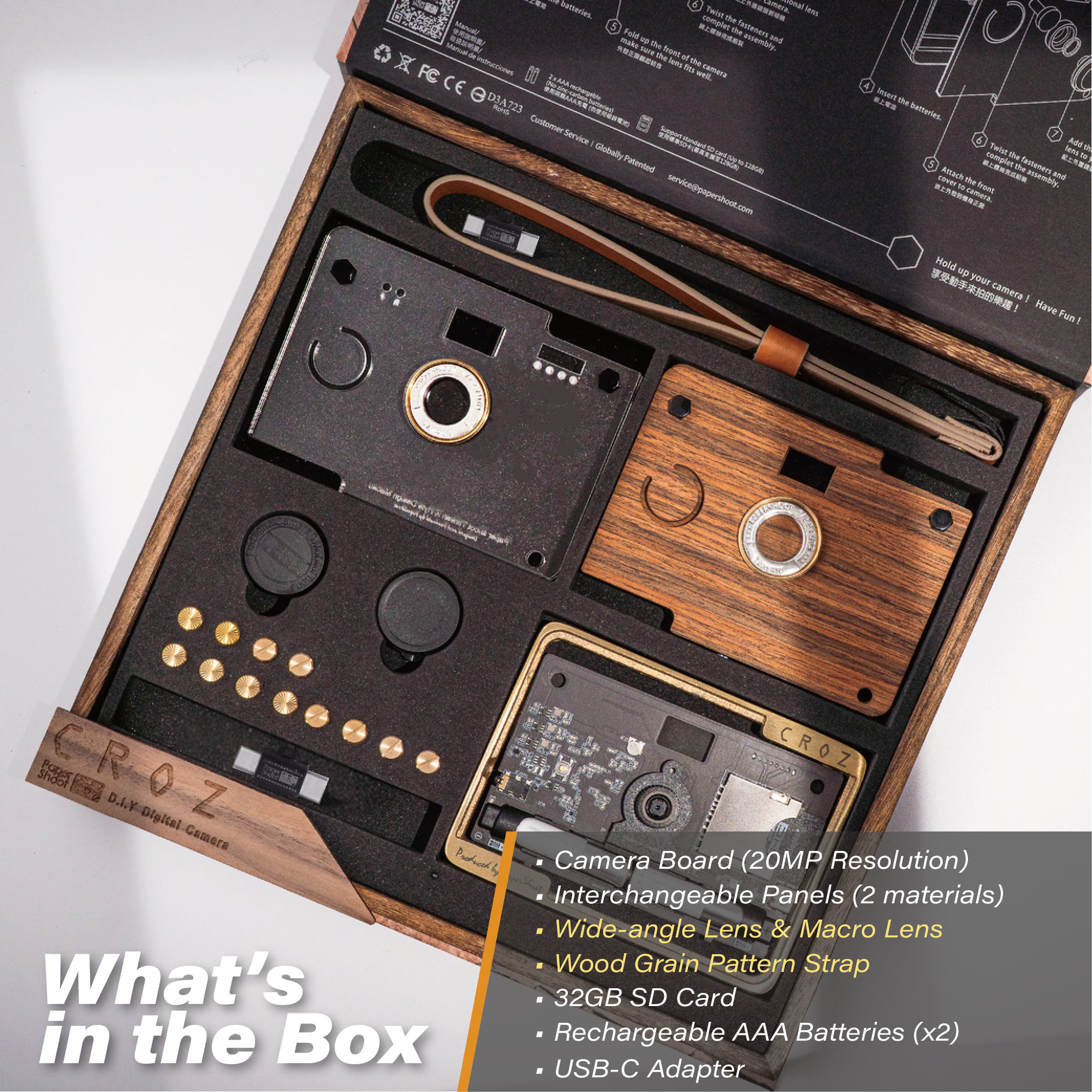
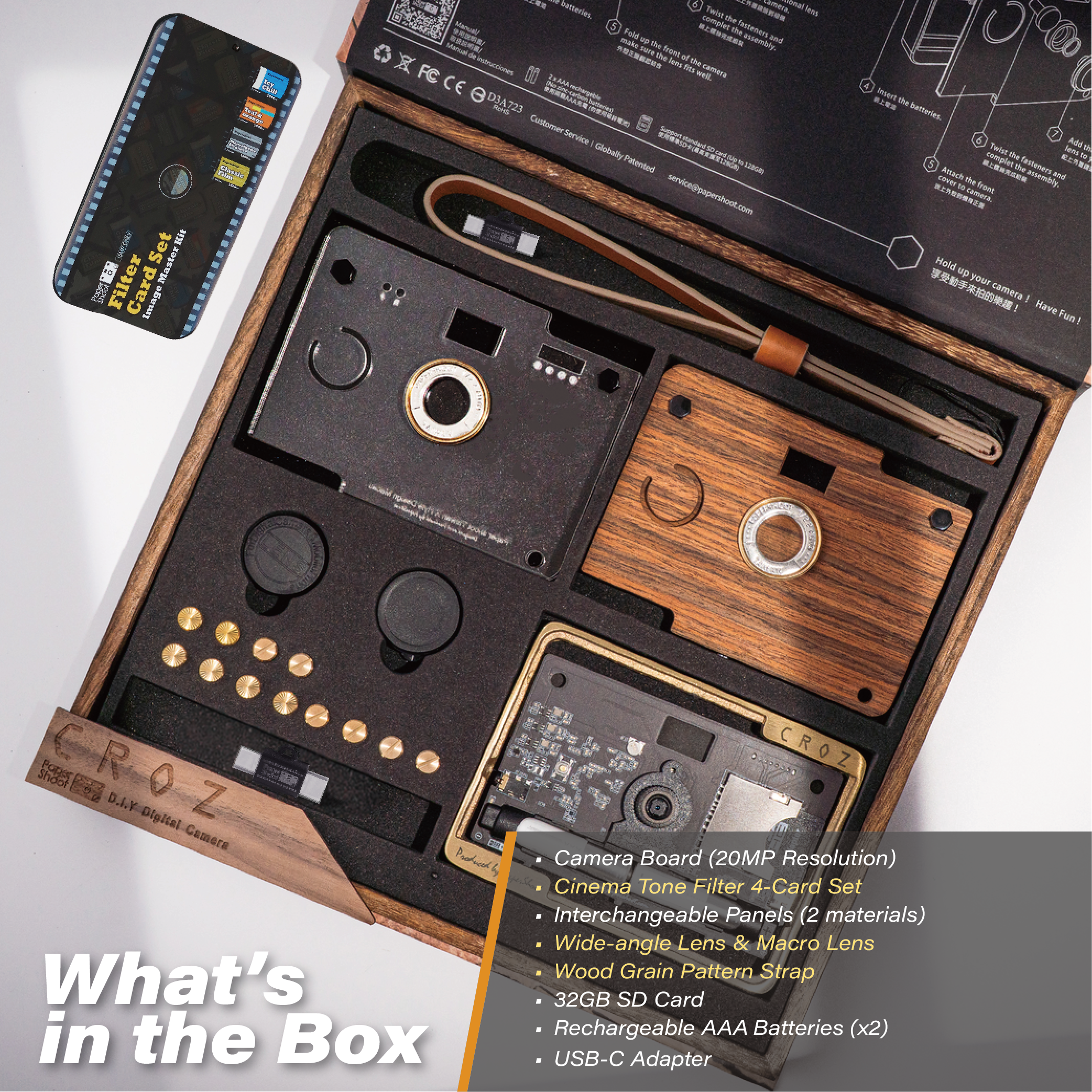
What’s Included
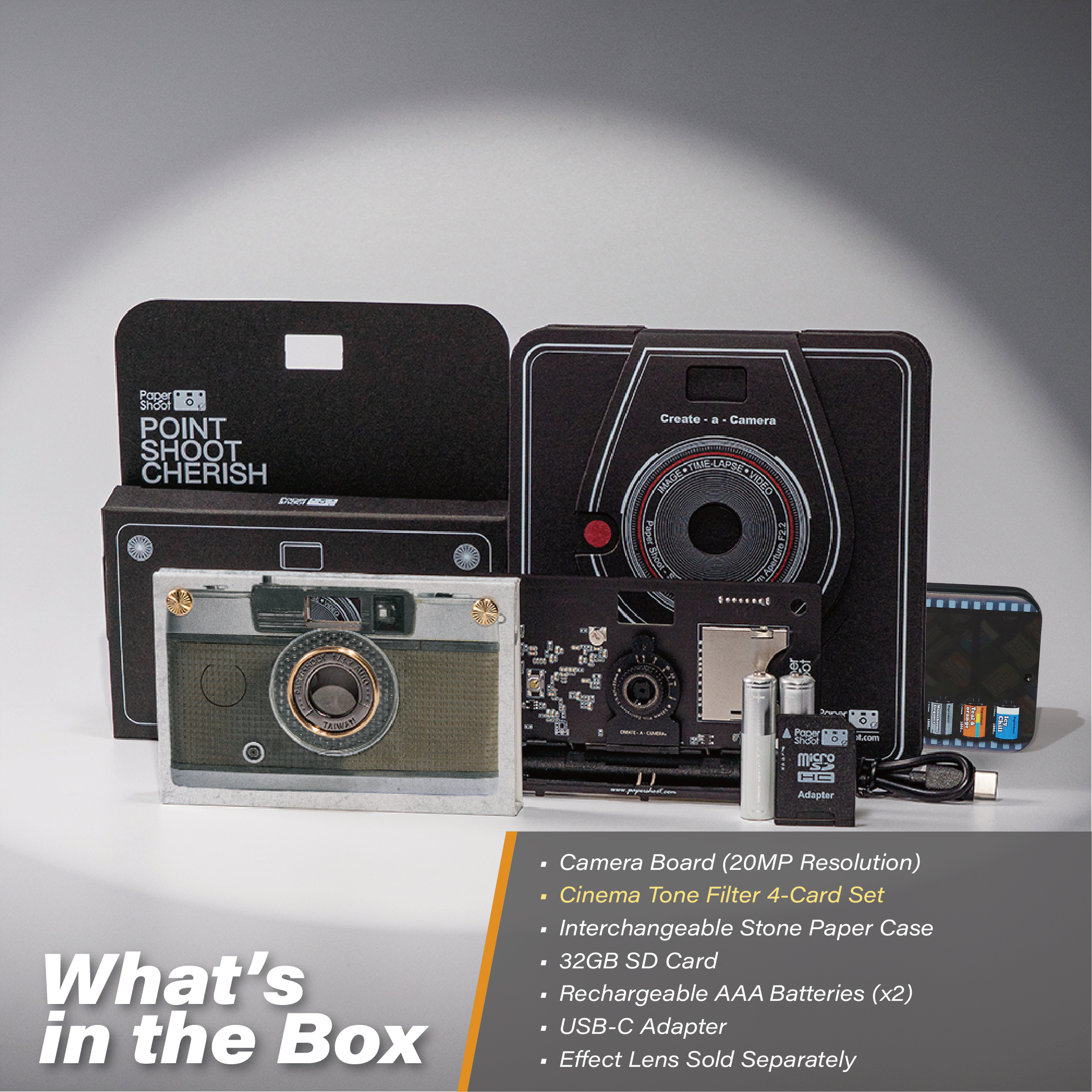
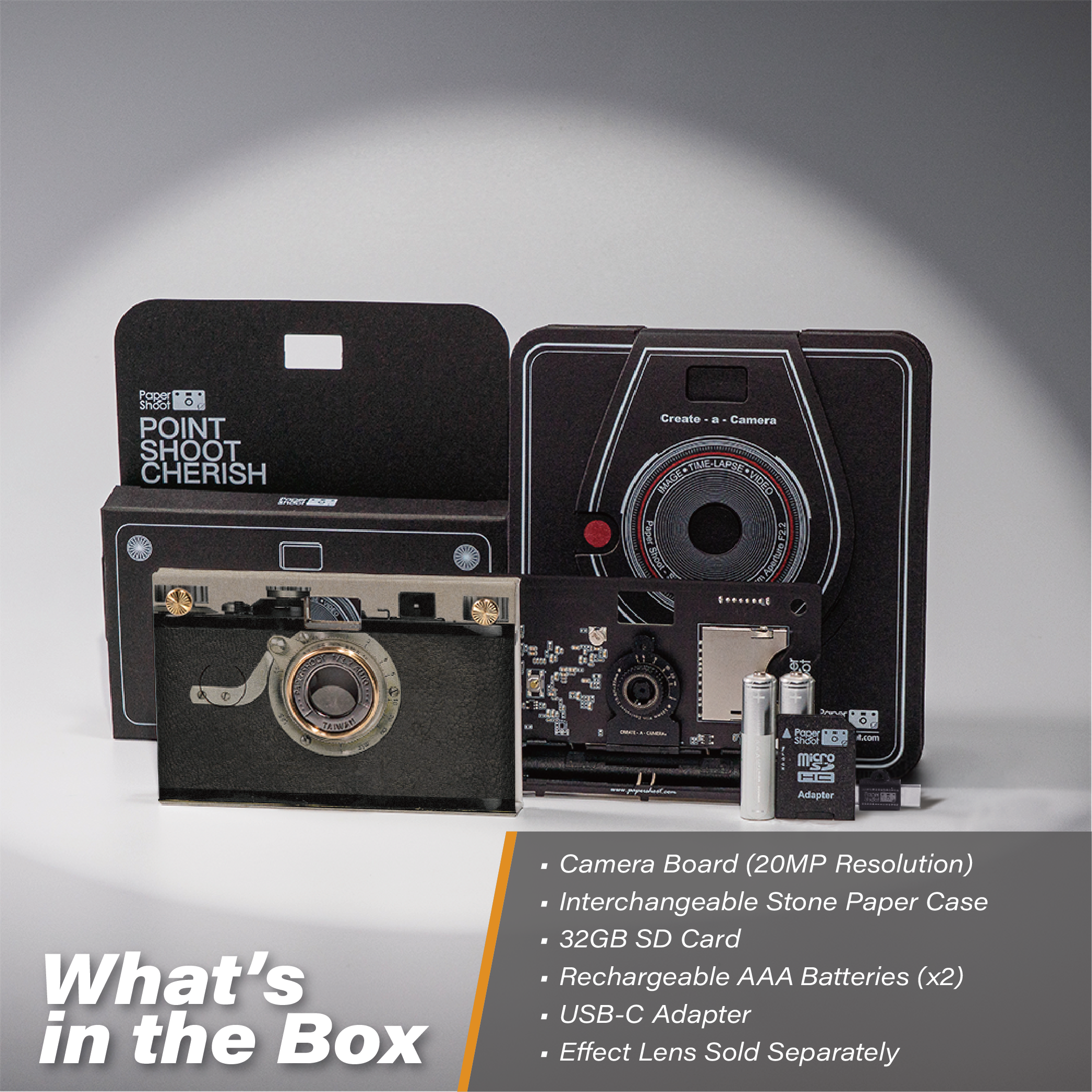
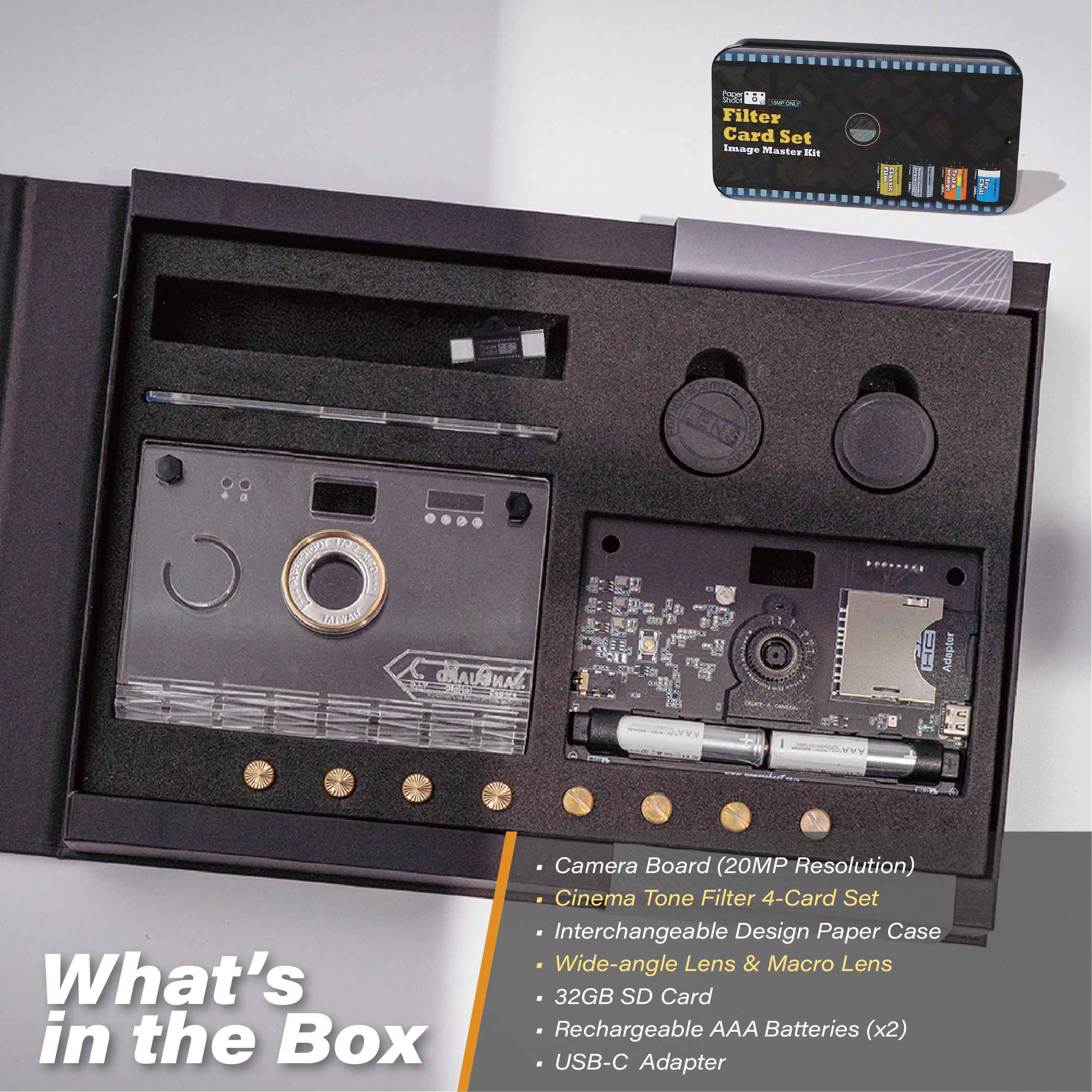
Camera Board
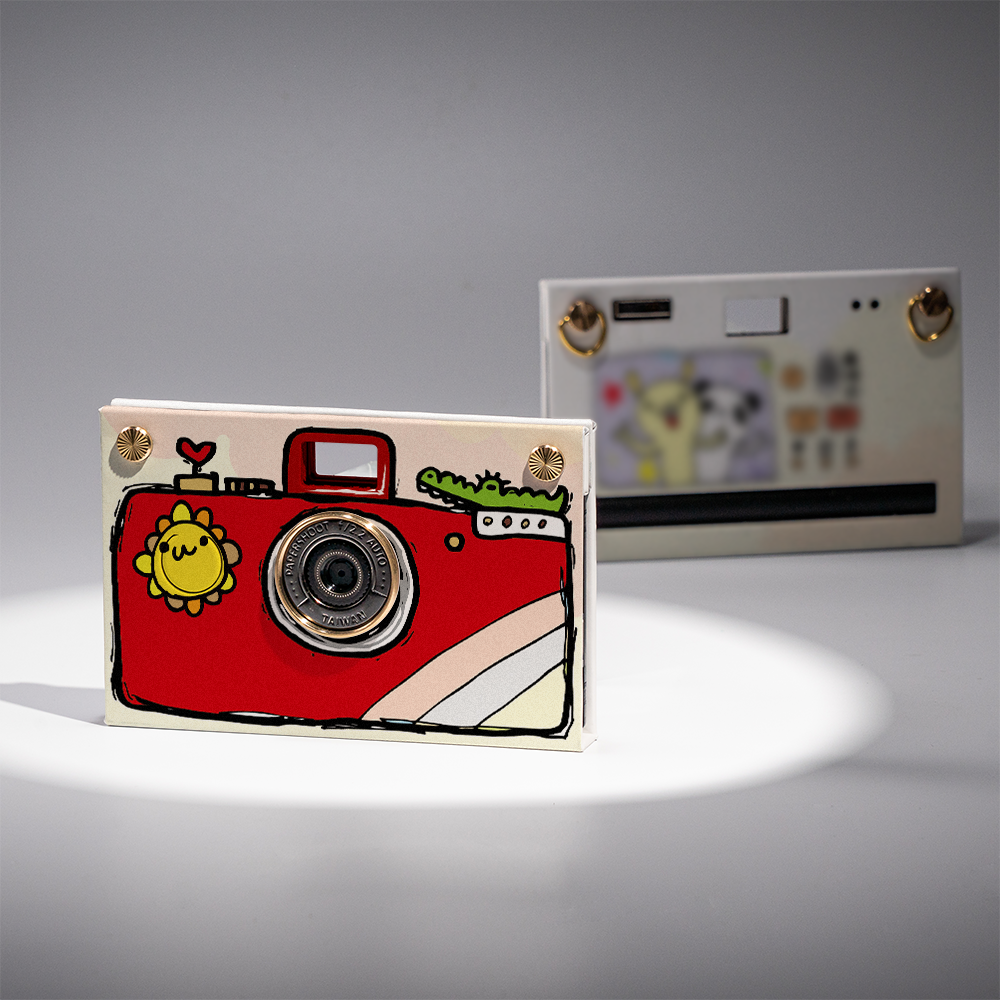
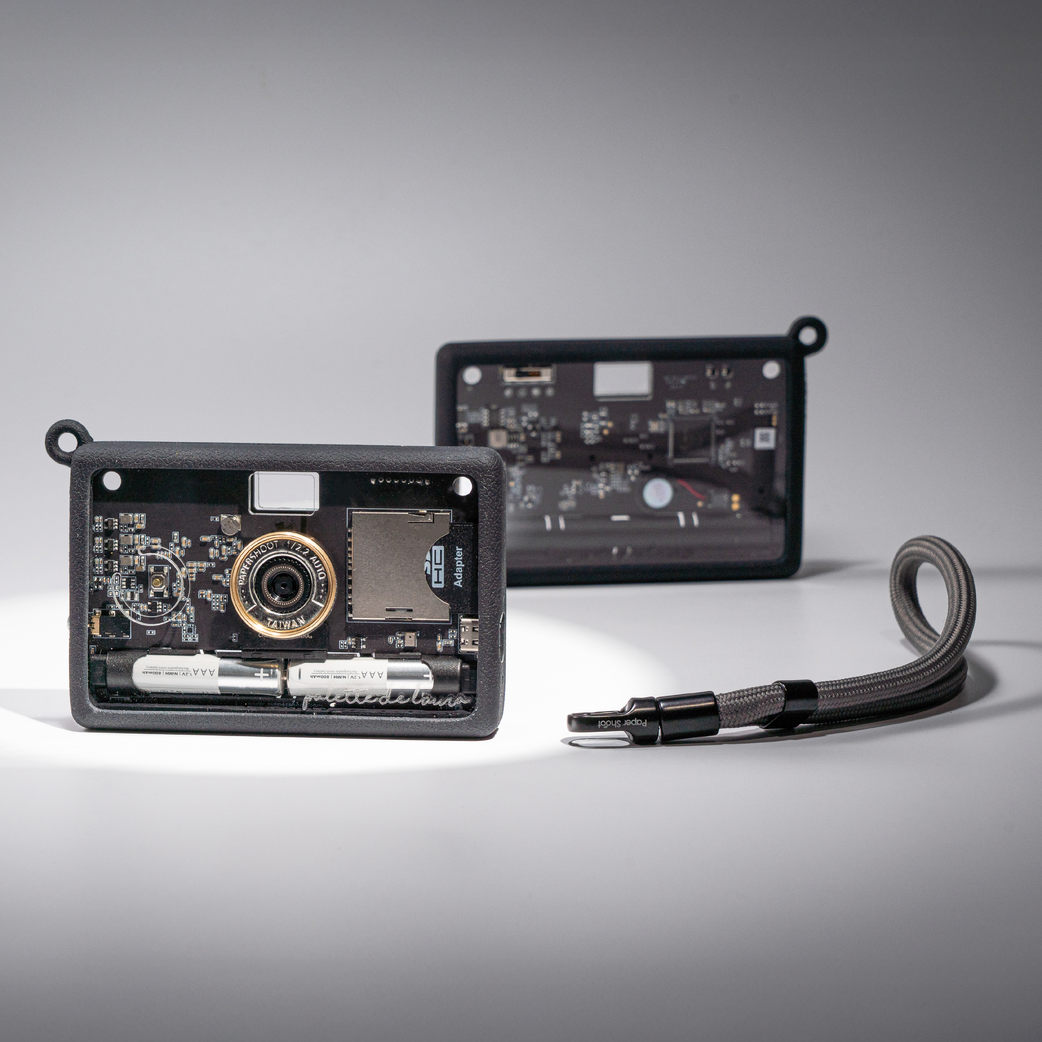
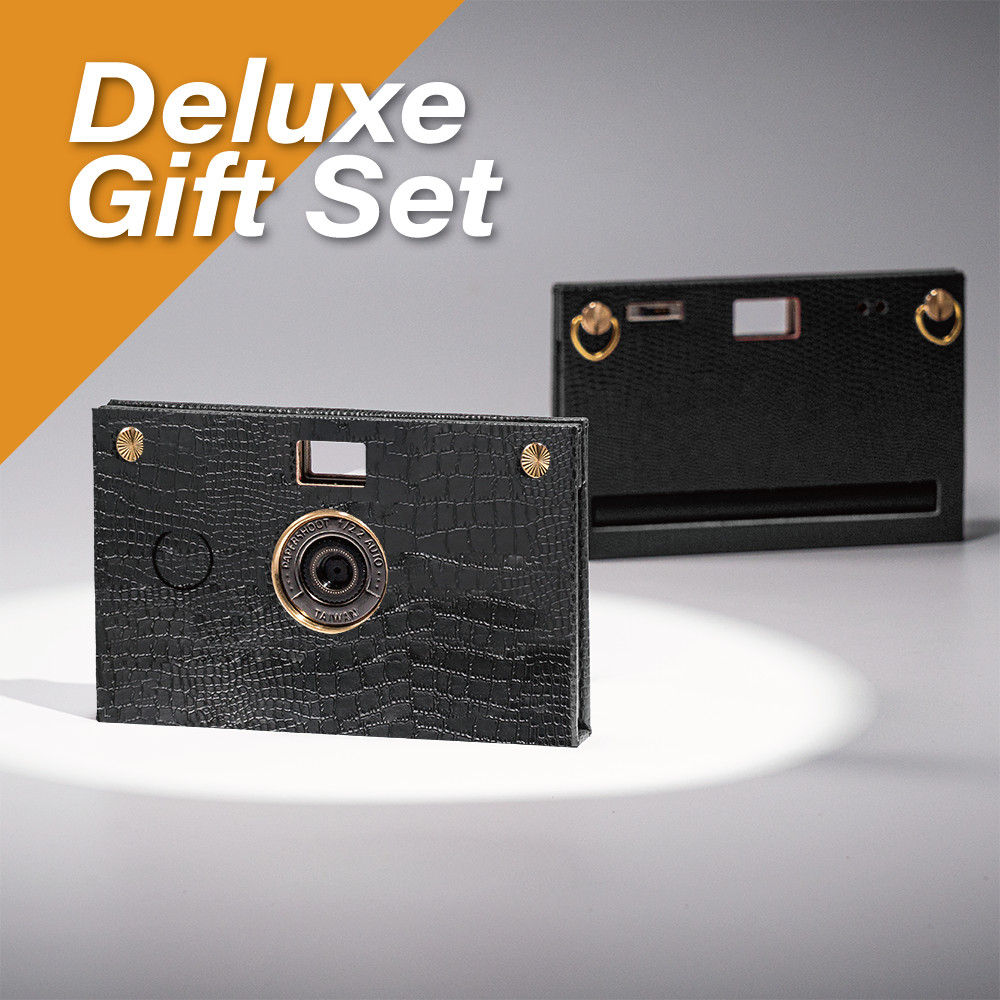
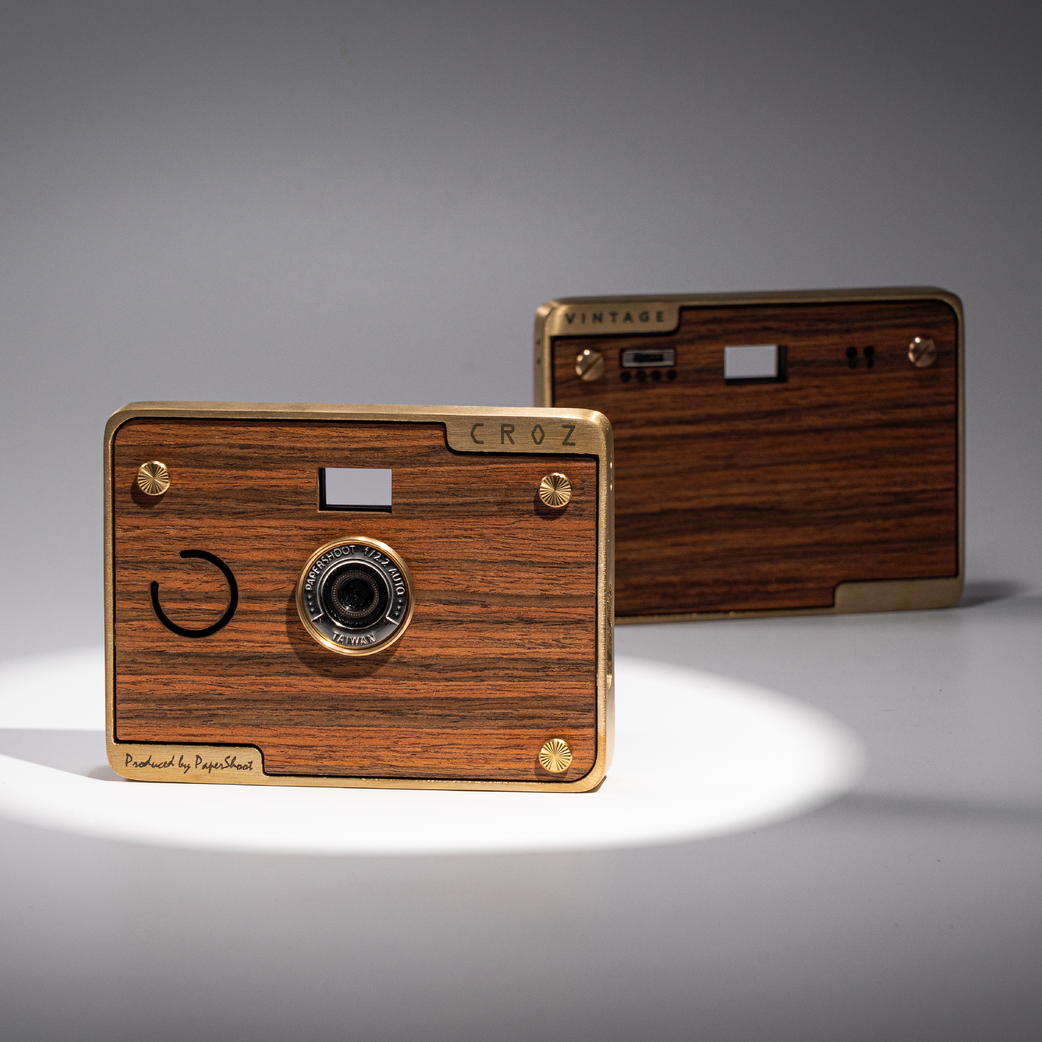
Interchangeable Stone Paper Case

Brass Fasteners
SD Card
AAA Rechargeable Batteries

Adapter or Cable (Charging & Data Transfer)
Ditch the Old CableSame Charging + Data Transfer
Now in a lighter, pocket-ready adapter.


FAQ
Is the image quality actually good?
Somewhere between film and digital. You get soft grain, gentle color shifts, and a look that feels a little unpredictable in the best way. It is not the sharp, corrected, every shot looks the same photo your phone gives you. Most people describe the results as warm, like an afternoon that got kept instead of documented. The sample photos below say it better than any spec sheet.
Is there a screen? Can I see my photos right away?
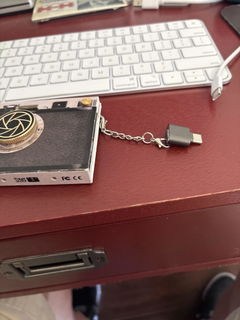
There is no screen, and that is on purpose. Without a preview to check or a shot to redo, you stay with the person in front of you instead of looking down. When you want to see your photos, plug the camera into your phone or laptop with the included Type-C connector and they come up right away. No card reader, no waiting on a lab.
How do I get 20 different looks?
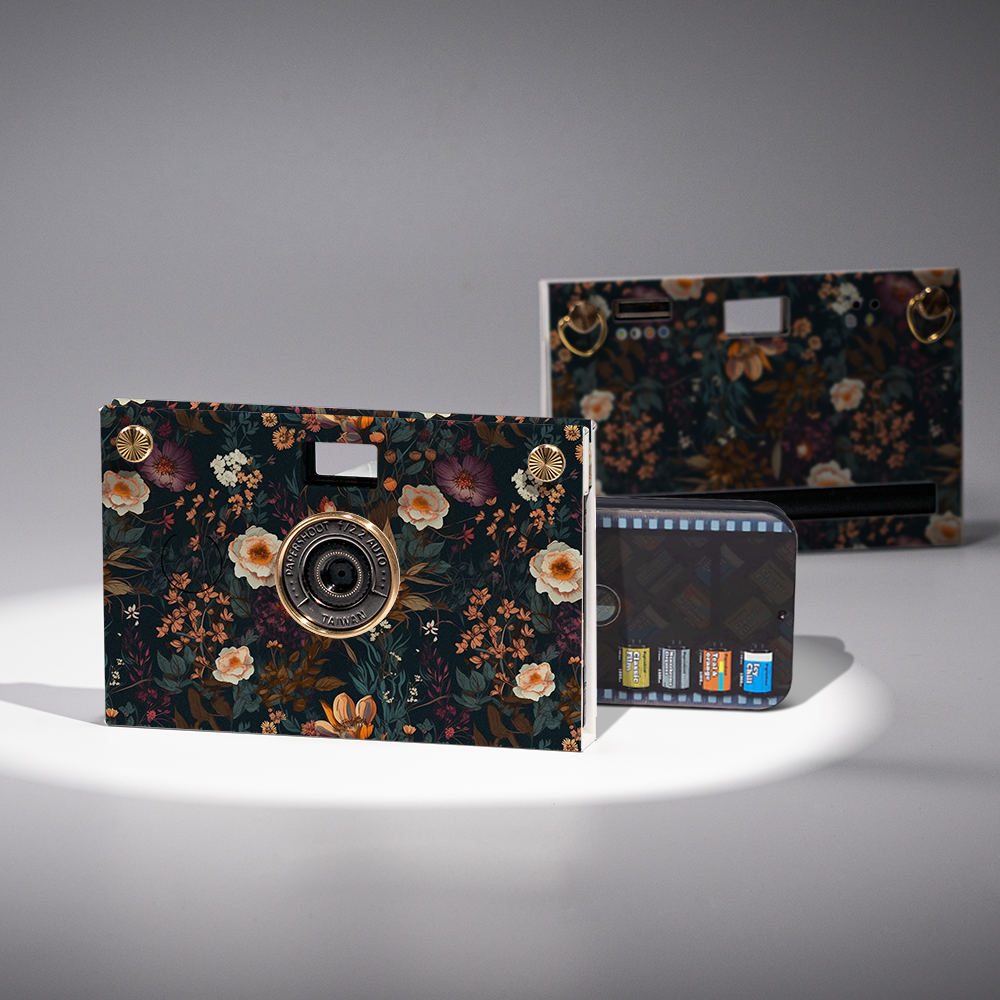
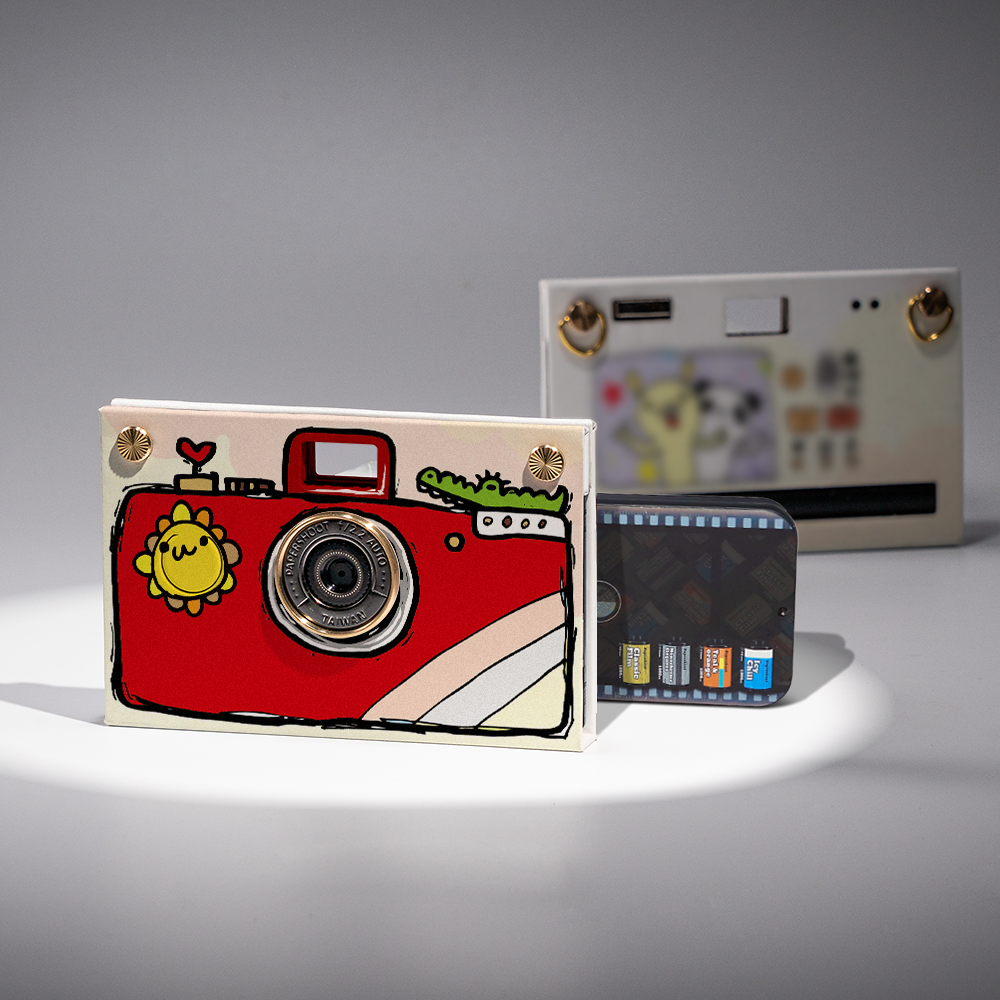
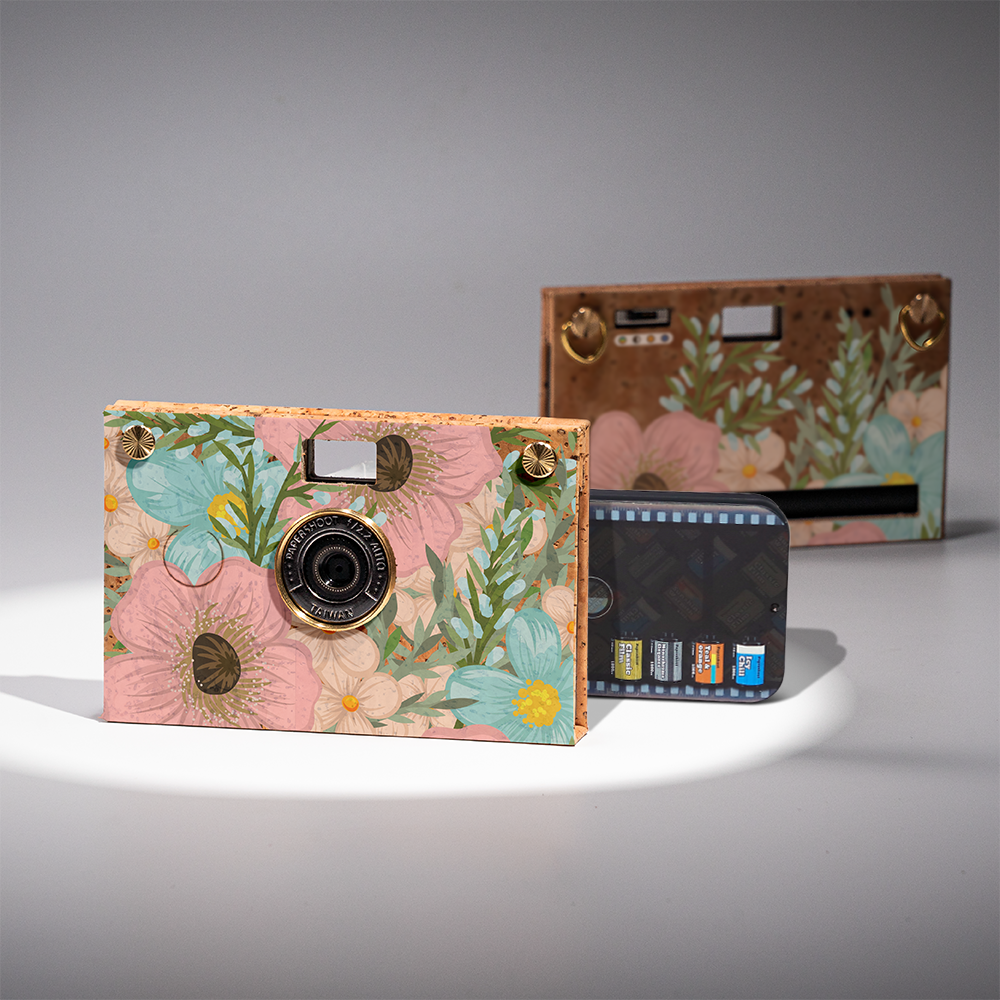
Slide a filter card into the side of the camera, like a SIM card. Changing cards is like changing film. The color the camera gives you changes with it.
The switch on the camera sets 4 built in modes, and each of the 4 cards in this bundle works across all of them. That is 20 looks. Nothing to set up, nothing to focus. Press the shutter and you are done.
How do I get the photos off the camera?
Plug in the included Type-C connector and your photos show up on your phone or laptop, ready to browse, pick, and save. No app to download, no Wi-Fi to connect. Share whatever you want straight from your phone. If your phone has a Lightning port (iPhone 14 and earlier), we also carry a Lightning card reader.
Shop the Lightning card reader →
Do I need to buy batteries or a memory card? How manyphotos per charge?
No, an SD card, batteries, and the Type-C connector are all in the box, so you can start shooting the day it arrives. The camera runs on AAA batteries, either rechargeable NiMH or standard alkaline, and a fresh set of two gets you around 300-500 shots. When you restock, just skip carbon zinc batteries, they do not have enough power to run the camera. The camera takes SD cards up to 128GB. For longer trips, a spare set weighs almost nothing and is worth packing. Extra batteries and cards are available on their own or as a set.
Shop batteries and memory cards →
Where does it work best?
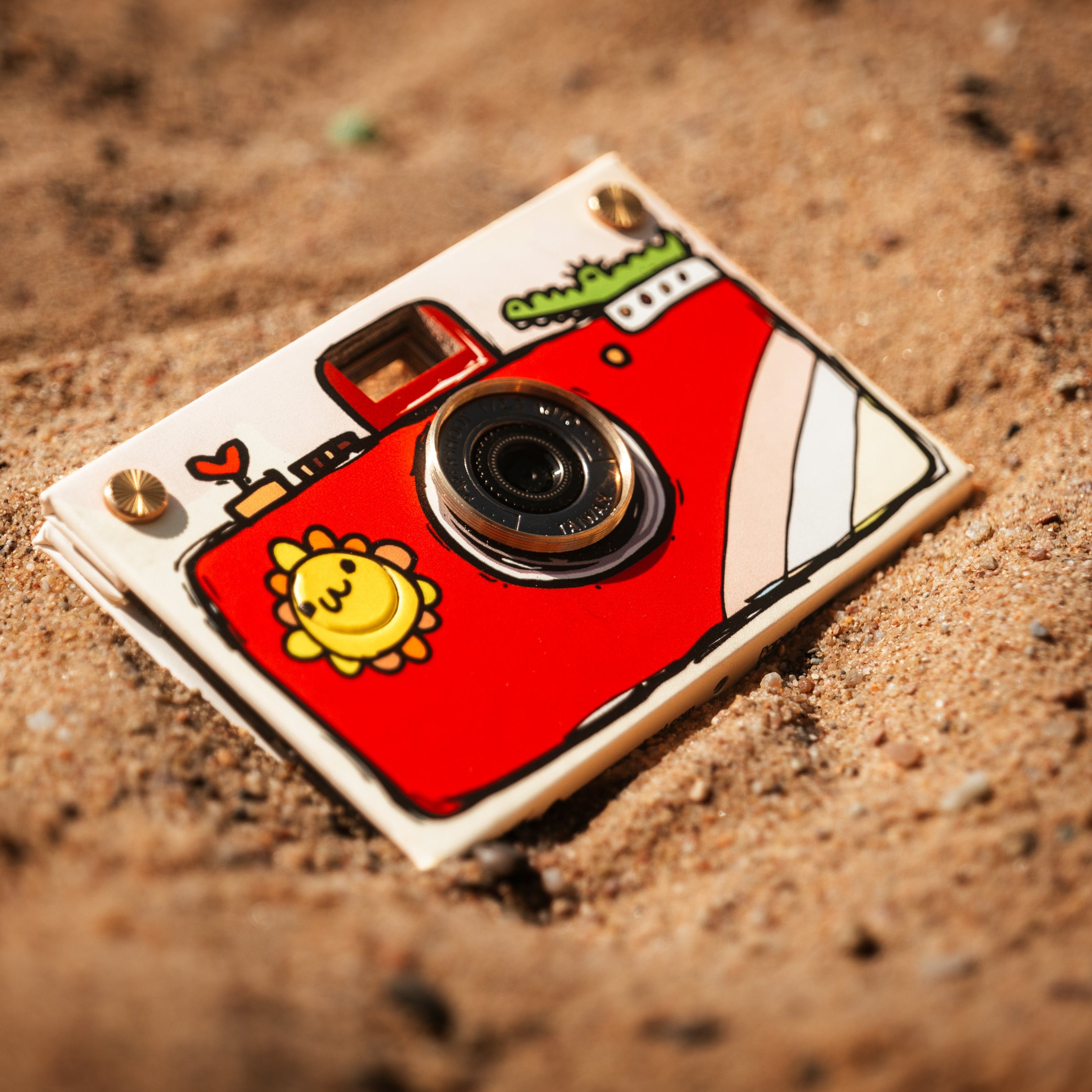
Paper Shoot is happiest in natural light and bright indoor spaces. Daylight outdoors, a seat by the window, a well lit cafe. In dimmer light you will see more grain, which is part of the character of this camera, and the Ring Light pairs with it if you want clearer shots at night. It is not waterproof, so keep it out of heavy rain, pools, and the ocean. A little mist will not hurt it.
What is the difference between models? Can I buy filter cardsand cases separately?
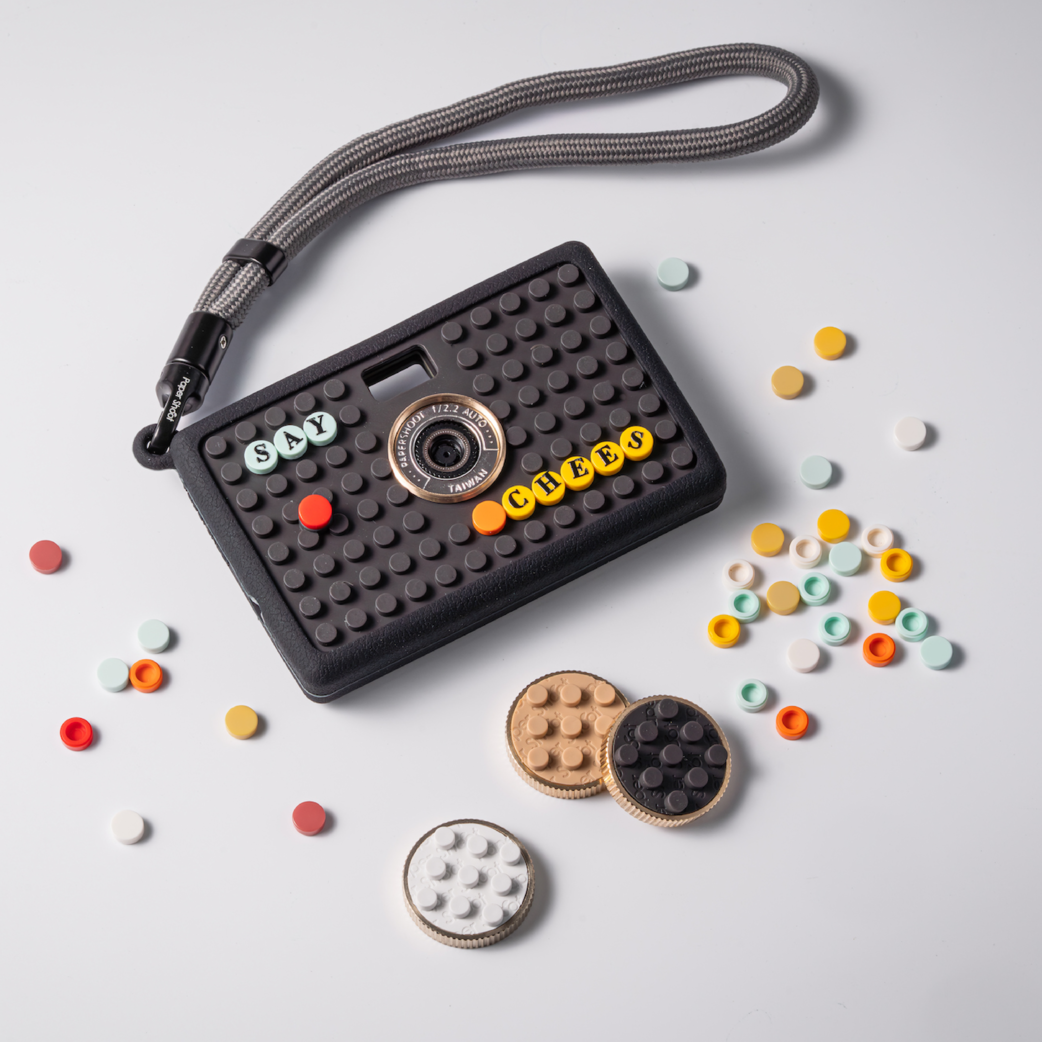
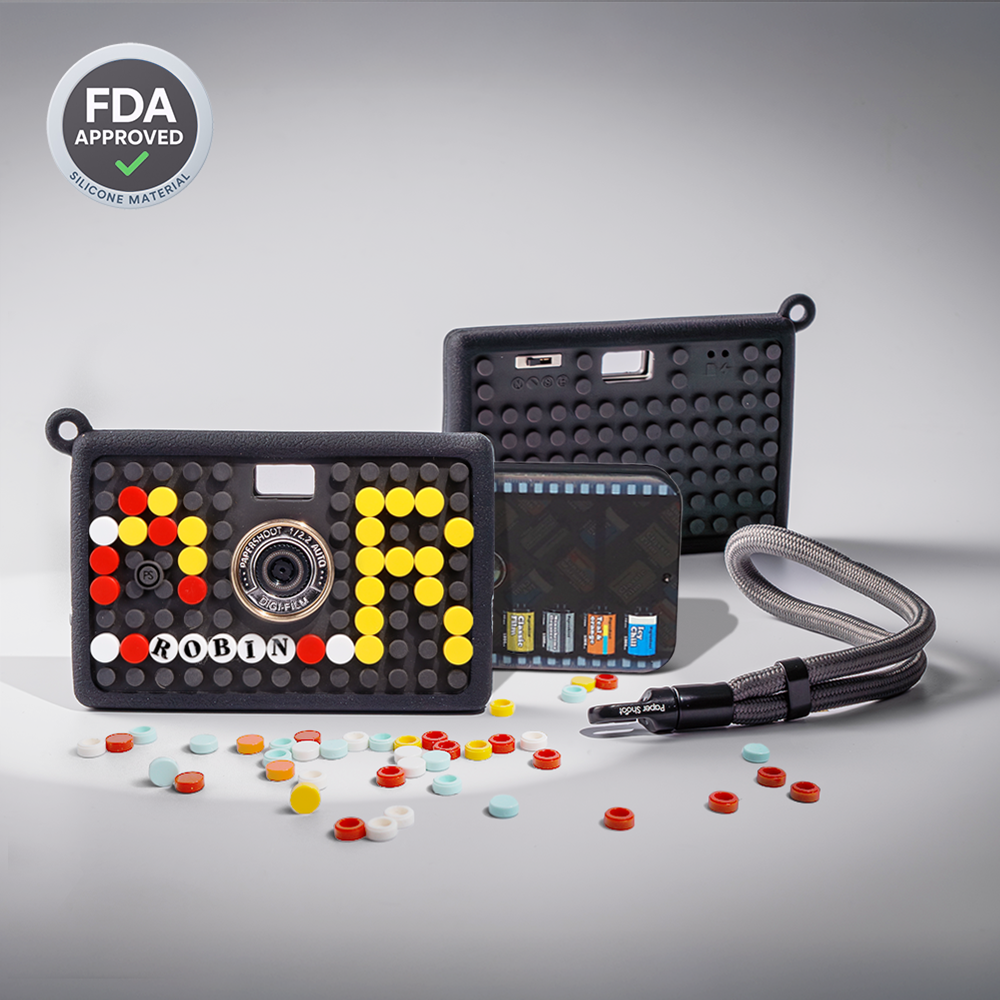
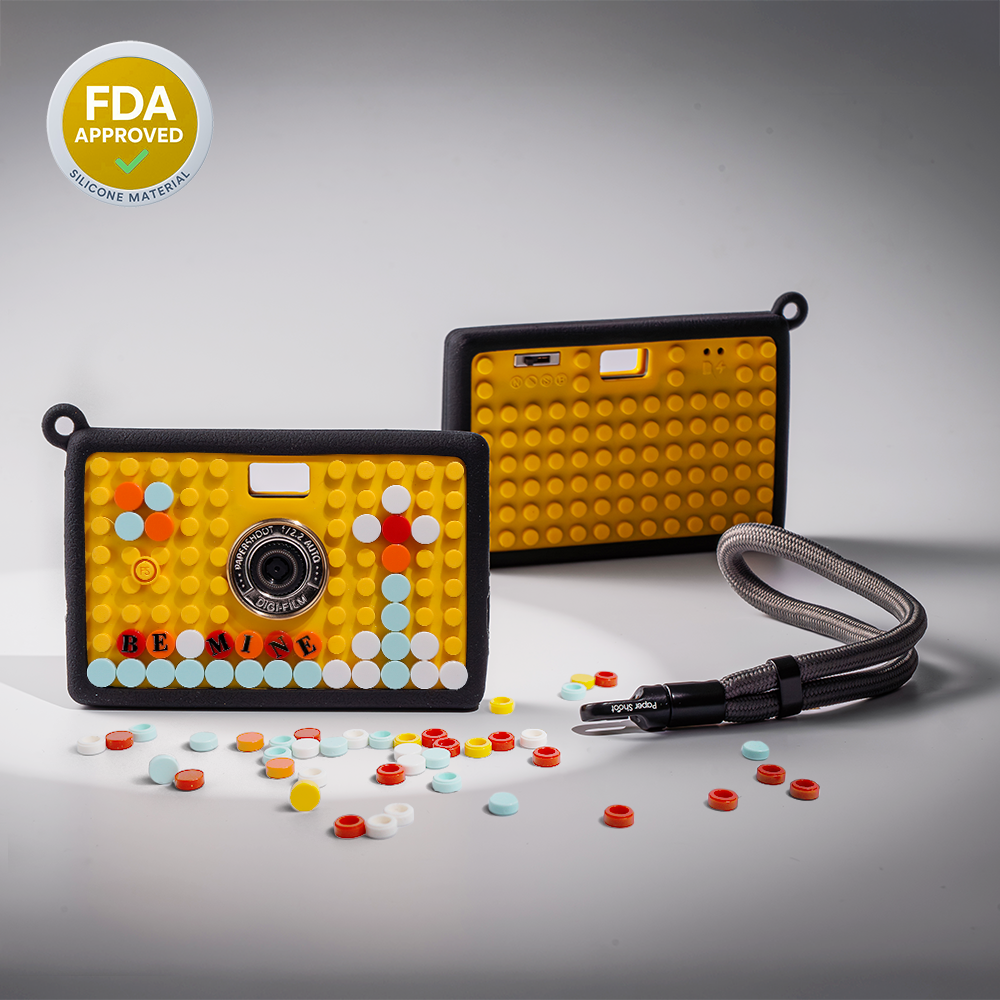
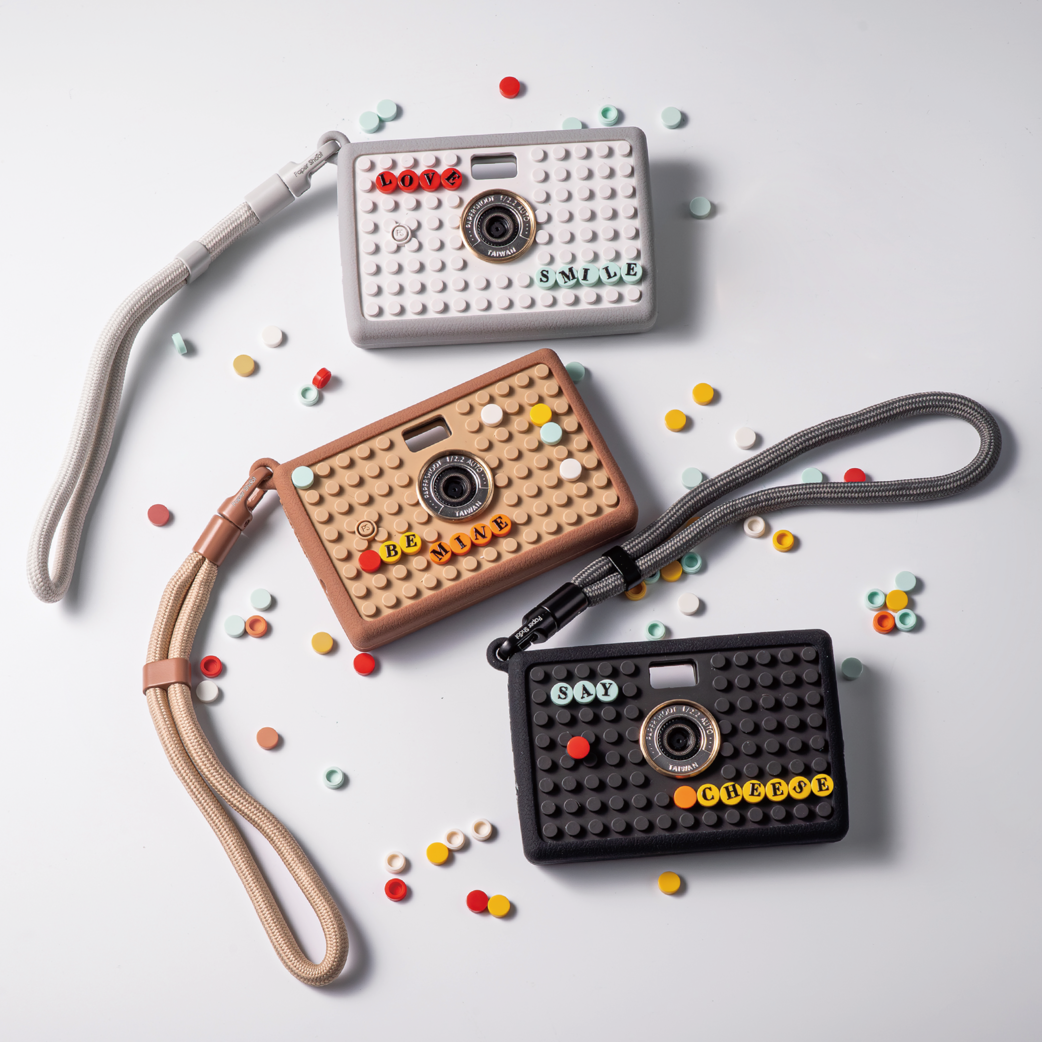
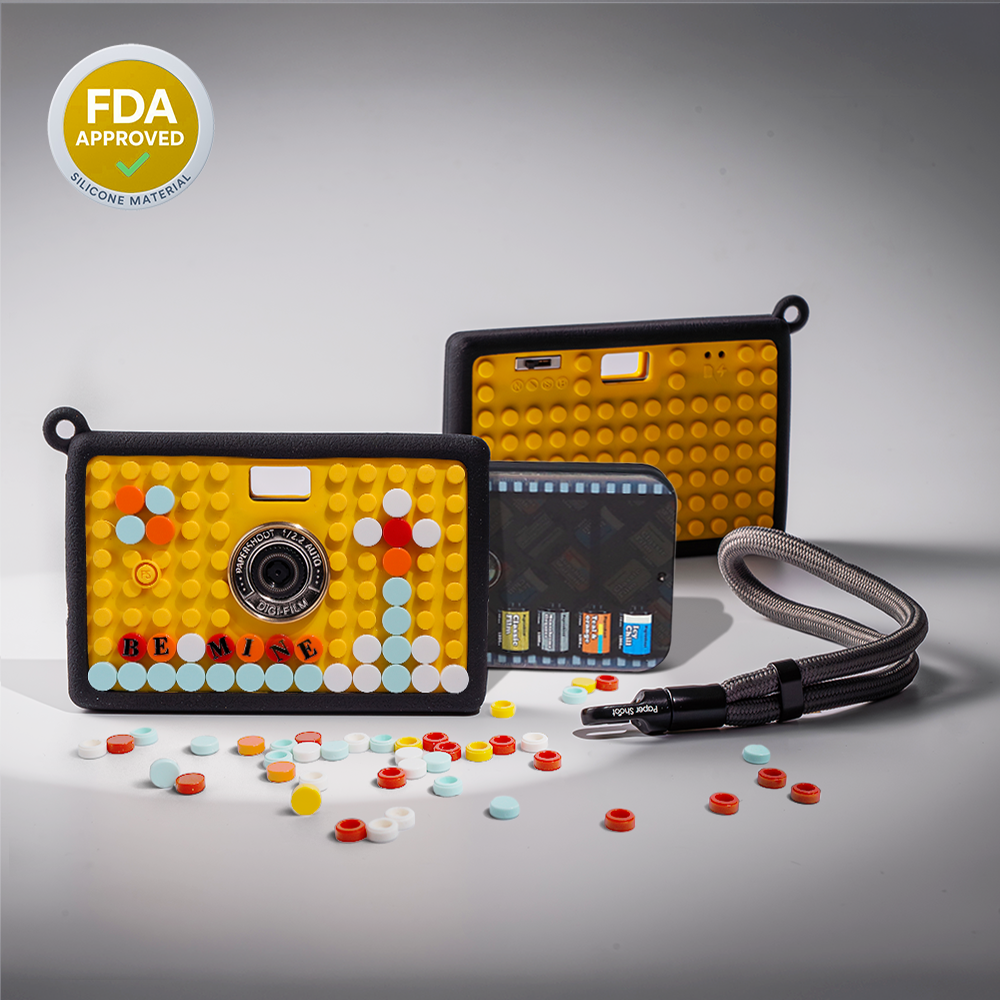
Every model uses the same lens and sensor, so image quality and filter effects are identical across the range. What changes is the case material and what comes in the set, like a special effect lens or a wrist strap. Filter cards and cases are also sold on their own, and a lot of people collect them slowly, by season or by trip, so the same camera keeps producing something new. Swapping a case takes a few seconds and no tools.
See the full range of case materials on the product→
Does it make a good gift? Who is it for?
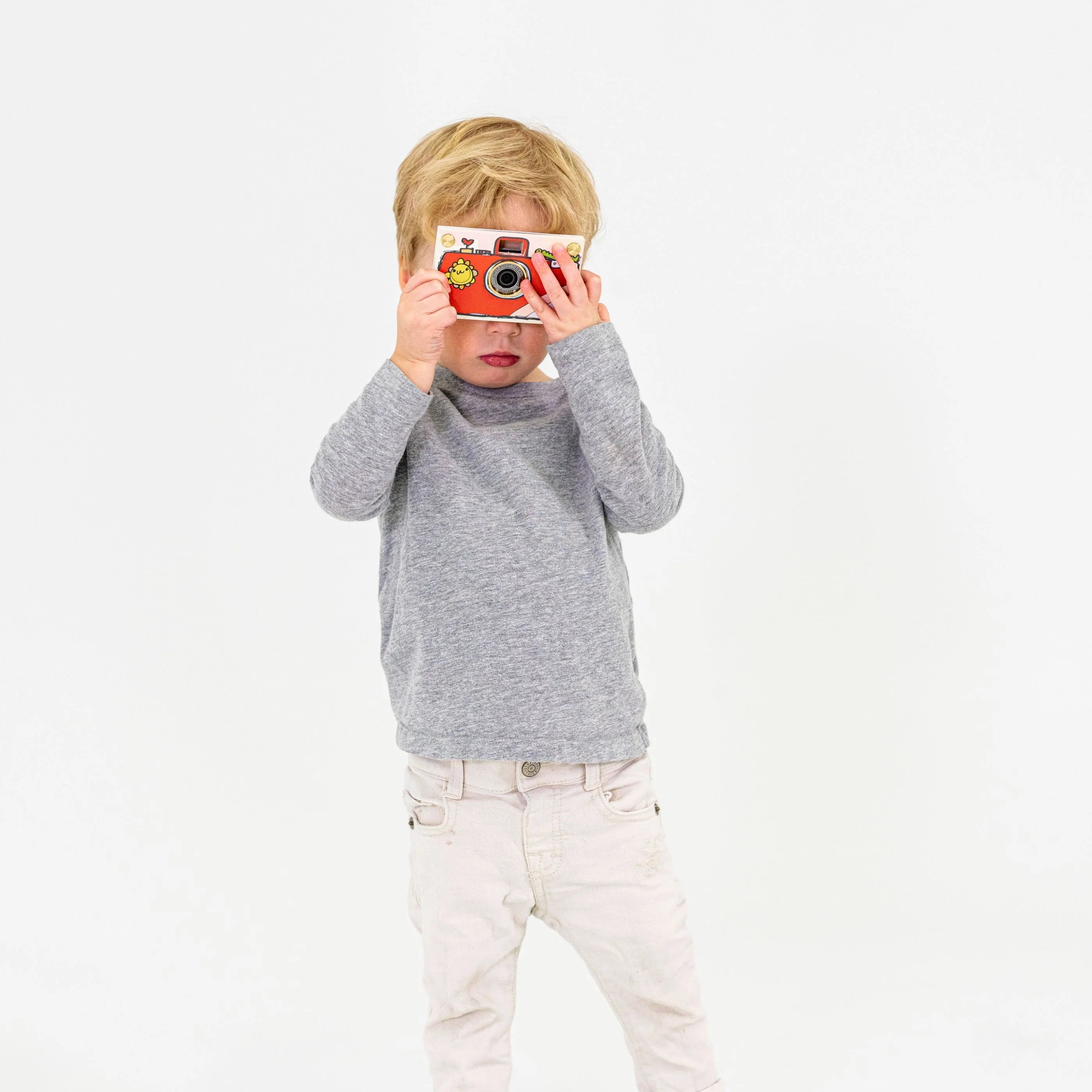
It is one of the easiest gifts to give. It is light, it explains itself, and whoever opens it can start using it the same day. Kids can handle it with a grown up nearby, and it is just as easy for someone who has never owned a camera. People give it to a child learning to see, to a partner who travels, to a friend who wants to hold on to ordinary days.
Warranty, shipping, and returns
Every camera comes with a one year warranty covering defects that are not the result of damage or misuse. Reach out to our team and we will take care of it. We also offer repairs outside the warranty period. Orders in the US ship from our New Jersey warehouse, picked up by the carrier within 1 to 2 business days, with delivery in 2 to 5 days. You can request a return or exchange within 30 days of delivery as long as the camera and its accessories come back complete and in good condition. Opened batteries and used memory cards cannot be returned for safety and hygiene reasons. Email us any time and we will reply within 1 to 3 business days.
This thing has upped my photography game and has gotten me passionate about the art of photography again. I love the PaperShoot!

Hi Annika! Thank you — this is honestly the best thing we could hear. Falling back in love with taking pictures is exactly what Paper Shoot was built for: no screen, no editing, just you and the moment in front of you. If you ever feel like sharing your shots, tag us at @takenbypapershoot — we'd love to see where your camera takes you next.
The camera is a fun little thing. The instructions are not so great, as far as explaing anything. But, charge it, point it and shoot. Just do it. Looking forward to capturing some fun images.
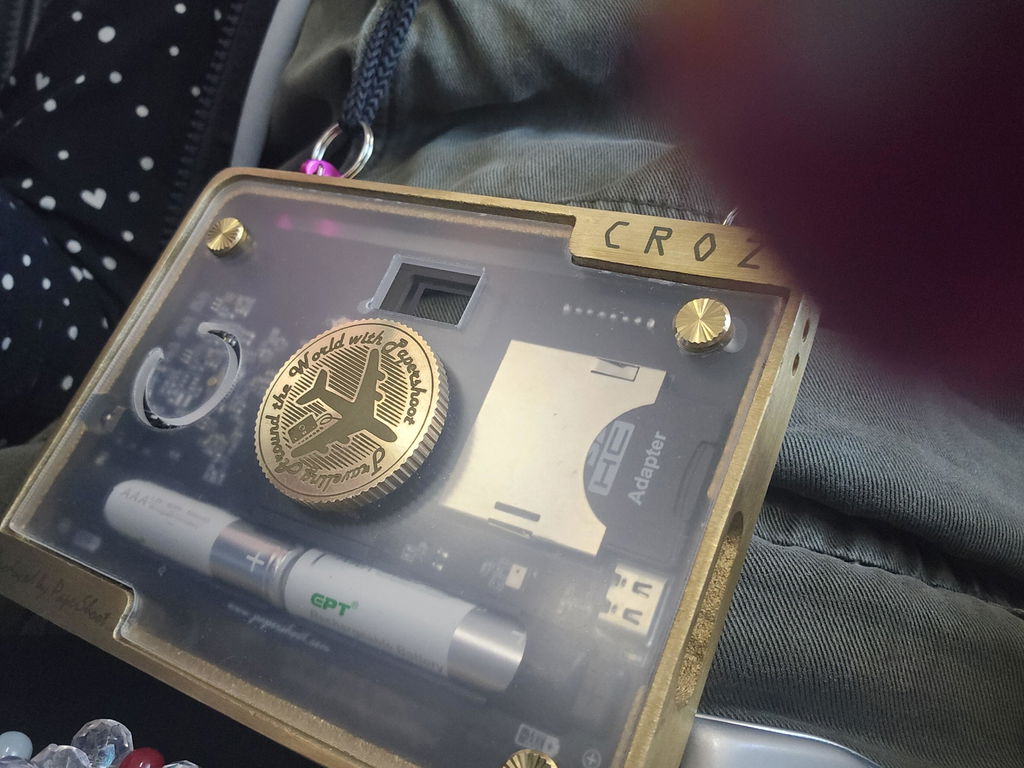
I loved it, it's very easy to use! And to transfer the photos to your TV is super easy 😍

I’m enjoying this little camera a lot more than I initially thought I would. Even though small, the jpg images are easily editable in Lightroom. Looking forward to taking it out again soon!
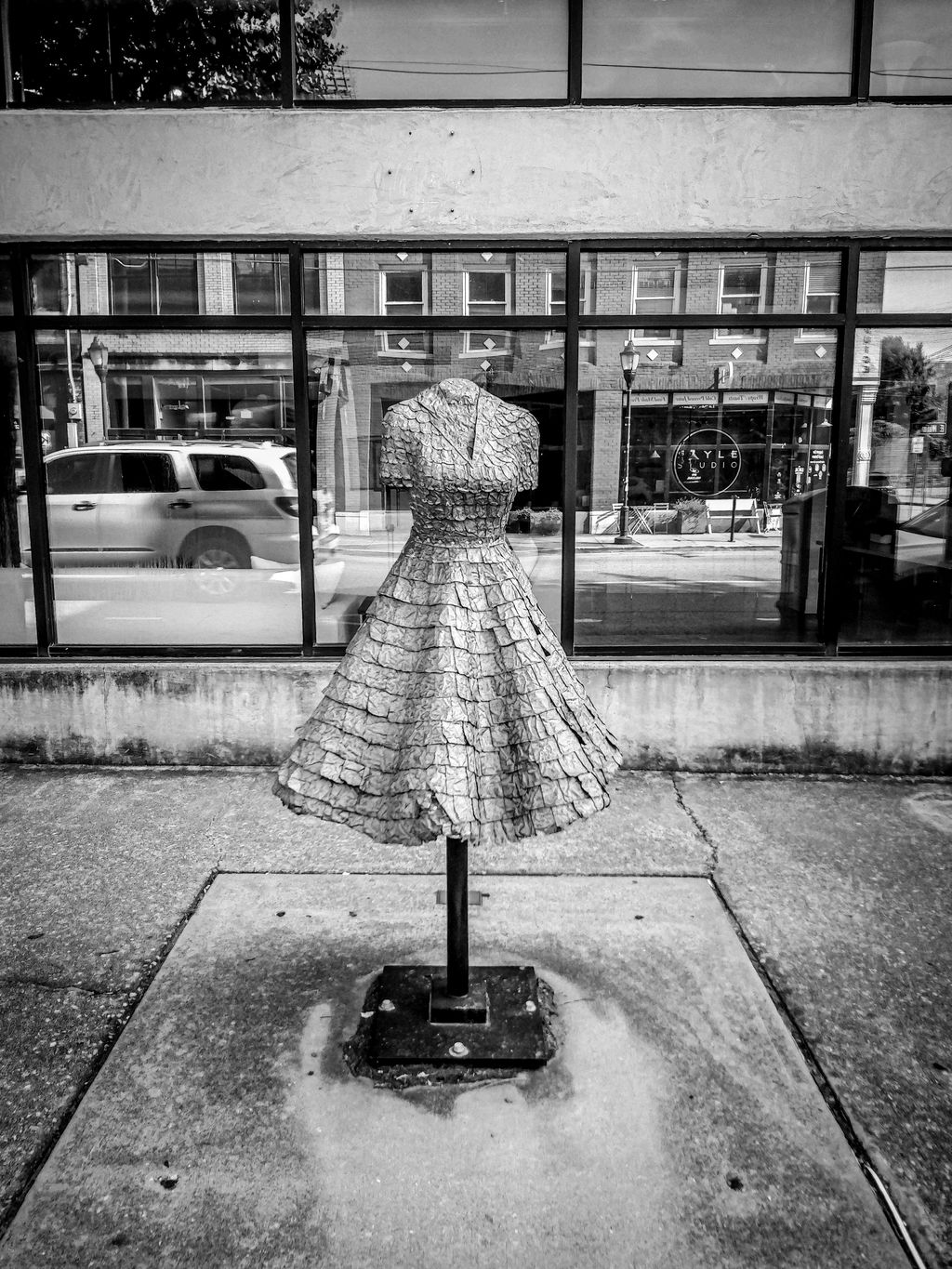
best fun I have had with photography since the 70's!!!

Absolutely OBSESSED with this gadget! Not only is it pocket-friendly and super cute, the vibe is just EVERYTHING!

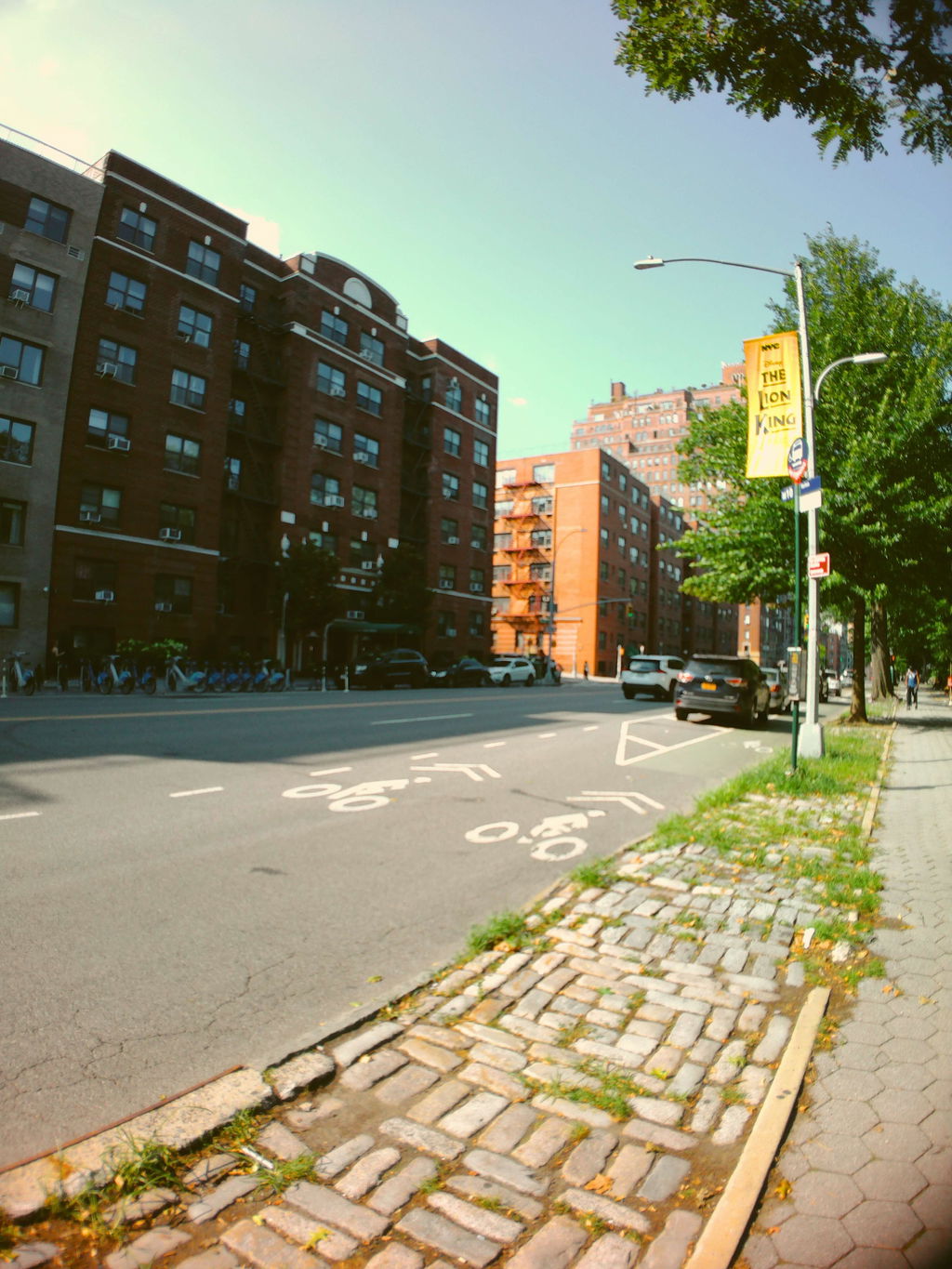

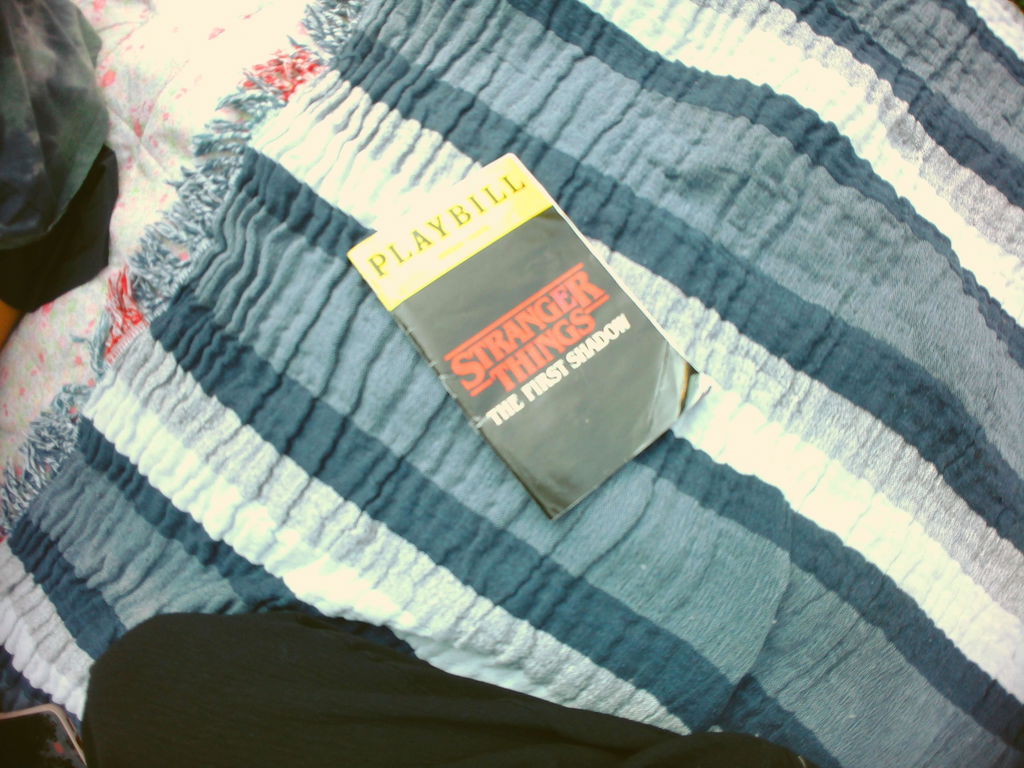
Love the camera and everything about this company.
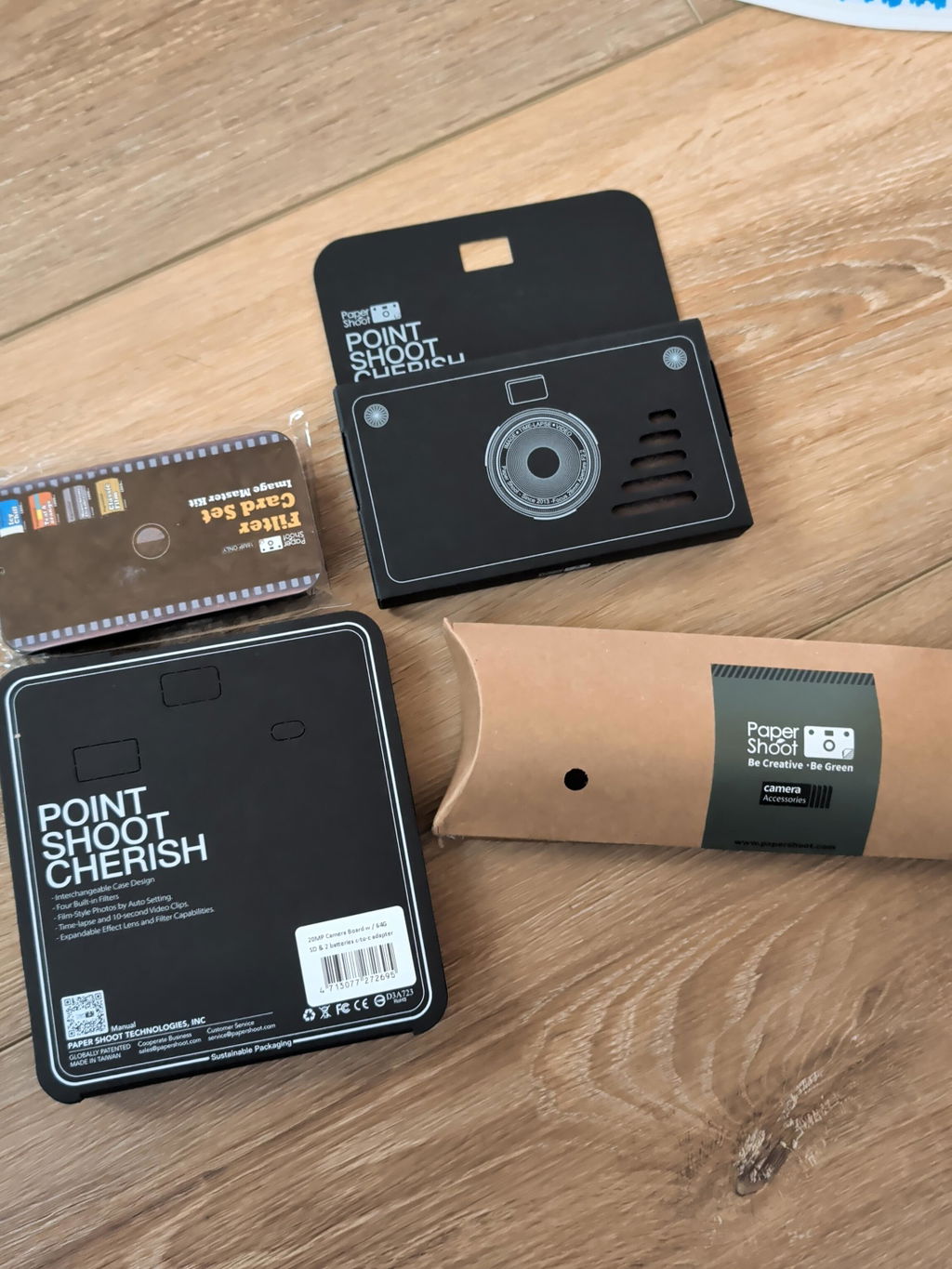
I have really enjoyed this Classic Film Paper Camera. The pictures have been great and it's easy to use.
A couple things that could be better. The "viewfinder" is not the same as what the camera takes so it takes a little calibration to know you'll get a bigger picture.
And my only big gripe, to enable the date/time stamp on camera requires one to download software that requires an override to run on a mac. That made me very nervous. Even after doing research to show that there is no issue with this company, I didn't love it. And I fear many people less good at computers might have difficulty doing the update even if they weren't worried about the possible security issues.


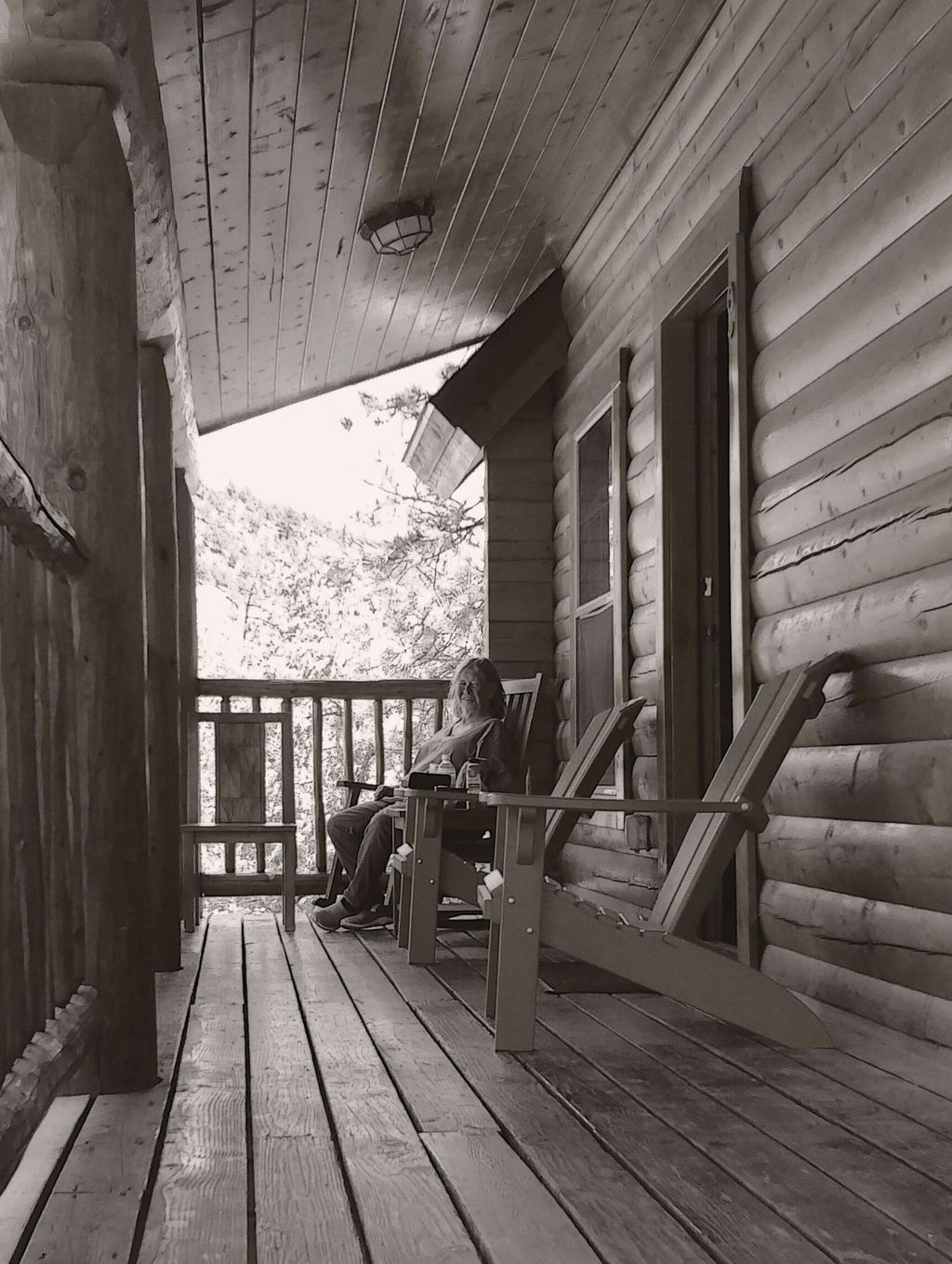
The whole family LOVES this camera! It’s so easy to put together and use. We all pass it around to take pictures of our day and then I upload the pictures right to our computer. The old timey look on the photos are awesome. I real love it, I will be recommending this to all my friends.

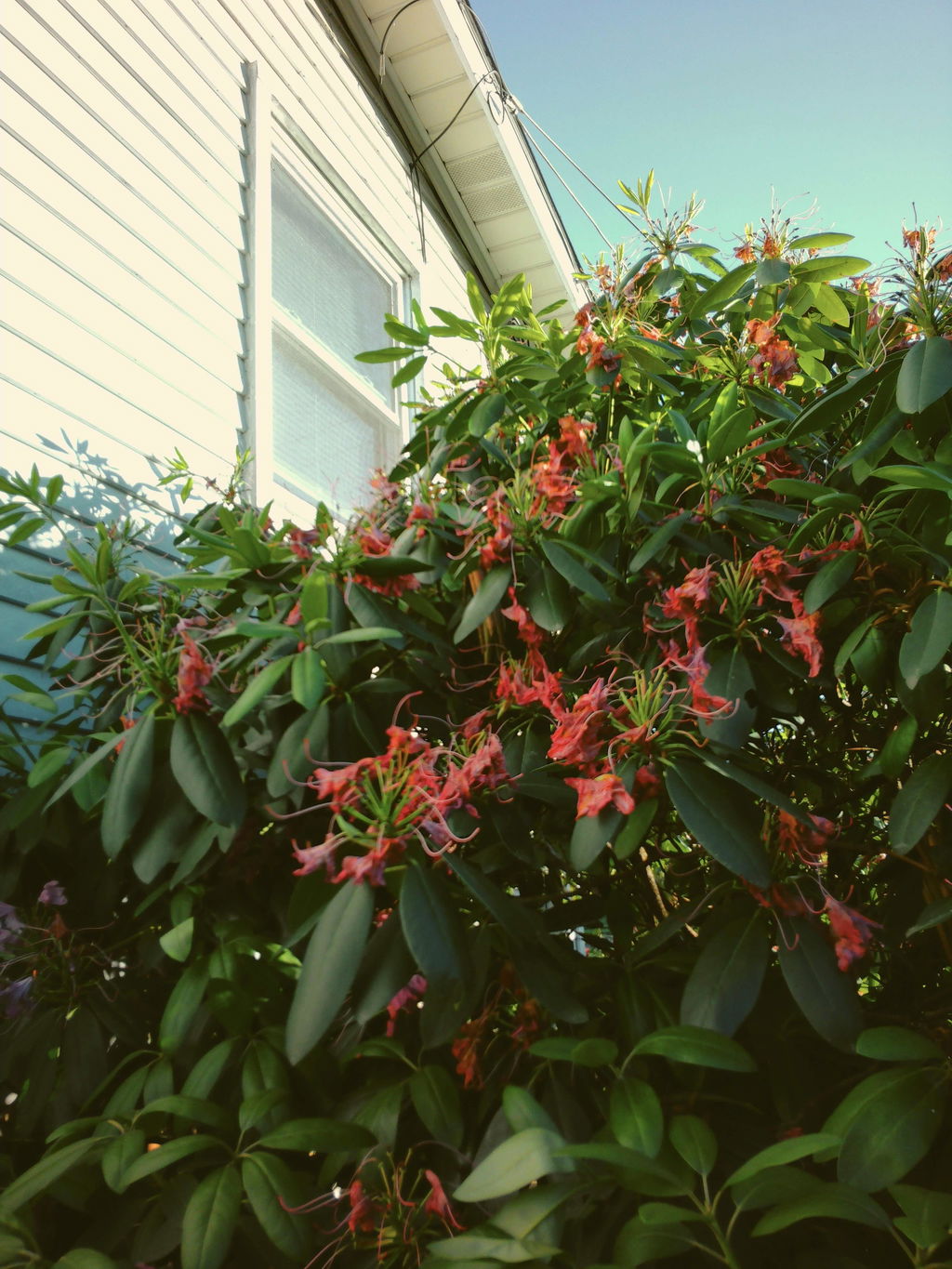
It’s absolutely amazing! The only issue I have is actually judging distance in the view finder, I hen I think I’m close enough I gotta be a little closer so it’ll actually focus on them, but apart from that it’s amazing!



I love it!!
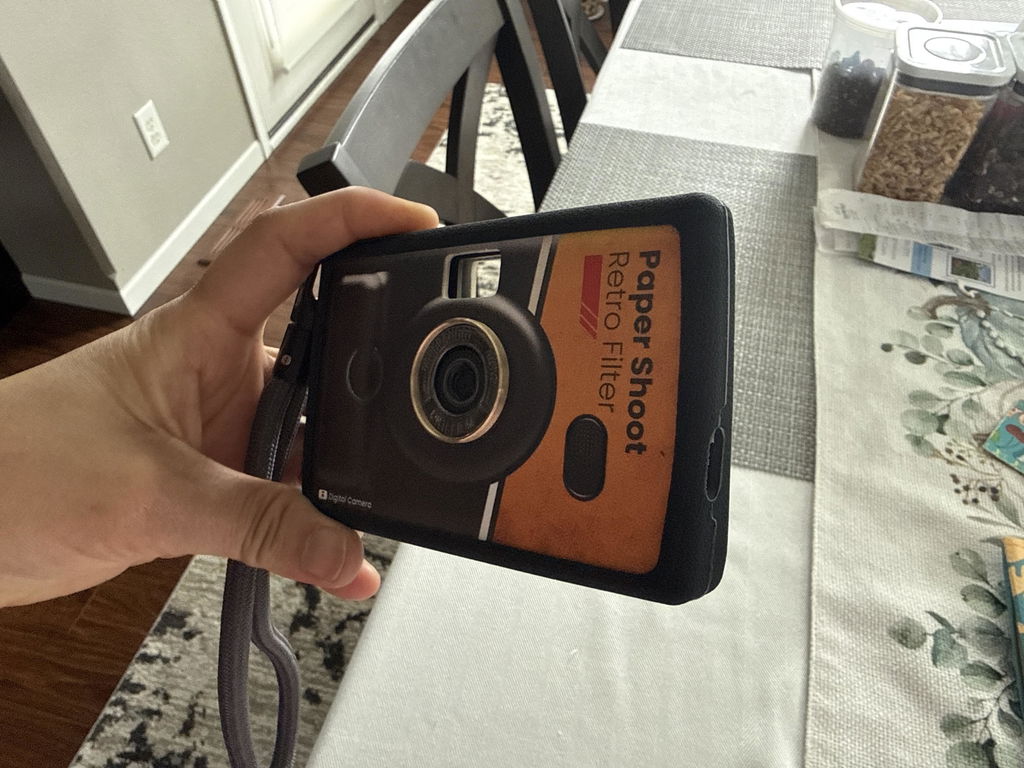
Most unique camera i’ve ever owned. i love the pictures it takes
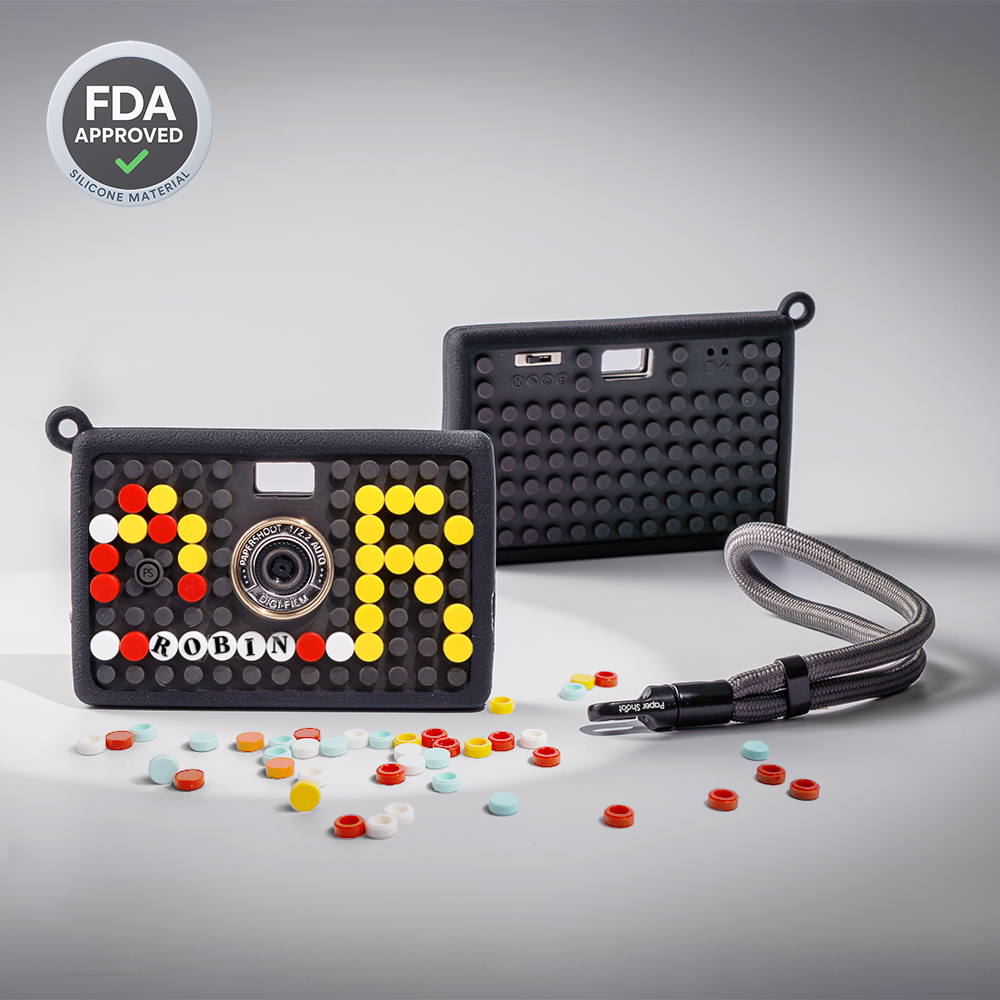
The camera is very unique and I like the transparent look of this case as well as the moisture resistance. My only gripe is that swapping filter cards can be a bit hard with bending back the rubber frame
cool concept but i prefer my phone. the storage card and filter cards are hard to get to while its built and the view finder or lack thereof felt strange to me. and more stuff to carry.
Thanks for writing this out — it's a fair take, and phones win on instant and sharp every time.
On the cards: how you reach them depends on the shell. With the open-side shells the filter card pops out with a press, and with the full-frame silicone shell you pull the silicone edge back and press the same way — no disassembly for either the filter card or the SD card. It's only the full-frame brass shell that needs the screws loosened each time. If yours is the brass one, email us at service@papershoot.com and we'll walk you through the fastest way to do it.
On the viewfinder — that one's a deliberate choice rather than an oversight. It's not built to replace your phone: no settings to think about, and no editing afterwards, which is where the time goes back.
Amazing little camera!
'little' is the part we worked hardest on ;D
It’s a great case! Very fun!
Glad you like it!
Compact and perfect for taking along on adventures. Super easy to use and transfer the photos to your phone!
Paper shoot camera brings back the essence of photography.
I love this camera so much it is the absolute best
Super nice build quality. I do wish the laser cutting process would begin with boxes around the letters...pull off the protective cover in that space...and continue with the rest of the cuts. It took 20 minutes with a pushpin to clear out the fragments.
Thicker than the paper cases by quite a bit. But the cool factor is worth it.
Fun little camera! The photos add another dimension that isn’t captured when using a phone. Some of my favorite photos from our recent trip came from the paper shoot. My 8 y/o old son had fun using it too.
the cuteness, the creativity, the colors, the convenience! i'm obbbsessed. this camera has been perfect for capturing moments with a vintage, disposable feel but with the convenience of a digital camera!
and it takes up virtually no space with the fact that it's paper thin. i highly recommend!
Value for money. Takes nice shots and filters do work. Love it
I love the camera and am planning on adding more to it. My only complaint would be the screws. They tend to loosen on their own and I lost 3 of the 4 while at the beach for a day. They don't seem to tighten enough and loosen even more with constant camera use. Other than that, I love it.
Love it!
Our Journal
If you have any questions, you are always welcome to contact us. We'll get back to you as soon as possible, within 24 hours on weekdays.
-
Shipping Information
Use this text to answer questions in as much detail as possible for your customers.
-
Customer Support
Use this text to answer questions in as much detail as possible for your customers.
-
FAQ’s
Use this text to answer questions in as much detail as possible for your customers.
-
Contact Us
Use this text to answer questions in as much detail as possible for your customers.